Artemis II Crew Honors Lunar Legacy with Apollo 14 Moon Tree Dedication
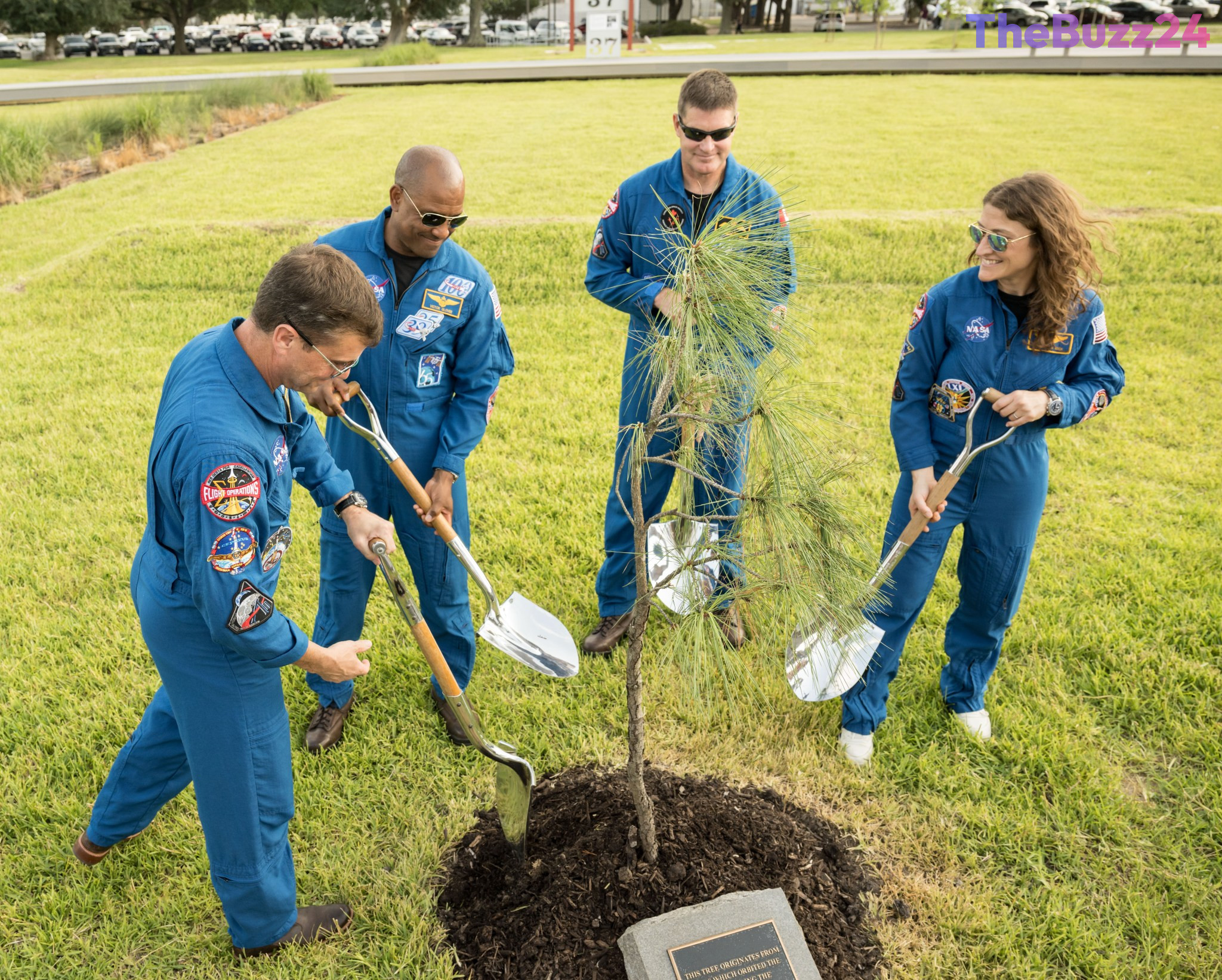
The crew of the upcoming Artemis II mission recently gathered at NASA’s Johnson Space Center to participate in a symbolic ceremony, dedicating a second-generation Apollo Moon tree. The event, held at the Lunar Receiving Park, serves as a bridge between the historic achievements of the Apollo era and the next generation of lunar exploration.
The tree, a loblolly pine, carries a significant lineage. It is a descendant of the original ‘Moon trees’ grown from seeds that traveled to lunar orbit aboard the Apollo 14 mission in 1971. Those original seeds were carried by astronaut Stuart Roosa, a former U.S. Forest Service smoke jumper who sought to conduct a unique biological experiment in space.
Following the return of Apollo 14, the seeds were germinated by the U.S. Forest Service, resulting in seedlings that were distributed and planted across the globe. By planting this new generation at the Johnson Space Center, the Artemis II crew highlights the continuity of human spaceflight and the enduring inspiration provided by the lunar missions of the past.
Key Takeaways
- The Artemis II crew dedicated a second-generation Apollo Moon tree at the Johnson Space Center.
- The original Moon trees originated from seeds carried to lunar orbit by astronaut Stuart Roosa during the Apollo 14 mission.
- The ceremony serves to connect the legacy of the Apollo program with the modern goals of the Artemis lunar exploration missions.
Editor’s Analysis & Impact
The dedication of the Moon tree is more than a ceremonial gesture; it represents a strategic effort by NASA to maintain public engagement and historical continuity as the agency prepares for a return to the lunar surface. By linking the Artemis II crew—who are tasked with the first crewed flight around the Moon in over 50 years—to the legacy of Apollo 14, the agency is reinforcing the narrative of a sustained, multi-generational commitment to space exploration. From an industry perspective, this highlights the importance of ‘soft power’ and cultural heritage in maintaining political and public support for high-cost space programs. As the Artemis program progresses, we can expect further efforts to bridge the gap between historical lunar achievements and the new era of commercial and international lunar development.
Frequently Asked Questions
Q: What are Apollo Moon trees?
A: Moon trees are trees grown from seeds that were taken into lunar orbit by astronaut Stuart Roosa during the Apollo 14 mission in 1971.
Q: Why is the Artemis II crew planting a new Moon tree?
A: The planting serves as a symbolic gesture to honor the history of lunar exploration and to inspire the next generation of astronauts as the Artemis program prepares for its upcoming missions.
AI Disclosure: This article is based on verified data and official reports. Our Team and AI have cross-referenced every financial detail with primary sources to ensure total accuracy.
More from this Category