Typhoon Maysak Triggers Catastrophic Flooding and Rare Tornadoes Across China
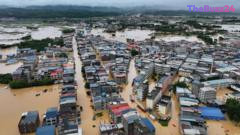
A powerful weather system, led by Typhoon Maysak, has unleashed a wave of destruction across China, forcing tens of thousands of residents to evacuate as floodwaters rapidly submerge entire villages. The storm, which marks the first major landfall of the 2026 season, caused rivers to burst their banks and dam walls to fail, particularly in the Guangxi province. In the city of Nanning, residents were left stranded on rooftops, struggling with limited supplies and a lack of communication as the rising water cut off electricity and internet access.
The devastation has extended far beyond the initial landfall. In a rare meteorological event, the collision of cold northern air with the typhoon’s warm southern currents triggered tornadoes in the central province of Hubei. Witnesses described scenes of chaos as high winds shattered windows and tossed furniture, with reports of individuals being swept from high-rise apartments. The extreme weather has resulted in at least 21 confirmed deaths across various regions, including fatalities from flash floods in Inner Mongolia and record-breaking rainfall in Fushun.
President Xi Jinping has ordered an all-out emergency response, mobilizing rescue teams to provide aid and relocate displaced citizens. However, local reports indicate that rescue efforts are being hampered by the sheer scale of the flooding and the intensity of the ongoing rainfall. As authorities work to manage the crisis, concerns are also mounting regarding the escape of farmed snakes from flooded facilities, adding a layer of danger to the already perilous rescue operations.
Looking ahead, the situation remains volatile as a second storm, Super Typhoon Bavi, is currently tracking across the Pacific toward China’s eastern coast. The frequency and intensity of these extreme weather events have prompted renewed discussions regarding the impact of climate change on China’s infrastructure and its critical agricultural sector, as the nation braces for further potential disruptions.
Key Takeaways
- Typhoon Maysak has caused widespread flooding in Guangxi, displacing tens of thousands and leaving many residents stranded without basic supplies.
- Rare tornadoes in Hubei province have caused significant structural damage and injuries, with meteorologists attributing the phenomenon to clashing air masses.
- The Chinese government has launched an 'all-out' rescue operation as the country prepares for the arrival of a second storm, Super Typhoon Bavi.
Editor’s Analysis & Impact
The recent surge in extreme weather events across China highlights a growing vulnerability in the nation’s disaster management infrastructure. The combination of rapid-onset flooding and rare, high-intensity tornadoes suggests that traditional climate models may be struggling to keep pace with the shifting atmospheric patterns. Economically, the impact on the trillion-dollar agricultural sector is significant, as repeated flooding threatens food security and rural livelihoods. Moving forward, the government will likely face increased pressure to invest in more resilient urban planning and advanced early-warning systems. The compounding effect of back-to-back storms, such as the arrival of Super Typhoon Bavi, underscores the necessity for a more robust, multi-regional emergency response framework that can handle simultaneous, large-scale climate disasters.
Frequently Asked Questions
Q: Why were tornadoes reported in Hubei during a typhoon?
A: The tornadoes were caused by the collision of cold air moving in from the north with the warm, moist air brought by Typhoon Maysak from the south, creating the unstable atmospheric conditions necessary for tornado formation.
Q: What is the current status of the rescue operations?
A: Rescue operations are ongoing, with authorities deploying inflatable boats and personnel. However, efforts are being challenged by the rapid speed of the flooding, limited access to remote mountain villages, and the loss of communication infrastructure in affected areas.
AI Disclosure: This article is based on verified data and official reports. Our Team and AI have cross-referenced every financial detail with primary sources to ensure total accuracy.
More from this Category