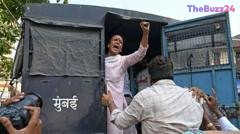
Delhi Authorities Detain Protesters Following ‘Cockroach’ Movement Demonstration
Authorities in Delhi have detained hundreds of protesters associated with the Cockroach Janta Party (CJP) following an unauthorized anti-government demonstration. The protest, which saw significant police intervention, resulted in the detention of several key figures, including CJP founder Abhijeet Dipke, shortly after his arrival in the capital. Videos circulating on social media captured the tense atmosphere as demonstrators were taken into custody, with participants seen protesting from inside police transport vehicles.
The movement, which gained momentum in May, stems from a controversial remark made by India’s Chief Justice, who compared unemployed youth to “cockroaches.” This characterization sparked widespread indignation among the country’s younger demographic, leading to the formation of the CJP as a platform for expressing grievances regarding unemployment and government policy. The group has since sought to challenge the rhetoric used by high-ranking officials through organized public dissent.
In anticipation of the demonstration, Delhi police had formally denied permission for the gathering, citing security concerns. A massive security operation was launched, involving tens of thousands of personnel and the strategic barricading of major roads to prevent the protest from gaining traction. Despite these measures and the heavy police presence, the CJP maintained its commitment to proceed with the demonstration, leading to the subsequent clashes and mass detentions.
Key Takeaways
- Hundreds of protesters from the Cockroach Janta Party were detained in Delhi after attempting to hold an unauthorized demonstration.
- The movement was sparked by a controversial comment from India's Chief Justice, who likened unemployed youth to 'cockroaches'.
- Delhi police deployed massive security forces and barricades to block the protest, citing a lack of official permission.
Editor’s Analysis & Impact
The emergence of the Cockroach Janta Party highlights a growing disconnect between India’s judicial and political establishment and its massive youth population. By adopting a derogatory label used by a high-ranking official as their namesake, the movement has successfully utilized irony and social media to amplify their frustrations regarding the country’s unemployment crisis. The government’s heavy-handed response, characterized by mass detentions and significant security deployments, suggests a low tolerance for dissent that could potentially backfire by further radicalizing the youth demographic. Moving forward, the ability of the CJP to sustain momentum will depend on their capacity to transition from symbolic protest to a structured political force. If the administration continues to rely solely on security measures rather than addressing the underlying economic grievances, the risk of recurring civil unrest in urban centers remains high.
Frequently Asked Questions
Q: What is the Cockroach Janta Party?
A: The Cockroach Janta Party (CJP) is a protest movement formed by young Indians in response to a comment by the Chief Justice of India, who compared unemployed youth to cockroaches.
Q: Why were the protesters in Delhi detained?
A: The protesters were detained because they attempted to hold a demonstration that had been denied official permission by Delhi police, leading to a large-scale security operation to disperse the crowd.
AI Disclosure: This article is based on verified data and official reports. Our Team and AI have cross-referenced every financial detail with primary sources to ensure total accuracy.
More from this Category