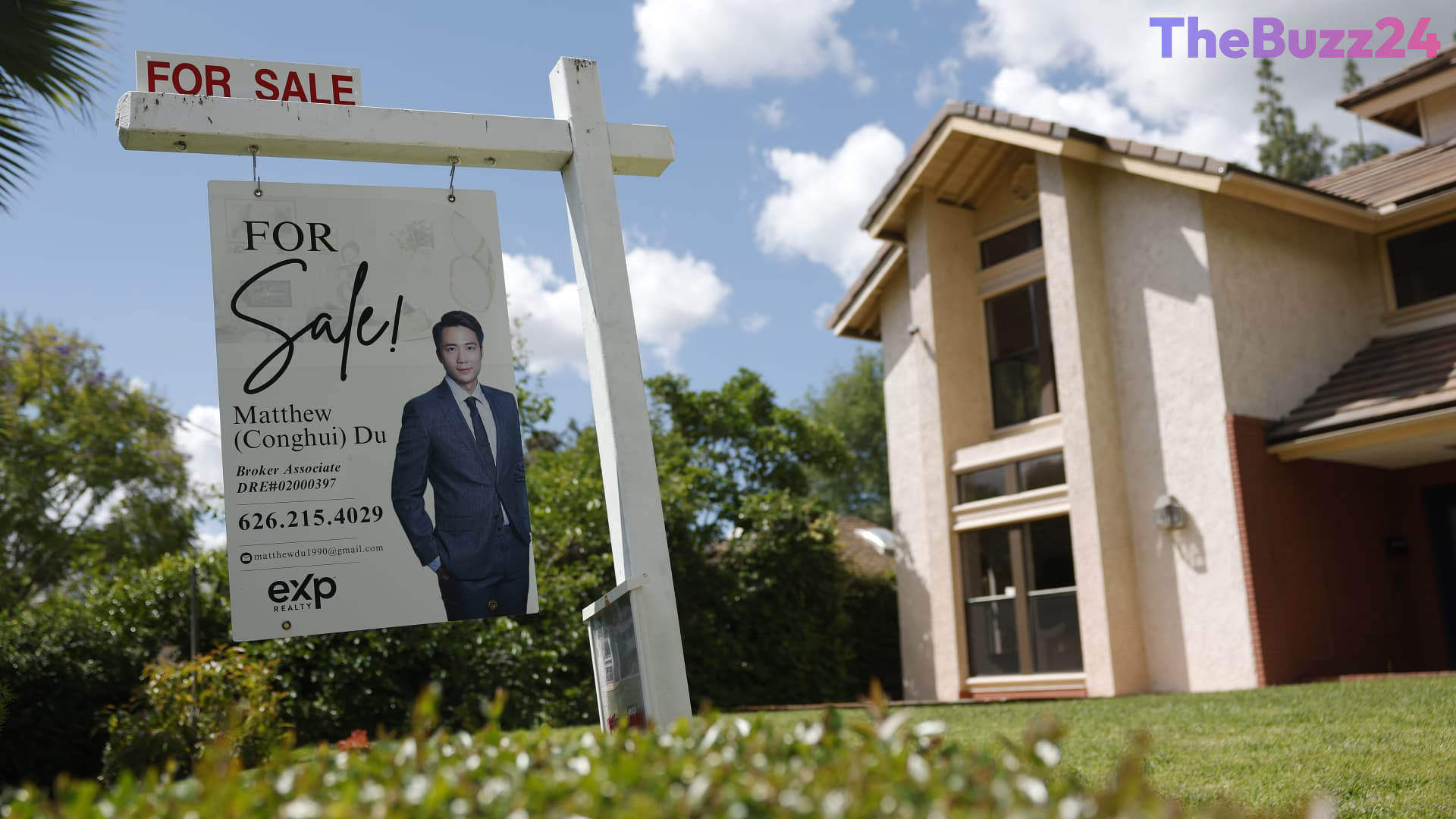
Housing Market Stalls as Record-High Prices and Mortgage Rates Dampen Demand
The residential real estate market faced a cooling period in June, as sales of previously owned homes slipped 2.4% compared to the previous month. On a seasonally adjusted, annualized basis, sales reached 4.09 million units, falling short of analyst expectations that had anticipated a modest monthly increase. Despite the monthly decline, sales figures remained 2.8% higher than the same period last year, reflecting a complex landscape defined by shifting affordability.
Inventory levels remain a significant bottleneck for potential buyers. By the end of June, there were 1.56 million units available, representing a 4.6-month supply at the current sales pace. This remains well below the six-month supply typically required to achieve a balanced market between buyers and sellers. As supply remains constrained, the median price for an existing home climbed to a record $440,600, marking a 1.8% increase over the previous year.
Market activity continues to show a stark divide based on property value. While lower-priced segments have seen stagnant or declining sales, the luxury market is thriving, with homes priced between $750,000 and $1 million seeing a 14% increase in sales, and properties exceeding $1 million jumping by 18%. Meanwhile, the share of all-cash transactions has moderated to 25%, down from 29% a year ago, while first-time buyers accounted for 33% of total market activity.
Key Takeaways
- Existing home sales fell 2.4% in June, missing analyst projections despite a year-over-year increase.
- Median home prices hit an all-time high of $440,600 due to persistent inventory shortages.
- The luxury housing market is significantly outperforming the entry-level segment, with high-end sales rising by double digits.
Editor’s Analysis & Impact
The current housing market is trapped in a cycle of low inventory and high interest rates, creating a ‘lock-in’ effect that keeps prices elevated even as demand softens. The divergence between luxury sales and entry-level stagnation suggests that the market is increasingly accessible only to affluent buyers or those with significant equity, while first-time buyers remain sidelined by affordability hurdles. Looking ahead, the market is unlikely to see a meaningful correction in prices until inventory levels increase substantially. If supply remains tight, the upward pressure on home prices will likely persist, potentially leading to a long-term decline in homeownership rates among younger demographics. The reliance on job growth to sustain the market is a precarious strategy, as any cooling in the labor market could exacerbate the current affordability crisis.
Frequently Asked Questions
Q: Why are home prices continuing to rise despite lower sales volume?
A: Home prices are rising primarily due to a persistent lack of inventory. When supply is low and fails to meet demand, prices are pushed upward regardless of the total number of transactions.
Q: What is considered a 'balanced' housing market?
A: A balanced market is generally defined as having a six-month supply of homes available for sale. Currently, the market is hovering around a 4.6-month supply, which favors sellers.
AI Disclosure: This article is based on verified data and official reports. Our Team and AI have cross-referenced every financial detail with primary sources to ensure total accuracy.
More from this Category