Massive Crowds Gather in Mashhad for Burial of Ayatollah Khamenei Amid Escalating US-Iran Conflict
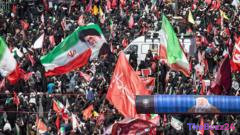
The holy city of Mashhad became the focal point of national grief as hundreds of thousands of mourners gathered for the burial of Iran’s late Supreme Leader, Ayatollah Ali Khamenei. Laid to rest at the historic Imam Reza shrine, the country’s most sacred Shia Muslim site, the ceremony marked the culmination of six days of extensive public mourning spanning multiple cities in both Iran and neighboring Iraq. The massive procession, filled with black-clad mourners waving national flags and red banners symbolizing vengeance, highlighted the deep emotional and political impact of the leader’s death.
Khamenei’s death, resulting from an Israeli airstrike on his Tehran residence on February 28, plunged the region into an active war involving Iran, Israel, and the United States. His son, Mojtaba Khamenei, has been named as his successor but did not attend the funeral services, having reportedly sustained severe injuries in the same military strike. The transition of power comes at an incredibly volatile moment, as the newly appointed leadership must navigate both internal transition and an escalating international conflict.
The solemnity of the funeral was starkly contrasted by a rapid escalation in military hostilities. Prior to the burial, railway bridges connecting Tehran to Mashhad were targeted in airstrikes, which Iranian officials blamed on the U.S. military in an attempt to disrupt the funeral proceedings. Meanwhile, retaliatory exchanges have intensified, with the U.S. striking targets to protect shipping lanes in the Strait of Hormuz, and Iranian forces launching counterattacks against U.S. military installations in Kuwait, Bahrain, and Qatar.
This renewed violence threatens to completely dismantle a recently signed memorandum of understanding (MoU) aimed at establishing a permanent truce and addressing Iran’s nuclear program. While mediators had previously reported progress in indirect talks, U.S. President Donald Trump recently declared the preliminary agreement to be effectively finished. The collapse of these diplomatic efforts leaves the region on the brink of a much wider and more devastating conflict.
Key Takeaways
- Ayatollah Ali Khamenei was buried at the Imam Reza shrine in Mashhad, concluding six days of public mourning following his death in an Israeli airstrike.
- The transition of power to his son, Mojtaba Khamenei, remains clouded as the new leader has not appeared in public due to injuries sustained in the same attack.
- A preliminary peace agreement between the U.S. and Iran is on the verge of collapse following renewed military strikes and statements from President Donald Trump.
Editor’s Analysis & Impact
The death of Ayatollah Ali Khamenei and the subsequent escalation of hostilities mark a dangerous turning point in Middle Eastern geopolitics. The potential collapse of the recently signed memorandum of understanding (MoU) threatens to plunge the region into an open-ended conflict, with severe implications for global energy markets. The Strait of Hormuz remains a critical chokepoint; any prolonged disruption to commercial shipping there will likely trigger a sharp spike in global oil prices and disrupt international supply chains. Furthermore, the internal political transition to Mojtaba Khamenei, occurring under the shadow of war and domestic unrest, introduces profound instability within Iran’s leadership. Without a diplomatic off-ramp, the cycle of retaliatory strikes between U.S. forces and Iranian-backed elements could expand into a broader regional war, dragging in neighboring Gulf states and permanently altering the security architecture of the Middle East.
Frequently Asked Questions
Q: Who succeeded Ayatollah Ali Khamenei as Iran's Supreme Leader?
A: He was succeeded by his son, Mojtaba Khamenei, though he has not yet made a public appearance due to injuries reportedly sustained in the same airstrike that killed his father.
Q: What is the status of the peace talks between the United States and Iran?
A: A preliminary memorandum of understanding signed three weeks ago is now in jeopardy, with U.S. President Donald Trump indicating the agreement may be over following a renewed exchange of military strikes.
Q: Where was the late Supreme Leader buried?
A: Ayatollah Khamenei was buried at the Imam Reza shrine in Mashhad, which is Iran's holiest Shia Muslim site.
AI Disclosure: This article is based on verified data and official reports. Our Team and AI have cross-referenced every financial detail with primary sources to ensure total accuracy.
More from this Category