China Achieves Key Milestone in Reusable Rocket Technology, Challenging SpaceX Dominance
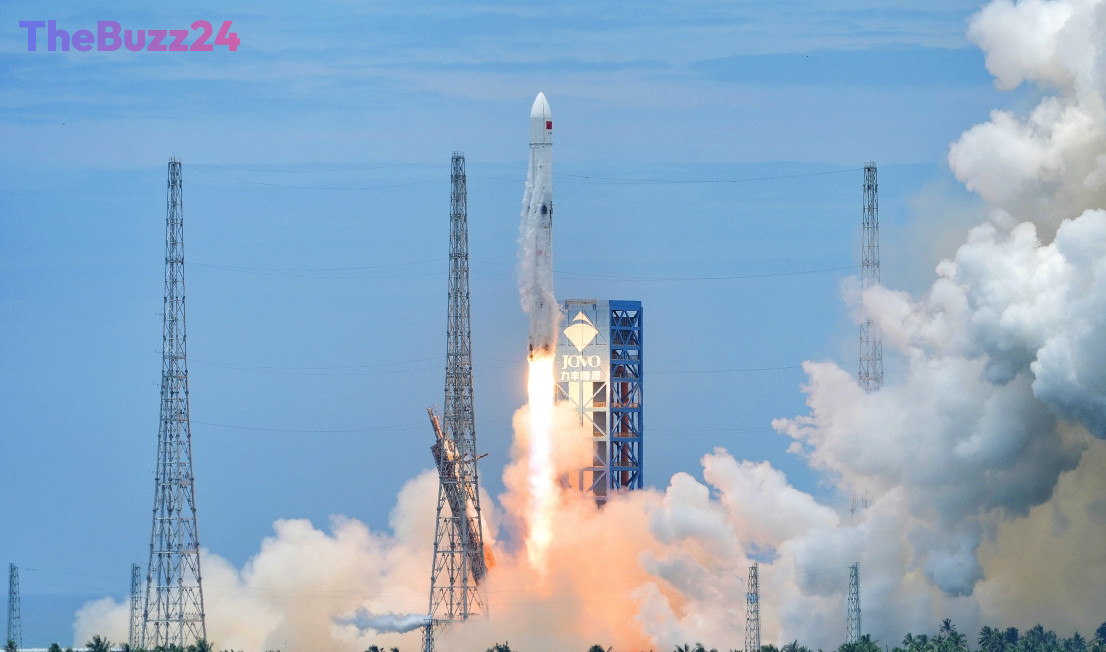
China’s state-owned space enterprise, the Aerospace Science and Technology Corporation (CASC), has successfully demonstrated a significant advancement in rocket technology by landing an orbital rocket booster on a seagoing recovery vessel. This achievement marks China as the second nation to master this critical capability, a move that positions it to directly challenge the cost-efficiency advantages previously held by companies like SpaceX.
The successful recovery of the Long March rocket booster, capable of carrying a payload comparable to SpaceX’s Falcon 9, signals CASC’s intent to rapidly develop reusable rocket technology. The company has indicated plans to attempt a full reuse of the booster by the end of the year. Unlike SpaceX’s method of using landing legs, China’s approach involves a netting system deployed on a recovery ship to capture the descending booster, a technique that relies on sophisticated guidance systems, sensors, and robust engine performance.
This development has significant implications for the global space industry. While national security regulations may segment the launch market, a reusable Chinese rocket could dramatically lower launch costs for China and its allies. This could lead to increased competition for satellite communication services, potentially impacting SpaceX’s Starlink network in emerging markets across Africa, the Middle East, and Southeast Asia. Furthermore, it could diminish the United States’ military advantage in space.
The successful booster recovery occurs amidst reports of cooperation between China and Russia on strategies to counter Starlink’s influence, particularly following its use in Ukraine. Meanwhile, SpaceX continues to push the boundaries with its larger Starship rocket, with another test launch anticipated soon, following a recent static fire test of its massive booster. Other players in the reusable rocket sector, such as Blue Origin and Rocket Lab, are also pursuing similar technologies, indicating a broader industry-wide race towards more sustainable and cost-effective space access.
Key Takeaways
- China's CASC has successfully recovered a reusable orbital rocket booster at sea, a capability previously dominated by SpaceX.
- This technological leap is expected to significantly reduce China's launch costs, potentially enabling it to compete more directly with SpaceX's Starlink in global markets.
- The advancement occurs amid geopolitical discussions about space-based communication networks and potential competition for military advantages in orbit.
Editor’s Analysis & Impact
China’s successful demonstration of sea-based booster recovery is a pivotal moment in the burgeoning commercial space race. By mastering reusability, CASC can drastically cut launch expenses, making space access more affordable not only for its domestic programs but also for international partners. This could reshape the competitive landscape for satellite internet services, particularly in developing regions where cost is a major barrier. While direct competition with U.S. entities might be limited by policy, the economic implications are profound, potentially challenging established players and fostering new market dynamics. The long-term outlook suggests an acceleration of space-based infrastructure development globally, driven by increased affordability and competition.
Frequently Asked Questions
Q: What is the significance of China recovering a rocket booster at sea?
A: Recovering a rocket booster at sea is a critical step towards reusability. It allows space agencies and companies to refurbish and reuse expensive rocket components, significantly reducing the cost of space launches. This makes space access more affordable and frequent.
Q: How does China's rocket recovery method differ from SpaceX's?
A: SpaceX typically uses landing legs to gently set its Falcon 9 boosters down on land or on autonomous droneships. China's demonstrated method involves using a netting system deployed across a recovery ship to capture the descending booster, relying heavily on advanced guidance and control systems.
Q: Could China's reusable rockets compete with SpaceX's Starlink?
A: Yes, while direct competition might be influenced by national security regulations, a reusable Chinese rocket could offer more affordable launch services. This could enable China to deploy its own satellite constellations or offer launch services for other nations, potentially competing with SpaceX's Starlink in global markets, especially in regions like Africa, the Middle East, and Southeast Asia.
AI Disclosure: This article is based on verified data and official reports. Our Team and AI have cross-referenced every financial detail with primary sources to ensure total accuracy.
More from this Category