Senra Secures $65 Million to Modernize Critical Wire Harness Manufacturing with Advanced Software
Senra, a pioneering startup co-founded by former SpaceX engineer Jordan Black and Benjamin Shanahan, has successfully closed a $65 million Series B funding round. The investment, co-led by Lowercarbon and Interlagos with significant participation from General Catalyst, Sequoia Capital, Andreessen Horowitz, and Founders Fund, will fuel the company’s mission to revolutionize the production of wire harnesses—the intricate electrical cabling vital to modern vehicles.
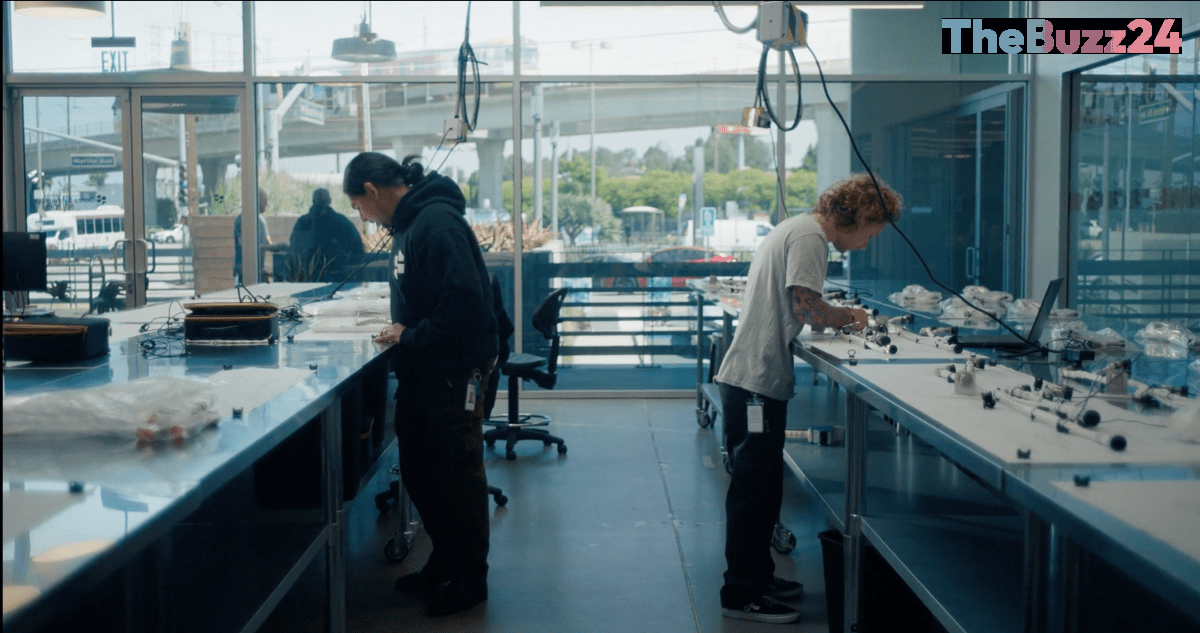
Wire harnesses, while fundamental to the operation of rockets, cars, planes, and other complex machinery, have largely been manufactured using methods that Black describes as unchanged since the Cold War era. His experience scaling wire harness production for SpaceX’s Starship highlighted the industry’s reliance on bespoke, manual processes. Senra addresses this challenge not by immediately replacing human craftspeople, but by integrating sophisticated software tools and strategic automation to standardize and enhance the traditional manual workflow.
The company’s proprietary Amp software platform is central to its approach, enabling the standardization of inputs across the wiring process and generating a digital twin to guide technicians. Senra also boasts the only federally certified wire harness training program, ensuring a highly skilled workforce. This modernization is particularly timely, as the company benefits from a surge in investment in U.S. manufacturing, especially within the defense industrial base. While customer names remain confidential, Senra’s technology is being adopted by builders of everything from submarines and land-based defense systems to launch vehicles and satellites.
The critical need for improved wire harness standards was starkly illustrated by the 2023 Boeing Starliner incident, where flammable tape in the wiring system caused costly delays. Senra’s focus on automated systems for tracking materials and engineering changes aims to prevent such catastrophic failures. With current production at 1,000 units per month across two factories, Senra plans to dramatically scale output to 10,000 units monthly by 2027, embodying the principle of building a strong, standardized foundation before pursuing full automation, much like the scaling success seen at SpaceX.
Key Takeaways
- Senra, co-founded by a former SpaceX engineer, secured $65 million in Series B funding to modernize wire harness manufacturing.
- The company aims to transform traditionally manual, 'Cold War era' production processes using software, partial automation, and standardized training.
- Senra's technology, including its Amp software, addresses critical quality and efficiency issues in sectors ranging from defense to aerospace, with plans to significantly scale production.
Editor’s Analysis & Impact
This substantial funding round for Senra underscores a critical need for innovation in foundational manufacturing sectors, particularly those supporting defense and aerospace. The reliance on outdated, manual processes for components as vital as wire harnesses presents significant risks to quality, efficiency, and national security. Senra’s pragmatic approach—prioritizing software-driven standardization and partial automation before full robotic integration—is a smart strategy for an industry where manipulating wires remains complex for machines. This investment could catalyze a broader modernization trend across legacy manufacturing, fostering more resilient supply chains and accelerating production cycles for complex systems. The emphasis on federally certified training also highlights a commitment to developing a skilled workforce for advanced manufacturing.
Frequently Asked Questions
Q: What problem is Senra trying to solve?
A: Senra aims to modernize the production of wire harnesses, which are critical electrical cabling systems in vehicles like rockets, cars, and planes. Currently, their manufacturing processes are largely manual and have remained unchanged since the Cold War era, leading to inefficiencies and potential quality issues.
Q: How does Senra's technology work?
A: Senra utilizes its proprietary Amp software platform to standardize inputs throughout the wiring process and create a digital twin. This guides technicians, who undergo federally certified training, and helps track materials and engineering changes, improving quality and efficiency. The company also integrates partial automation where feasible.
Q: Who are Senra's target customers?
A: While specific customers were not disclosed, Senra serves manufacturers of a wide range of complex vehicles, including submarines, maritime vehicles, land-based defense systems, launch vehicles, and satellites.
AI Disclosure: This article is based on verified data and official reports. Our Team and AI have cross-referenced every financial detail with primary sources to ensure total accuracy.
More from this Category