Data Confirms Driver Overrode Tesla Autopilot in Fatal Texas House Crash
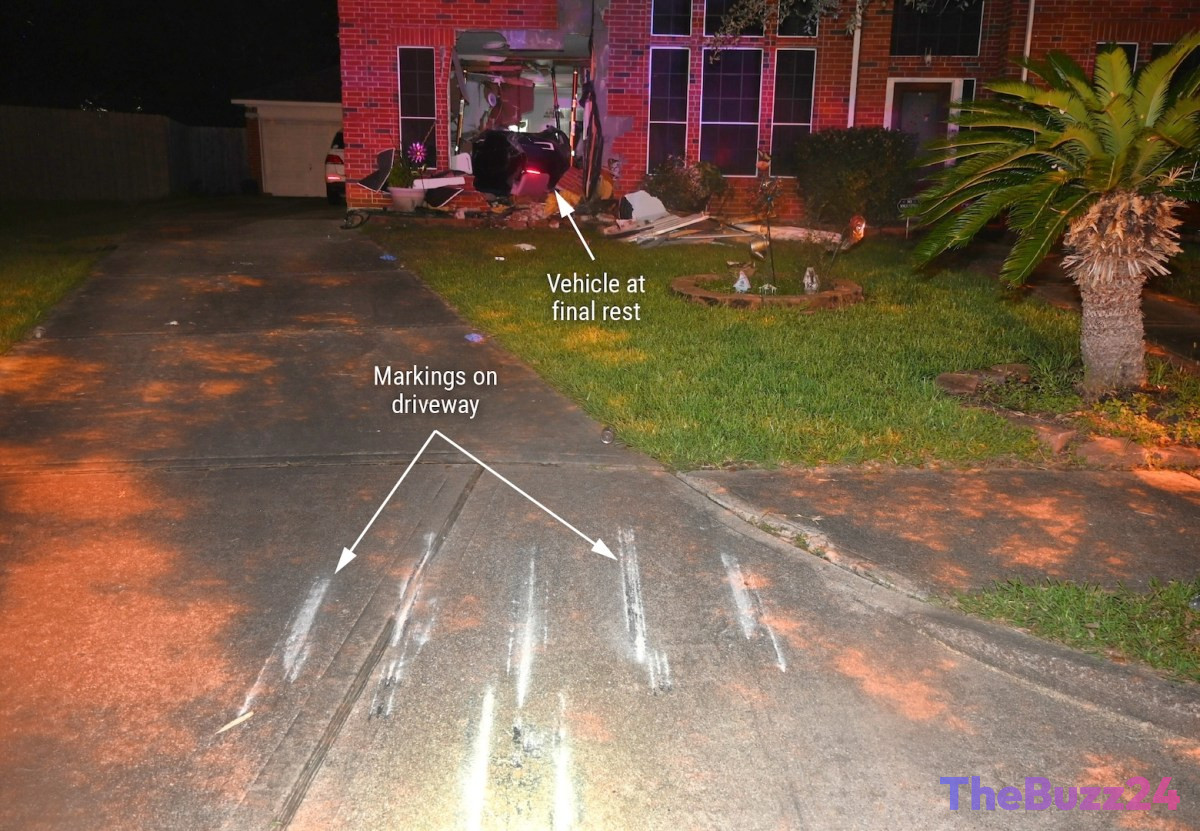
A newly released preliminary investigation report has revealed that a Tesla driver involved in a fatal crash in Katy, Texas, fully depressed the accelerator pedal, overriding the vehicle’s semi-autonomous driving system. The vehicle was traveling at speeds exceeding 70 miles per hour in a 30 mph residential zone when it veered off the road and slammed into a local residence, resulting in the death of 76-year-old homeowner Martha Avila.
The driver, 44-year-old Michael Butler, has been charged with manslaughter following the incident. Additionally, the victim’s family has launched a negligence lawsuit targeting both Butler and Tesla. While Butler claimed to authorities that he had lost consciousness during the drive, investigators uncovered a series of telling internet searches on his phone, including queries about Tesla’s Full Self-Driving (FSD) software being “too timid” and “not aggressive enough.”
Data retrieved from the vehicle confirms that the driver’s manual input overrode the active Full Self-Driving (Supervised) system. This finding aligns with statements made by Tesla CEO Elon Musk, who defended the technology shortly after the crash by arguing that the high-speed collision did not align with FSD’s cautious neighborhood driving parameters. The federal safety investigation noted that environmental conditions were optimal at the time of the crash, with clear skies, dry roads, and bright daylight.
Under Tesla’s current operational guidelines, drivers utilizing the FSD (Supervised) system must remain fully attentive and prepared to take immediate control of the vehicle. This incident highlights the ongoing challenges regulatory bodies face in monitoring advanced driver-assistance systems and distinguishing between software limitations and human error.
Key Takeaways
- Data shows the driver pressed the accelerator to 100%, overriding Tesla's Full Self-Driving software.
- The vehicle was traveling over 70 mph in a 30 mph zone before crashing into a home and killing a resident.
- The driver faces manslaughter charges and a civil lawsuit, despite claiming he passed out during the incident.
Editor’s Analysis & Impact
This incident underscores a critical defense for Tesla amid mounting scrutiny over its Full Self-Driving (FSD) technology. By proving that human intervention—specifically a 100% accelerator override—was the direct cause of the high-speed crash, Tesla successfully distances its software from liability in this specific tragedy. However, the broader implications for the autonomous vehicle industry remain complex. While technology providers can design safeguards, they cannot entirely prevent deliberate or negligent human override. This case will likely influence future regulatory frameworks, potentially pushing agencies like the National Highway Traffic Safety Administration (NHTSA) to mandate stricter driver-monitoring systems that can detect driver incapacitation or erratic manual overrides. For investors, the vindication of FSD in this instance offers temporary relief, but the ongoing legal battles and public skepticism surrounding autonomous driving safety will continue to pose long-term headwinds for Tesla’s valuation.
Frequently Asked Questions
Q: Can a driver override Tesla's Full Self-Driving (Supervised) system?
A: Yes. Tesla's FSD system is designed to allow immediate driver override. Pressing the accelerator pedal or applying force to the steering wheel will disengage or override the automated driving functions, returning full control to the driver.
Q: What charges does the driver face in this Texas crash?
A: The driver, Michael Butler, has been criminally charged with manslaughter. He and Tesla are also facing a civil lawsuit for negligence filed by the family of the victim, Martha Avila.
Q: What did the investigation reveal about the vehicle's speed and conditions?
A: The vehicle was traveling at over 70 mph in a 30 mph residential zone under clear, dry, and daylight conditions before crashing into the home.
AI Disclosure: This article is based on verified data and official reports. Our Team and AI have cross-referenced every financial detail with primary sources to ensure total accuracy.
More from this Category