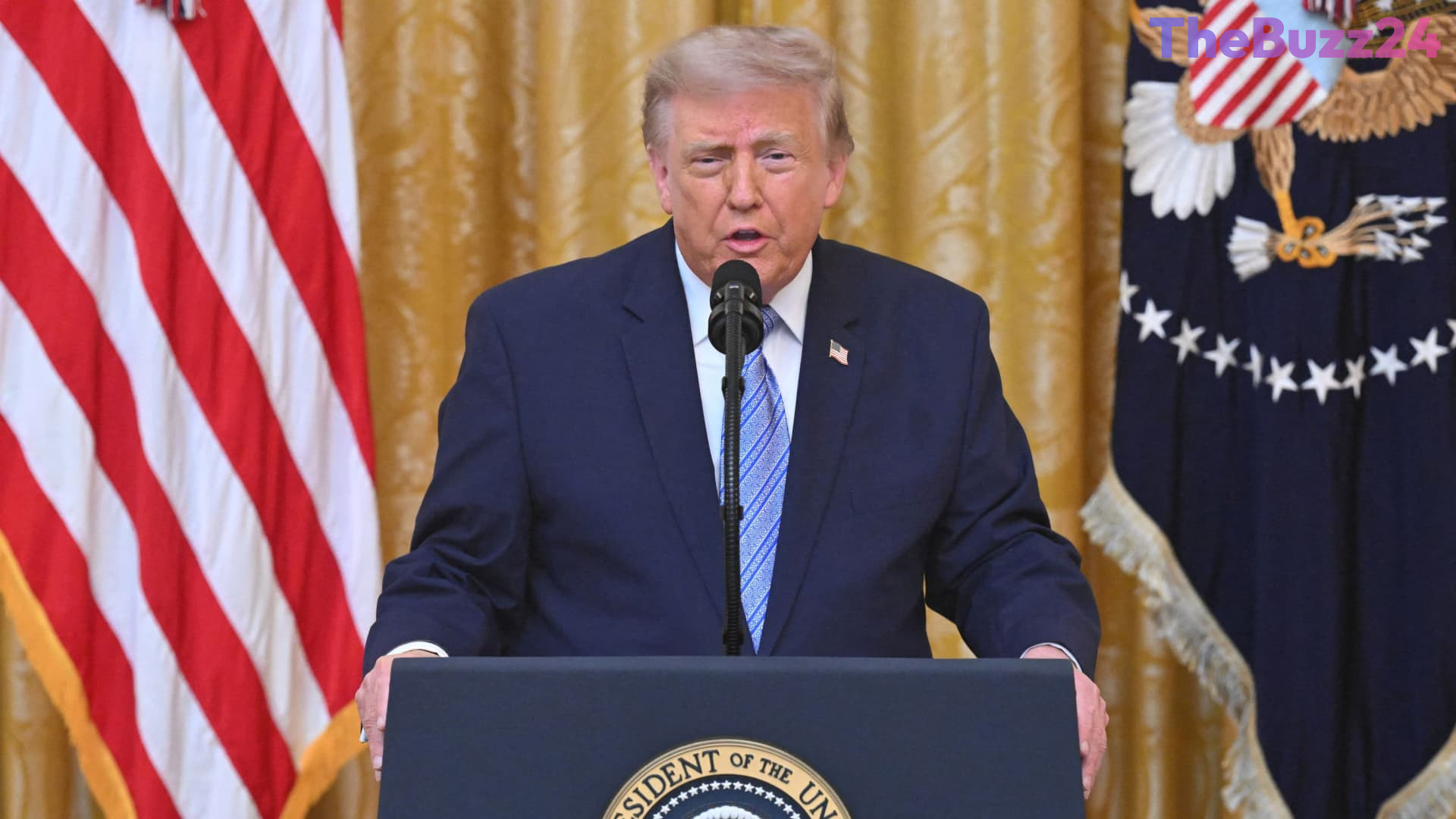
Trump Renews Allegations of Foreign Interference in 2020 Election During Primetime Address
In a recent primetime national address, Donald Trump raised significant questions regarding the integrity of United States election systems, specifically alleging that China engaged in widespread meddling during the 2020 election cycle. Trump cited newly declassified intelligence documents as evidence of vulnerabilities within the nation’s electoral infrastructure, claiming that these files demonstrate an illicit acquisition of millions of voter records by foreign actors. These assertions are part of a broader effort by the former president to highlight perceived security flaws and advocate for stricter voting regulations.
Central to Trump’s legislative agenda is the proposed ‘SAVE America Act,’ a bill that would mandate photo identification for voters and require proof of citizenship for registration. Trump has positioned this legislation as a top priority, even going so far as to withhold support for other government measures until the bill is addressed. Supporters argue these steps are necessary to ensure election security, while critics contend that such requirements could disenfranchise vulnerable populations, including low-income voters and people of color.
Despite these claims, official assessments from the U.S. intelligence community have previously concluded that China did not deploy efforts to alter the outcome of the 2020 presidential election, nor did they interfere with vote tabulation or the transmission of results. Furthermore, while Trump pointed to Department of Homeland Security data regarding non-citizen voter registrations, federal law already prohibits non-citizens from voting in federal elections, and documented instances of such activity remain statistically rare. As the political landscape shifts toward the upcoming midterm elections, these debates over election administration continue to serve as a primary point of contention between the major political parties.
Key Takeaways
- Donald Trump alleged that China engaged in extensive meddling and data acquisition during the 2020 election cycle.
- The former president is pushing for the 'SAVE America Act,' which would mandate stricter voter ID and citizenship verification requirements.
- Official U.S. intelligence assessments have previously contradicted claims that foreign interference altered the 2020 election results.
Editor’s Analysis & Impact
The rhetoric surrounding election integrity continues to be a defining feature of the current American political climate, creating a polarized environment that impacts legislative priorities and public trust. By focusing on the ‘SAVE America Act,’ Trump is effectively leveraging election security as a wedge issue to mobilize his base ahead of the midterms. From a market and industry perspective, this ongoing instability creates uncertainty for institutional stakeholders who rely on predictable governance and stable democratic processes. The broader implication is a sustained period of legislative gridlock, as the focus shifts from economic or infrastructure policy to procedural battles over voting rights. Future outlooks suggest that until there is a bipartisan consensus on election administration, these claims will continue to influence voter turnout, campaign strategies, and the overall perception of democratic legitimacy in the United States.
Frequently Asked Questions
Q: What is the primary goal of the 'SAVE America Act'?
A: The proposed legislation aims to tighten election security by requiring photo identification for voters and proof of citizenship for voter registration.
Q: Have U.S. intelligence agencies confirmed Chinese interference in the 2020 election?
A: No. Official intelligence assessments have concluded that while China considered influence efforts, they did not deploy interference to change the election outcome or tamper with vote tabulation.
AI Disclosure: This article is based on verified data and official reports. Our Team and AI have cross-referenced every financial detail with primary sources to ensure total accuracy.
More from this Category