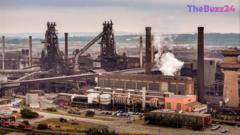
UK Nationalizes British Steel, Drawing Strong Condemnation from Beijing
The United Kingdom government has moved to nationalize British Steel, a decision that has sparked a sharp rebuke from China. Beijing expressed its firm opposition and strong dissatisfaction with the UK’s action, which it claims infringes upon the rights of Chinese investors.
The UK government justified its decision by stating that taking the loss-making firm into public hands would protect thousands of jobs and safeguard a “vital national capability.” This move follows the UK taking control of British Steel’s operations in Scunthorpe last year, despite the company still being owned by China’s Jingye Group. China’s commerce ministry asserted that the nationalization “seriously infringed upon Jingye’s legitimate rights and interests and severely undermined the confidence of Chinese companies investing in the UK,” urging Britain to uphold its commitments under the China–UK Bilateral Investment Treaty.
British Steel, which was reportedly losing £700,000 daily under Jingye’s ownership, now costs the UK government approximately £1.3 million per day to run. The nationalization aims to maintain the production of specific steel types essential for Network Rail and the construction industry, which are not yet manufactured elsewhere in the country. This prevents the UK from becoming the only G7 nation unable to produce virgin steel and avoids over-reliance on imports. While the government’s long-term strategy involves transitioning to more cost-effective and environmentally friendly electric arc furnaces, it seeks to maintain current blast furnace output in the interim.
This decision is poised to strain relations between London and Beijing, presenting an early foreign policy challenge for incoming Prime Minister Andy Burnham. The new leadership will need to carefully balance diplomatic tensions with the economic benefits of maintaining ties with the world’s second-largest economy. Historically, British Steel was last under state ownership until its privatization in 1988 by Margaret Thatcher’s government, highlighting the cyclical nature of state intervention in critical industries.
Key Takeaways
- The UK government nationalized British Steel to protect jobs and a vital national capability, despite its previous ownership by China's Jingye Group.
- China's commerce ministry strongly condemned the move, citing infringement on Jingye's legitimate rights and undermining Chinese investment confidence in the UK.
- The nationalization, costing the UK government significant daily sums, aims to maintain unique steel production crucial for infrastructure and avoid over-reliance on imports, but strains UK-China relations.
Editor’s Analysis & Impact
The nationalization of British Steel represents a significant intervention by the UK government, prioritizing national strategic interests and job preservation over market forces. While it offers short-term stability for the steelworks and its employees, it places a substantial financial burden on taxpayers, with daily operating costs exceeding £1 million. The long-term outlook will likely involve the government seeking a new private buyer, potentially one aligned with its green industrial strategy, focusing on a transition to Electric Arc Furnaces. Broader implications include a notable diplomatic rift with China, potentially deterring future Chinese investment in the UK and challenging the sanctity of bilateral investment treaties. This move sets a precedent for how critical industries might be managed in an era of geopolitical competition and economic uncertainty, posing an immediate foreign policy test for the incoming UK leadership.
Frequently Asked Questions
Q: Why did the UK government nationalize British Steel?
A: The UK government nationalized British Steel primarily to safeguard approximately 2,700 direct jobs, protect a vital national industrial capability, and ensure the continued production of specialized steel types crucial for infrastructure projects like Network Rail, which are not yet produced elsewhere in the UK.
Q: What is China's reaction to the nationalization?
A: China's commerce ministry has expressed strong opposition and dissatisfaction, stating that the move "seriously infringed upon Jingye's legitimate rights and interests" and "severely undermined the confidence of Chinese companies investing in the UK." Beijing also called on Britain to uphold its obligations under the China–UK Bilateral Investment Treaty.
Q: What are the financial implications of the nationalization for the UK?
A: The nationalization is a significant financial undertaking for the UK government, with the Scunthorpe steelworks reportedly costing around £1.3 million per day to operate. While the government intends to cover these running costs for the immediate future, it is unlikely to be a long-term solution, and a future private buyer will likely be sought.
AI Disclosure: This article is based on verified data and official reports. Our Team and AI have cross-referenced every financial detail with primary sources to ensure total accuracy.
More from this Category