NASA Pushes Experimental Truss-Braced Wing to Structural Breaking Point
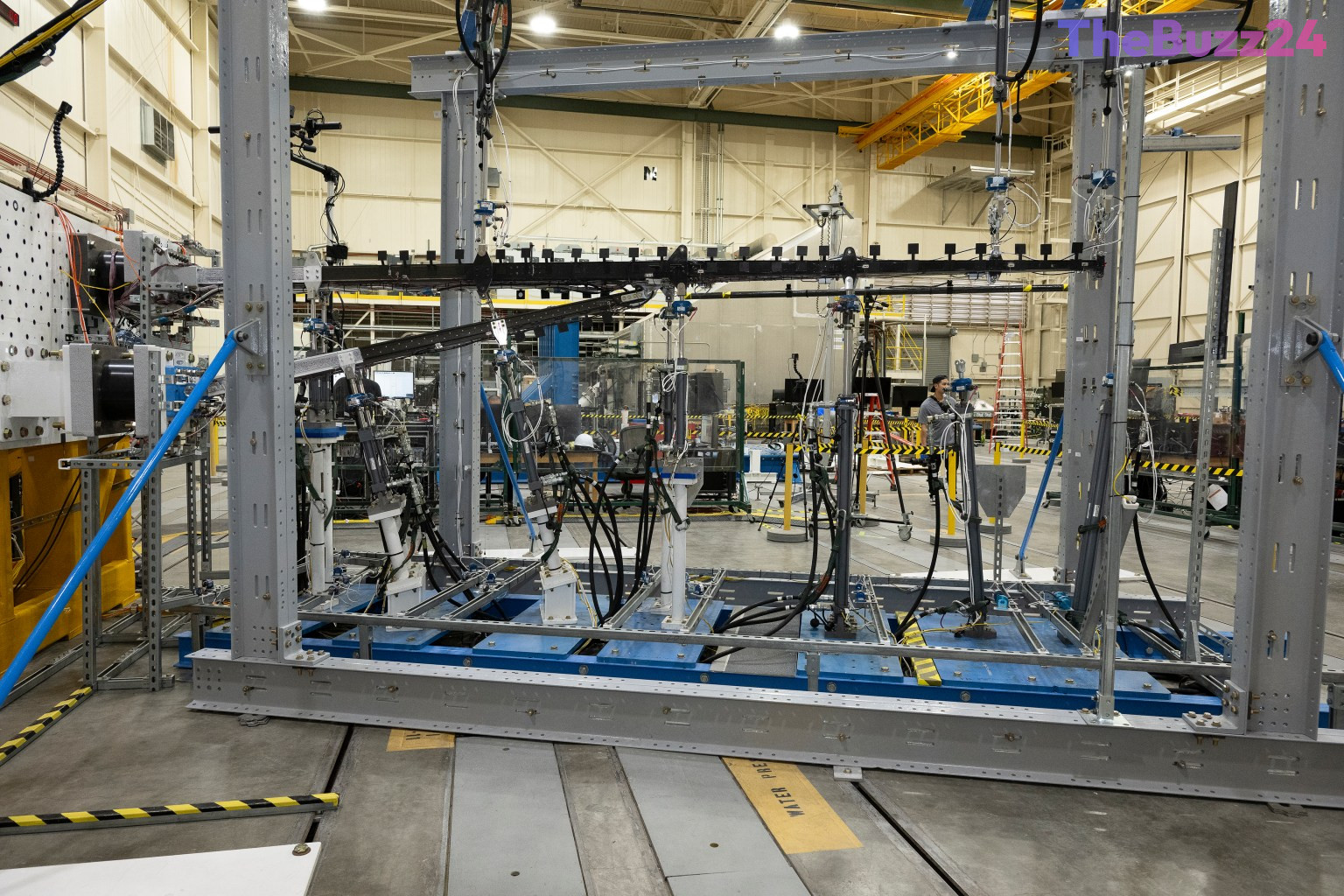
Engineers have successfully completed a rigorous series of stress tests on a new, ultra-thin wing design, marking a significant milestone in the development of next-generation, fuel-efficient aircraft. The 15-foot test article, known as the Structural Wing Experiment Evaluating Truss-bracing (SWEET-15), was subjected to extreme force loads at the Flight Loads Laboratory in California to determine its durability and structural integrity under flight conditions.
The wing design utilizes a long, slender profile supported by an aerodynamic strut, a configuration derived from the Transonic Truss-Braced Wing concept. To construct the model, researchers integrated five advanced composite manufacturing technologies, including a specialized robotic assembly process designed to create lighter, stronger aerospace components. Throughout the testing phase, the structure was monitored by an array of fiber-optic strain sensors, which validated the accuracy of initial computer simulations regarding how the wing handles in-flight stress.
In the final stage of the evaluation, the team intentionally pushed the wing beyond its design limits to observe its failure point. The structure held firm until reaching 127% of its intended load capacity, providing researchers with critical data on how joints and struts behave under catastrophic stress. This successful test-to-failure provides a roadmap for future airframe designs, confirming that the new manufacturing methods are viable for creating more efficient, high-performance aircraft in the coming years.
Key Takeaways
- The SWEET-15 wing design successfully withstood 127% of its intended design load before failing, exceeding performance expectations.
- The project utilized advanced composite manufacturing and robotic assembly to create a structure that is both lightweight and highly durable.
- Data gathered from this test-to-failure will directly inform the development of future ultra-efficient commercial aircraft.
Editor’s Analysis & Impact
The successful testing of the SWEET-15 wing represents a pivotal step toward the ‘greening’ of the aviation industry. By validating the structural viability of truss-braced wings, researchers are moving closer to aircraft designs that significantly reduce fuel consumption through improved aerodynamics and reduced weight. The use of advanced composite manufacturing and fiber-optic sensing highlights a broader industry shift toward digital-twin validation and automated assembly, which are essential for scaling next-generation aerospace technologies. As the industry faces increasing pressure to lower carbon emissions, these structural breakthroughs provide a tangible path toward more sustainable subsonic flight. The ability to accurately predict failure points through these tests reduces the risk for future full-scale demonstrators, likely accelerating the timeline for commercial adoption of these efficient wing configurations.
Frequently Asked Questions
Q: What is the primary goal of the SWEET-15 wing project?
A: The project aims to develop and test ultra-efficient wing designs that use lightweight composite materials and truss-bracing to help commercial airliners significantly reduce fuel consumption.
Q: Why did engineers intentionally break the wing during testing?
A: By pushing the wing to 127% of its design limit, engineers were able to observe exactly how and where the structure fails, providing vital data on the behavior of joints and struts under extreme stress.
AI Disclosure: This article is based on verified data and official reports. Our Team and AI have cross-referenced every financial detail with primary sources to ensure total accuracy.
More from this Category