NASA Opens Media Accreditation for Upcoming Nancy Grace Roman Space Telescope Launch
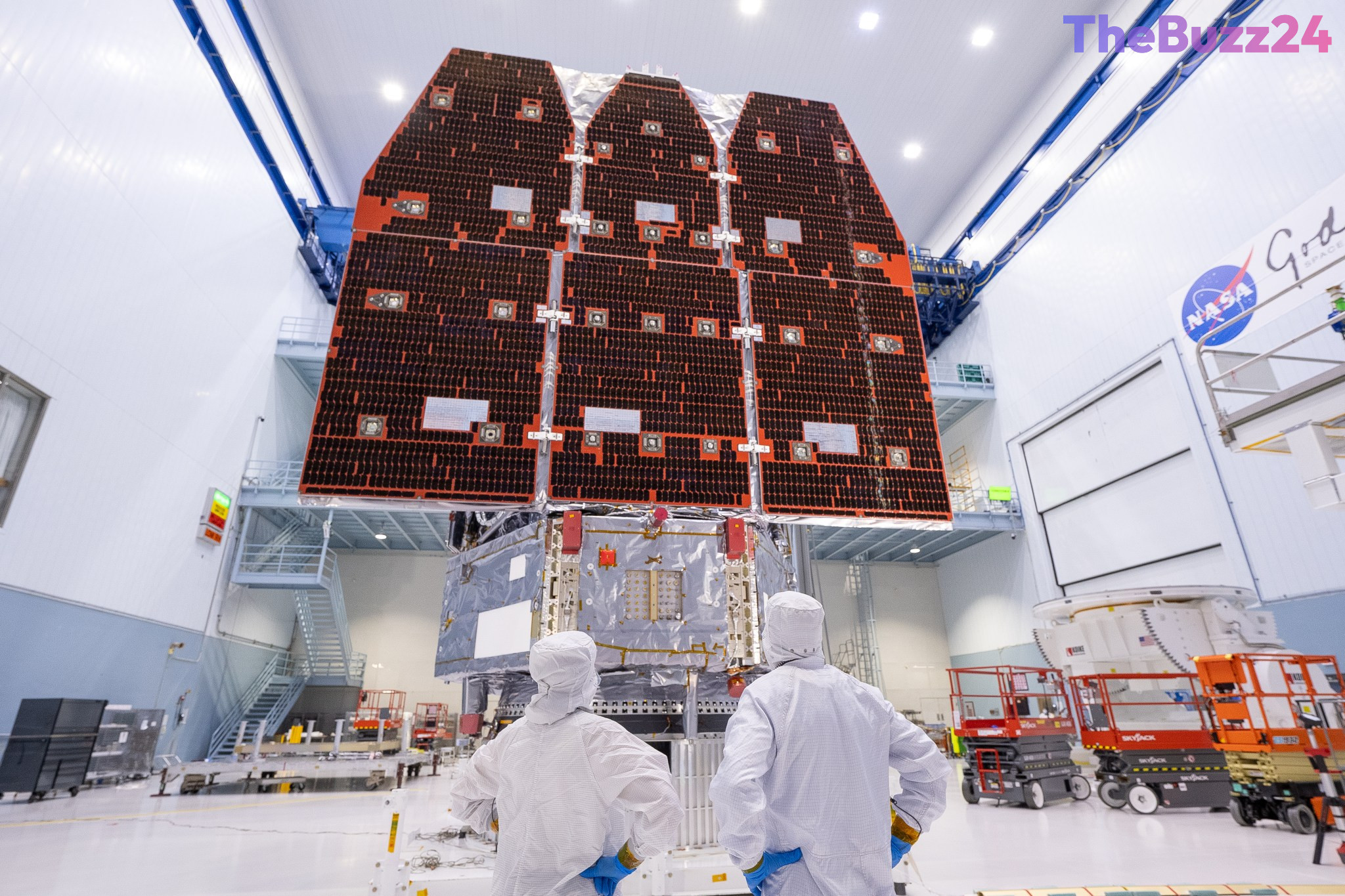
NASA has officially opened the media accreditation process for the highly anticipated launch of the Nancy Grace Roman Space Telescope. The mission is currently scheduled to lift off no earlier than 7:20 a.m. ET on Sunday, August 30, utilizing a SpaceX Falcon Heavy rocket departing from Launch Complex 39A at the Kennedy Space Center in Florida.
Named in honor of the agency’s first chief astronomer, the Roman Space Telescope is designed to provide unprecedented, wide-field views of the cosmos. By capturing expansive images of the universe, the observatory aims to deepen scientific understanding of dark matter, dark energy, and the distribution of exoplanets. Its capabilities will allow researchers to study celestial objects ranging from those within our own solar system to galaxies located at the very edges of the observable universe.
Journalists and media organizations wishing to cover the launch in person must adhere to strict application deadlines. International media representatives without U.S. citizenship are required to submit their credentials by 11:59 p.m. on July 26. Meanwhile, U.S.-based media and American citizens representing international outlets have until 11:59 p.m. on July 30 to complete their registration. All applications must be processed through the official NASA media portal.
Key Takeaways
- The Nancy Grace Roman Space Telescope is scheduled to launch on August 30 via a SpaceX Falcon Heavy rocket.
- The mission aims to revolutionize cosmology by studying dark matter, dark energy, and exoplanets with wide-field imaging.
- Media accreditation deadlines are set for July 26 for international applicants and July 30 for U.S.-based applicants.
Editor’s Analysis & Impact
The launch of the Nancy Grace Roman Space Telescope represents a significant milestone in modern astrophysics, positioning it as a successor to the legacy of the Hubble and James Webb observatories. By focusing on wide-field infrared surveys, the Roman mission is uniquely equipped to map the large-scale structure of the universe, providing critical data to solve the mysteries of dark energy—a force that continues to accelerate the expansion of the cosmos. From an industry perspective, the reliance on the SpaceX Falcon Heavy underscores the continued integration of commercial launch providers into high-stakes scientific exploration. The success of this mission will likely dictate the trajectory of future deep-space survey projects and provide a wealth of data that will occupy the global scientific community for decades to come.
Frequently Asked Questions
Q: What is the primary scientific goal of the Nancy Grace Roman Space Telescope?
A: The telescope is designed to explore dark matter, dark energy, and exoplanets, providing a wide-field view of the universe to help scientists understand its composition and evolution.
Q: How can media representatives apply for launch coverage?
A: Media representatives must submit their accreditation applications online through the official NASA media portal at media.ksc.nasa.gov before the specified July deadlines.
AI Disclosure: This article is based on verified data and official reports. Our Team and AI have cross-referenced every financial detail with primary sources to ensure total accuracy.
More from this Category