US Escalates Strikes on Iran as Ceasefire Collapses
The United States military has conducted strikes on Iran for a seventh consecutive night, following President Donald Trump’s declaration that a temporary ceasefire agreement was no longer in effect. U.S. Central Command (Centcom) confirmed that its forces targeted a range of Iranian military assets, including surveillance sites, logistics infrastructure, underground weapons depots, and maritime capabilities.
In response to the U.S. actions, Iran reportedly targeted U.S. allies in the region. Kuwait’s Ministry of Electricity and Water stated that one of its power and water distillation plants was hit by a “hostile attack,” causing a fire and disrupting power generation. Jordan’s military also reported intercepting 10 Iranian missiles fired into its airspace, though no damage was sustained. Bahrain similarly announced that its air defenses had thwarted Iranian attacks.
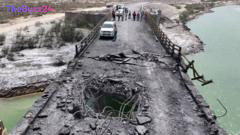
Centcom reported that its operations, which involved fighter aircraft, drones, and warships, concluded after several hours. Explosions were reportedly heard in several Iranian locations, including the central city of Yazd and the port of Bandar Abbas near the Strait of Hormuz. The U.S. military has also refuted Iranian claims of attacks on civilian infrastructure, such as bridges and airports, asserting that all strikes were exclusively on military targets. Footage verified by news outlets shows damage to the Gariveh Bridge, with provincial authorities reporting seven fatalities in the affected region. The U.S. also stated it destroyed an IRGC maritime surveillance control tower in Chabahar port.
The recent escalation follows the collapse of a ceasefire agreement brokered in June to facilitate peace talks. While the ceasefire was largely observed, Iran’s actions against oil tankers in the Strait of Hormuz, demanding ships seek authorization to pass, preceded renewed U.S. strikes. Talks reportedly stalled, leading to Trump’s decision to end the ceasefire. The U.S. has since reimposed a naval blockade on Iranian ports, and Iran has declared the Strait closed to shipping, raising concerns about global energy supplies as a significant portion of the world’s oil and LNG transits through the waterway.
Key Takeaways
- The U.S. has carried out seven consecutive nights of strikes against Iran following the collapse of a ceasefire agreement.
- Iran has retaliated by targeting U.S. allies, including facilities in Kuwait and missiles fired into Jordan.
- The ongoing conflict raises significant concerns for global energy security due to the strategic importance of the Strait of Hormuz.
Editor’s Analysis & Impact
The recent military escalation between the U.S. and Iran marks a significant deterioration of regional stability, directly impacting global energy markets. The closure of the Strait of Hormuz, a critical chokepoint for oil and gas transport, poses a substantial risk of supply disruptions and price volatility. This breakdown in diplomatic efforts, evidenced by the failed ceasefire, suggests a prolonged period of heightened tension. The broader implications include potential for wider regional conflict, increased defense spending, and a renewed focus on alternative energy routes and sources. The effectiveness and long-term consequences of the U.S. strikes, alongside Iran’s retaliatory actions, will be closely watched by international powers and market participants alike.
Frequently Asked Questions
Q: What led to the recent U.S. strikes on Iran?
A: The U.S. military initiated strikes after President Donald Trump declared a temporary ceasefire agreement with Iran to be over, following Iran's actions against oil tankers and stalled peace talks.
Q: What is the significance of the Strait of Hormuz?
A: The Strait of Hormuz is a vital maritime chokepoint through which approximately one-fifth of the world's oil and liquefied natural gas is transported. Its closure or disruption has significant implications for global energy supplies and prices.
Q: Did Iran retaliate against U.S. allies?
A: Yes, Iran reportedly targeted U.S. allies in the region. Kuwait reported a hostile attack on a power and water plant, and Jordan's military intercepted Iranian missiles fired into its airspace.
AI Disclosure: This article is based on verified data and official reports. Our Team and AI have cross-referenced every financial detail with primary sources to ensure total accuracy.
More from this Category