Political Crossroads: Alabama’s Redrawn Districts Spark Battle Over Representation and Federal Funding
In the rural city of Tuskegee, Alabama, the absence of basic healthcare infrastructure has turned the local fire department into a makeshift emergency clinic. For residents like 19-year-old student De’Mari Benham, who was forced to forgo medical treatment for a severe injury due to a lack of funds and distance to the nearest hospital, the struggle for resources is a daily reality. This environment of scarcity has made federal representation a critical lifeline for the community, which has long suffered from systemic poverty and a lack of essential services.
When Shomari Figures was elected to the US House of Representatives in 2024, he became the first Black person to represent Tuskegee in modern history. His tenure brought immediate, tangible results, including securing $1 million in federal funding for a new civic center designed to house emergency services and provide shelter during severe weather. Similarly, in the nearby town of Eufaula, Figures helped secure $500,000 for a new MRI machine at the local medical center, a facility that had previously struggled to provide basic diagnostic care to its residents.
However, these gains are now under threat following a recent Supreme Court ruling that has made it significantly more difficult to challenge congressional maps based on racial discrimination. The decision has allowed Alabama’s Republican-led legislature to redraw district lines, effectively dissolving the majority-Black district that enabled Figures’ election. As the state shifts toward a new map that favors a white-majority electorate, local officials and residents fear that the loss of a representative who prioritizes their specific needs will lead to a decline in the federal support that has become vital to their survival.
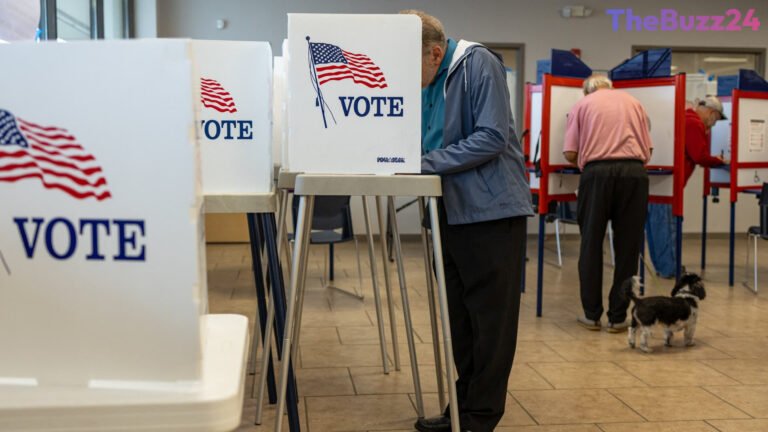
As the midterm elections approach, the political landscape in Alabama remains deeply polarized. While Republican candidates argue that redistricting is a matter of partisan strategy rather than racial exclusion, civil rights advocates and local leaders maintain that the move is a direct attempt to dilute the voting power of Black Alabamians. For the residents of the Black Belt, the upcoming election is not merely a contest between political parties, but a fight to maintain a voice in a system that they feel is increasingly designed to exclude them.
Key Takeaways
- A recent Supreme Court ruling has enabled Alabama to redraw congressional maps, potentially diluting the voting power of Black communities in the state.
- Representative Shomari Figures had successfully secured significant federal funding for essential infrastructure, including emergency services and medical equipment, for underserved Alabama districts.
- Local residents and officials fear that the redrawing of districts will result in the loss of a representative who advocates for their specific needs, threatening the future of critical community projects.
Editor’s Analysis & Impact
The situation in Alabama serves as a microcosm for the broader national debate regarding the intersection of partisan redistricting and the Voting Rights Act. By shifting the legal burden of proof, the Supreme Court has effectively signaled a retreat from federal oversight in state-level electoral mapping. The economic implications for rural, minority-majority districts are profound; when representation is tied to federal grant acquisition, the loss of a sympathetic legislator can result in a direct withdrawal of capital from already impoverished areas. Moving forward, we can expect a continued trend of ‘partisan gerrymandering’ being used as a shield for racial dilution, leading to increased litigation and further erosion of trust in democratic institutions. The outcome of these district battles will likely dictate the legislative priorities of the South for the next decade, potentially widening the gap between urban and rural resource allocation.
Frequently Asked Questions
Q: Why is the redrawing of Alabama's congressional map controversial?
A: Critics argue the new map is racially motivated and designed to dilute the voting power of Black residents by breaking up majority-Black districts, while proponents claim it is a race-neutral, partisan political strategy.
Q: How does congressional representation impact local infrastructure in Alabama?
A: Many rural Alabama communities rely heavily on federal funding secured by their representatives to build essential infrastructure, such as emergency centers and medical facilities, which are otherwise unavailable due to local poverty and lack of tax revenue.
AI Disclosure: This article is based on verified data and official reports. Our Team and AI have cross-referenced every financial detail with primary sources to ensure total accuracy.
More from this Category