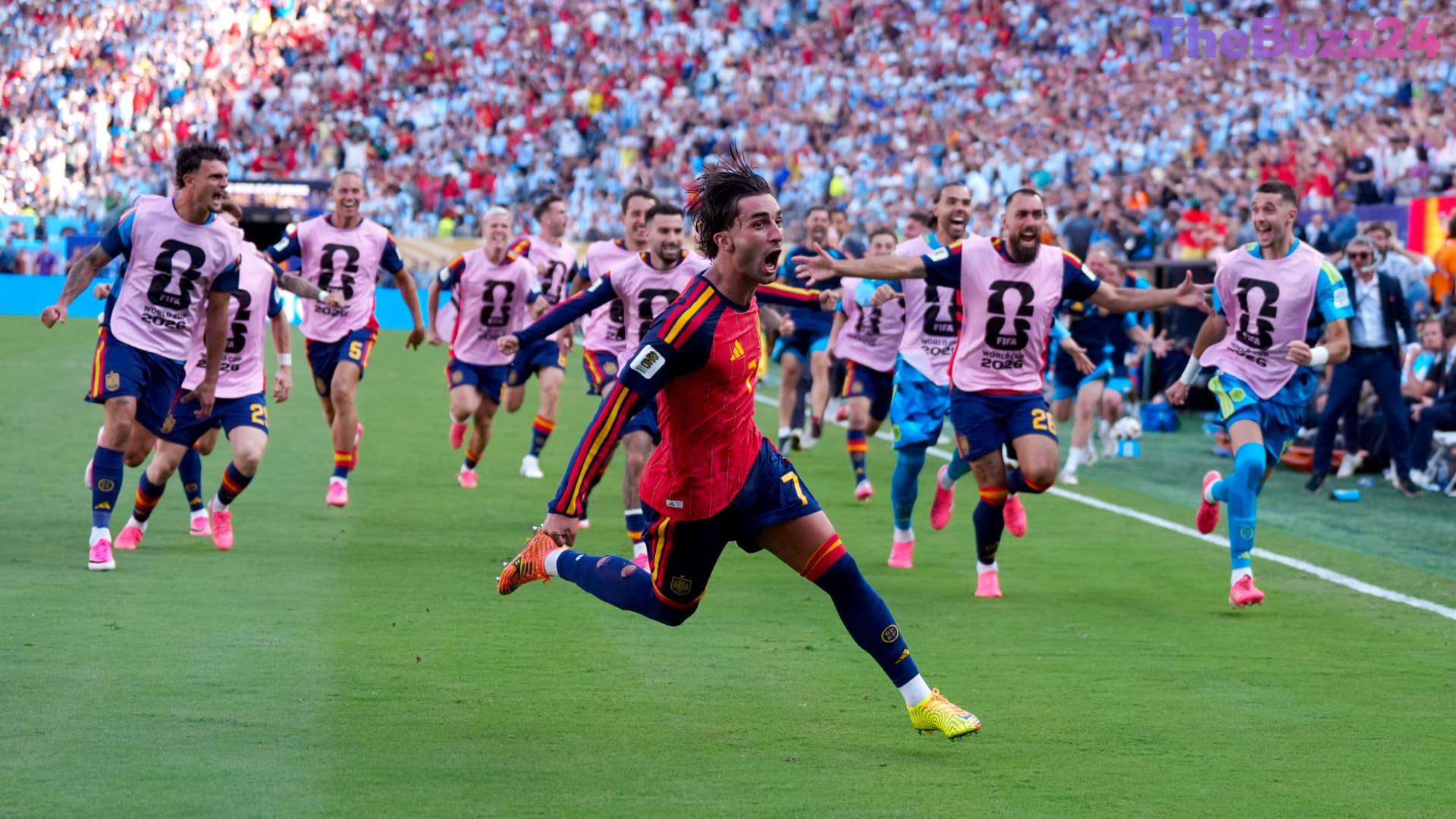
Spain Claims World Cup Glory in Historic Extra-Time Victory Over Argentina
Spain has ascended to the pinnacle of international soccer, securing its second World Cup title with a hard-fought 1-0 victory over Argentina. The decisive moment arrived in the 106th minute when substitute Ferran Torres capitalized on a loose ball in the penalty area, firing a precise strike into the back of the net. The win marks a historic milestone for Spain, which now holds the distinction of being the first nation to simultaneously possess both the men’s and women’s World Cup trophies.
Throughout the tournament, Spain demonstrated defensive excellence, conceding only a single goal across eight matches—a new record for a championship team. Despite Argentina’s desperate attempts to equalize, including a heroic 12-save performance by goalkeeper Emiliano Martinez, Spain maintained tactical control for the duration of the match. The victory extends Spain’s unbeaten streak to 38 matches, establishing a new record for European teams and cementing their status as the current dominant force in global football.
For Argentina, the loss marked a bittersweet conclusion to the international career of Lionel Messi. In what is widely expected to be his final World Cup appearance, the legendary forward was visibly emotional as his team fell just short of a repeat title. The match, which saw Argentina reduced to 10 men following a late red card for Enzo Fernandez, was attended by a star-studded crowd and millions of viewers worldwide, serving as the grand finale to a record-breaking 48-team tournament hosted across North America.
Key Takeaways
- Spain secured its second men's World Cup title, becoming the first nation to hold both the men's and women's trophies simultaneously.
- Ferran Torres scored the game-winning goal in the 106th minute, ending Argentina's hopes of a back-to-back championship.
- Spain set a new tournament record for defensive efficiency, allowing only one goal throughout their entire campaign.
Editor’s Analysis & Impact
Spain’s victory represents a paradigm shift in international football, moving away from individual-centric play toward a system of total ball retention and defensive discipline. By successfully neutralizing Lionel Messi and the high-octane Argentine attack, Spain has validated the efficacy of their tactical approach on the world’s biggest stage. The broader implication for the sport is a potential shift in coaching philosophies, as teams look to emulate Spain’s record-breaking defensive consistency. Furthermore, the simultaneous holding of both men’s and women’s titles provides a massive commercial and cultural boost to the Spanish football federation, likely leading to increased investment in youth development and infrastructure. As the Messi era concludes, the global market for football talent will likely see a transition toward younger, tactically versatile squads that prioritize collective structure over reliance on a single superstar.
Frequently Asked Questions
Q: How many World Cup titles does Spain now have?
A: Spain has won two men's World Cup titles, with their first victory occurring in 2010 and their second in this tournament.
Q: Did Argentina finish the match with a full squad?
A: No, Argentina finished the match with 10 players after Enzo Fernandez was issued a second yellow card in the second half of extra time.
AI Disclosure: This article is based on verified data and official reports. Our Team and AI have cross-referenced every financial detail with primary sources to ensure total accuracy.
More from this Category