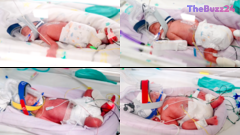
Medical Miracle: Rare Identical Quadruplets Born in Australia
A 34-year-old mother in Australia has defied staggering medical odds by giving birth to naturally conceived identical quadruplets. The four girls, delivered via caesarean section at 28 weeks and four days, represent a biological phenomenon so rare that medical experts estimate the occurrence at approximately one in 15 million pregnancies. The infants, who shared a single placenta, were delivered at the Royal Brisbane and Women’s Hospital.
Jenitar Na’amoana and her husband, Jortham, were already parents to four children when they received the unexpected news of the quadruplets. Due to the extreme risks associated with such a pregnancy, Na’amoana was admitted to the hospital at 25 weeks for constant monitoring. Dr. Alexa Bendall, the maternal-fetal medicine specialist who oversaw the pregnancy, noted that the mother managed to avoid major complications throughout the process, allowing the team to reach their target delivery milestone of 28 weeks.
The newborns—named Emily, Harriet, Catherine, and Alexa—are currently thriving in the hospital’s neonatal intensive care unit. The fourth child was named in honor of Dr. Bendall, who provided care throughout the journey. As the family prepares to welcome the infants home, they have launched a fundraising campaign to secure a larger vehicle capable of accommodating their now eight-child household, a goal that has already garnered significant community support.
Key Takeaways
- A mother in Australia successfully delivered naturally conceived identical quadruplets, a rarity estimated at one in 15 million cases.
- The infants were born at 28 weeks and are currently receiving specialized care in the hospital's neonatal unit.
- The family has launched a fundraising initiative to manage the logistical challenges of raising eight children.
Editor’s Analysis & Impact
This case highlights the intersection of extreme biological rarity and advanced maternal-fetal medicine. While naturally conceived quadruplets are statistically improbable, the successful outcome underscores the critical importance of proactive inpatient monitoring in high-risk pregnancies. From a broader perspective, such stories often trigger public interest in the financial and logistical realities of large-scale family expansion, as evidenced by the rapid success of the family’s fundraising efforts. In the medical community, this case serves as a significant data point for obstetricians studying monozygotic multiples, particularly regarding the management of shared-placenta pregnancies. The future outlook for the infants remains positive, provided they continue to meet developmental milestones within the neonatal care environment.
Frequently Asked Questions
Q: How rare are identical quadruplets?
A: Identical quadruplets are extremely rare, with medical experts estimating the odds of such a pregnancy at approximately one in 15 million.
Q: Why was the pregnancy considered high-risk?
A: The pregnancy was classified as high-risk because the four fetuses shared a single placenta, which increases the likelihood of complications for both the mother and the infants.
AI Disclosure: This article is based on verified data and official reports. Our Team and AI have cross-referenced every financial detail with primary sources to ensure total accuracy.
More from this Category