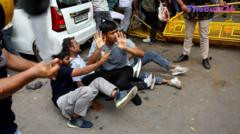
India’s Youth-Led ‘Cockroach’ Movement Challenges Government Over Education Crisis
Tens of thousands of young protesters have descended upon Delhi, marking one of the most significant demonstrations against the current administration in recent years. The movement, known as the Cockroach Janta Party (CJP), has evolved from a satirical online initiative into a potent political force, demanding systemic reform of India’s education sector and the resignation of Education Minister Dharmendra Pradhan.
The movement gained momentum following widespread outrage over the handling of the National Eligibility cum Entrance Test (NEET), the country’s primary medical college entrance exam. After allegations of paper leaks led to the cancellation of the exam for over 2.2 million students, frustration boiled over. The situation intensified further when activist Sonam Wangchuk, who had been on a 20-day hunger strike in support of the movement, was forcibly removed by authorities, sparking additional protests and calls for Prime Minister Narendra Modi to step down.
The group’s unique name serves as a pointed critique of the political establishment. It was adopted after Chief Justice Surya Kant allegedly compared unemployed youth to ‘cockroaches’ and ‘parasites’ during a court hearing, a remark that ignited a firestorm of resentment among India’s Gen Z population. By embracing the label, protesters have effectively turned a derogatory comment into a symbol of defiance, with many attending demonstrations dressed in cockroach costumes to highlight their grievances.
While the government has faced pressure from opposition leaders who have labeled the police response to the students as an ‘attack on democracy,’ the long-term impact of the CJP remains to be seen. The movement has successfully bridged the gap between digital activism and physical protest, drawing support from various political figures and forcing a national conversation on accountability, exam integrity, and the future of India’s youth.
Key Takeaways
- The Cockroach Janta Party (CJP) has emerged as a major youth-led protest movement in Delhi, demanding education reform and the resignation of top officials.
- The movement was triggered by systemic failures in the NEET medical entrance exam, including widespread allegations of paper leaks and exam cancellations.
- The group's name is a satirical response to derogatory remarks made by a high-ranking judicial official, which the youth have reclaimed as a symbol of their political resistance.
Editor’s Analysis & Impact
The rise of the Cockroach Janta Party represents a significant shift in Indian political engagement, signaling that digital-native generations are increasingly willing to translate online sentiment into sustained, physical street activism. The movement highlights a growing disconnect between the government’s administrative policies and the aspirations of India’s massive youth demographic. By focusing on the integrity of competitive exams—a high-stakes issue for millions of families—the CJP has tapped into a deep-seated vein of economic and social anxiety. If the government fails to address these structural concerns regarding educational accountability, this movement could serve as a blueprint for future grassroots challenges to established political power. The involvement of opposition figures suggests that the CJP is becoming a focal point for broader anti-incumbency sentiment, potentially complicating the political landscape in upcoming election cycles.
Frequently Asked Questions
Q: What is the primary goal of the Cockroach Janta Party?
A: The CJP is primarily demanding an overhaul of India's education system, greater accountability for exam paper leaks, and the resignation of the Education Minister.
Q: Why is the movement called the 'Cockroach' party?
A: The name is a satirical response to comments made by Chief Justice Surya Kant, who allegedly compared unemployed youth to cockroaches and parasites during a legal hearing.
AI Disclosure: This article is based on verified data and official reports. Our Team and AI have cross-referenced every financial detail with primary sources to ensure total accuracy.
More from this Category