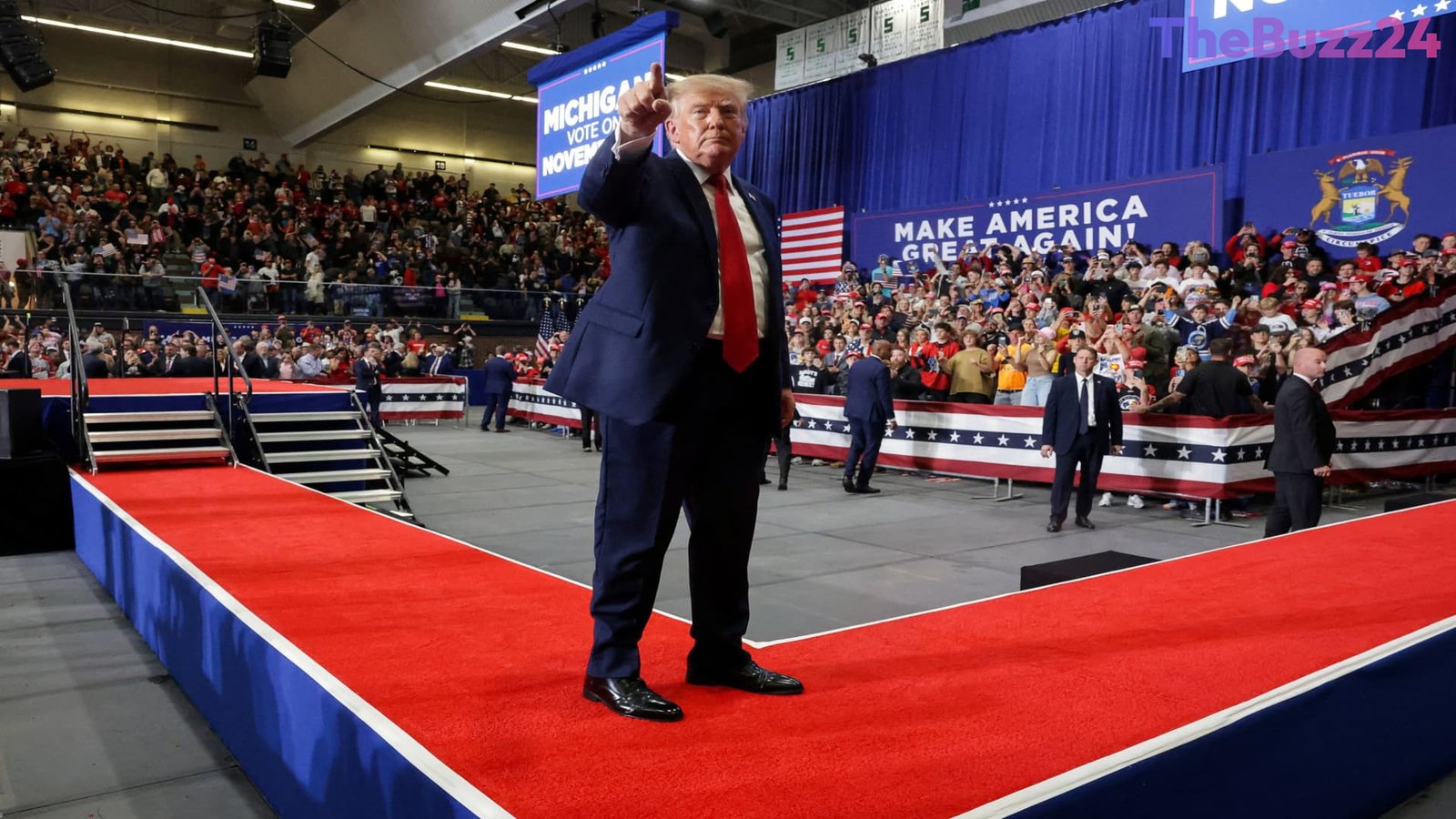
Political Tensions Escalate in Michigan Senate Race Amid Rhetorical Attacks
The Michigan U.S. Senate race has intensified as high-profile political figures trade sharp accusations, bringing national attention to the state’s pivotal role in the upcoming midterm elections. During a recent campaign event in Port Huron, Donald Trump leveled severe criticisms against Democratic candidate Abdul El-Sayed, attempting to link the candidate to extremist ideologies. Trump’s rhetoric included controversial comparisons between the candidate and the hijackers involved in the September 11, 2001, terrorist attacks, framing the election as a critical moment for voters to prevent a perceived threat from entering the U.S. Capitol.
El-Sayed, who would become the first Muslim elected to the U.S. Senate if successful, has consistently rejected these characterizations as baseless and shameful. His opponent, Republican Mike Rogers, has echoed concerns regarding El-Sayed’s alleged affiliations, though he has provided no concrete evidence to support claims of ties to the Muslim Brotherhood. El-Sayed has countered these narratives by emphasizing his commitment to his faith and his loyalty to the United States, suggesting that such attacks are designed to distract from substantive policy debates.
The broader political landscape in Michigan remains highly competitive, with both parties viewing the state as essential to securing control of Congress. Former President Barack Obama recently campaigned in Detroit to support Democratic candidates, characterizing the attacks against El-Sayed as a familiar, divisive tactic intended to undermine a candidate’s patriotism. As the election approaches, the discourse continues to be shaped by these intense personal clashes, alongside significant regional concerns regarding manufacturing investments and trade policies impacting the local automotive industry.
Key Takeaways
- Donald Trump has intensified his rhetoric against Michigan Senate candidate Abdul El-Sayed, invoking 9/11 imagery to question his suitability for office.
- Abdul El-Sayed has dismissed allegations of extremist ties as shameful, while Republican opponent Mike Rogers continues to question the candidate's associations.
- The Michigan Senate race is considered a critical battleground that could determine the balance of power in the U.S. Senate.
Editor’s Analysis & Impact
The rhetoric employed in the Michigan Senate race highlights a growing trend of identity-based political warfare that prioritizes character assassination over policy discourse. By invoking national security fears and historical trauma, candidates are attempting to mobilize their respective bases in a high-stakes environment where control of the Senate hangs in the balance. This strategy carries significant long-term implications for political polarization, as it risks alienating diverse voter demographics and eroding trust in the electoral process. The focus on such inflammatory narratives suggests that the final days of the campaign will likely remain volatile, with both parties doubling down on divisive messaging to secure the narrow margins required for a legislative majority. The outcome will serve as a bellwether for how effectively such polarizing tactics resonate with the broader American electorate in the current political climate.
Frequently Asked Questions
Q: What is the primary point of contention between Abdul El-Sayed and Mike Rogers?
A: The primary contention involves allegations made by Rogers regarding El-Sayed's alleged ties to the Muslim Brotherhood, which El-Sayed has categorically denied as baseless and shameful.
Q: Why is the Michigan Senate race considered significant for the national political landscape?
A: The race is vital because it is one of several competitive contests that will determine which party holds the majority in the U.S. Senate, potentially shifting the balance of power in Washington.
AI Disclosure: This article is based on verified data and official reports. Our Team and AI have cross-referenced every financial detail with primary sources to ensure total accuracy.
More from this Category