Gen Z Uprising: India’s ‘Cockroach Party’ Ignites Mass Protests Over Exam Scandals
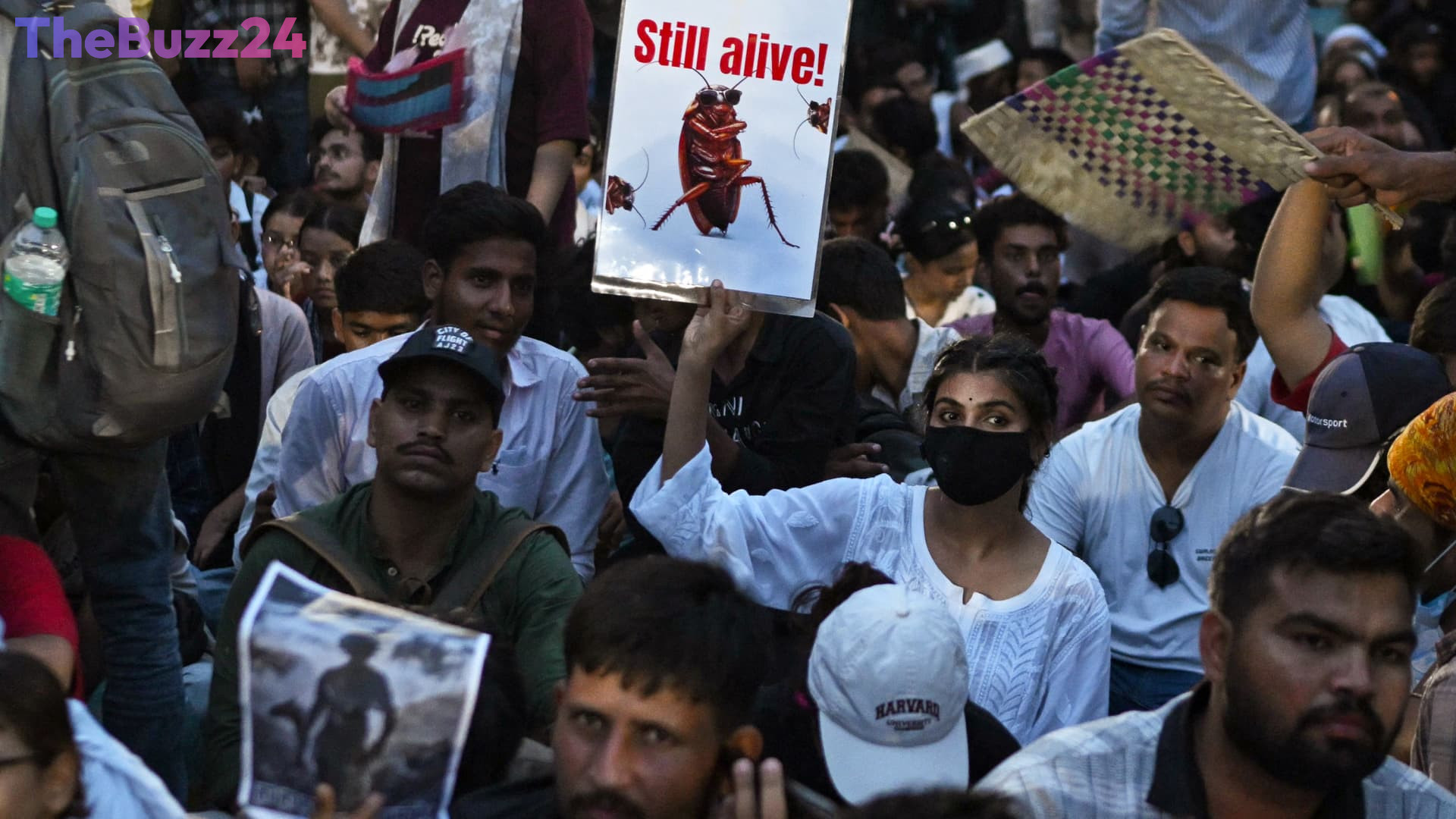
Thousands of young students, galvanized by the pseudo-political group ‘Cockroach Janta Party’ (CJP), have taken to the streets in New Delhi, escalating protests against the Indian government. The demonstrations, primarily driven by widespread anger over recent exam paper leaks, are demanding the resignation of Education Minister Dharmendra Pradhan and have put significant pressure on Prime Minister Narendra Modi’s administration.
The CJP, which began as an online satire inspired by a Supreme Court justice’s remarks likening some activists to “cockroaches,” has rapidly transformed into a potent real-world movement. The group has amassed a significant following online, though its main social media account was recently taken down. The protests gained further momentum after students breached security barricades near the parliament, leading to clashes with Delhi Police, who reported numerous injuries among their personnel. Eyewitness accounts suggest a heavy-handed response from law enforcement.
This wave of student unrest highlights deep-seated frustrations among India’s youth regarding unemployment and limited economic opportunities. Experts view these demonstrations as potentially the most significant challenge to the government since the 2020-2021 farmers’ protests. The issue has spilled into the national parliament, with opposition leader Rahul Gandhi criticizing the government and citing a high number of exam leaks over the past decade, impacting millions of students. The recent cancellation and re-examination of the National Eligibility cum Entrance Test (NEET) for medical college admissions has become a focal point for the discontent.
The protests have garnered support from various quarters, including activist Sonam Wangchuk, who has been on a hunger strike, and prominent farmer unions. The CJP’s emergence as a platform for youth grievances, coupled with India’s ranking as a high-risk country for civil unrest, signals growing discontent that could shape future political landscapes, especially with the 2029 general election on the horizon.
Key Takeaways
- Thousands of Gen Z students are protesting in India, led by the 'Cockroach Janta Party' (CJP), demanding the Education Minister's resignation over exam paper leaks.
- The CJP, originating as online satire, has become a significant real-world protest movement, highlighting youth unemployment and economic frustrations.
- The protests have escalated with clashes between students and police, drawing national political attention and support from activists and farmer groups.
Editor’s Analysis & Impact
The escalating student protests in India, fueled by exam scandals and broader economic anxieties, represent a significant challenge to the Modi government. The rapid mobilization of Gen Z, amplified by the unique ‘Cockroach Janta Party’ movement, underscores a growing disconnect between the youth population and the ruling establishment. This unrest, occurring in a nation already flagged for high civil unrest risk, could have lasting implications for political stability and policy-making, particularly concerning education reform and job creation. The government’s response will be critical in managing public sentiment and addressing the underlying grievances that are increasingly becoming a potent force ahead of future elections.
Frequently Asked Questions
Q: What is the 'Cockroach Janta Party' (CJP)?
A: The CJP is a group that started as an online political satire and has evolved into a real-world protest movement. It was inspired by remarks made in the Supreme Court and has become a platform for young students protesting against exam paper leaks and other government failures.
Q: What are the main demands of the student protesters?
A: The primary demand is the resignation of India's Education Minister, Dharmendra Pradhan, due to recent exam paper leaks. Protesters also express broader concerns about youth unemployment and lack of economic mobility.
Q: How has the Indian government responded to the protests?
A: The government has stated its commitment to discussing the exam paper leak issue and addressing youth concerns in parliament. However, the protests have also seen police action, including tear gas and alleged beatings, against demonstrators.
AI Disclosure: This article is based on verified data and official reports. Our Team and AI have cross-referenced every financial detail with primary sources to ensure total accuracy.
More from this Category