AI’s Internal War: Silicon Valley Giants Clash Over Regulation in Fierce Election Battles
The burgeoning political landscape surrounding artificial intelligence is witnessing an intense internal conflict, as powerful Silicon Valley factions diverge sharply on the future of AI regulation and development. Groups advocating for accelerated AI progress and minimal regulatory oversight have significantly outspent their counterparts focused on implementing robust safeguards. This financial disparity has fueled direct political confrontations, highlighting a deep ideological rift within the tech industry as it seeks to influence policy.
Analysis of federal filings reveals that proponents of rapid AI advancement have channeled approximately $8 million into general-election congressional races. In contrast, organizations prioritizing stricter safety measures and greater state-level regulatory authority have collectively invested around $6.9 million. This competition extends beyond mere financial contributions, manifesting in head-to-head contests for political influence, such as the notable race in Florida’s 25th Congressional District. Here, opposing super PACs have poured substantial resources into supporting candidates with aligned visions for AI governance, illustrating the high stakes involved.
The current internecine struggle mirrors strategies previously employed in the cryptocurrency sector, where well-funded groups heavily influenced electoral outcomes. Tech heavyweights have committed substantial sums to super PACs and affiliated organizations, aiming to elect candidates who champion their preferred regulatory frameworks. However, this aggressive approach has not been without its challenges. The significant spending has also triggered counter-mobilizations from groups advocating for caution, leading to costly battles in key primary contests and demonstrating that the AI industry’s unified political front has fractured, creating a complex and often contradictory political environment.
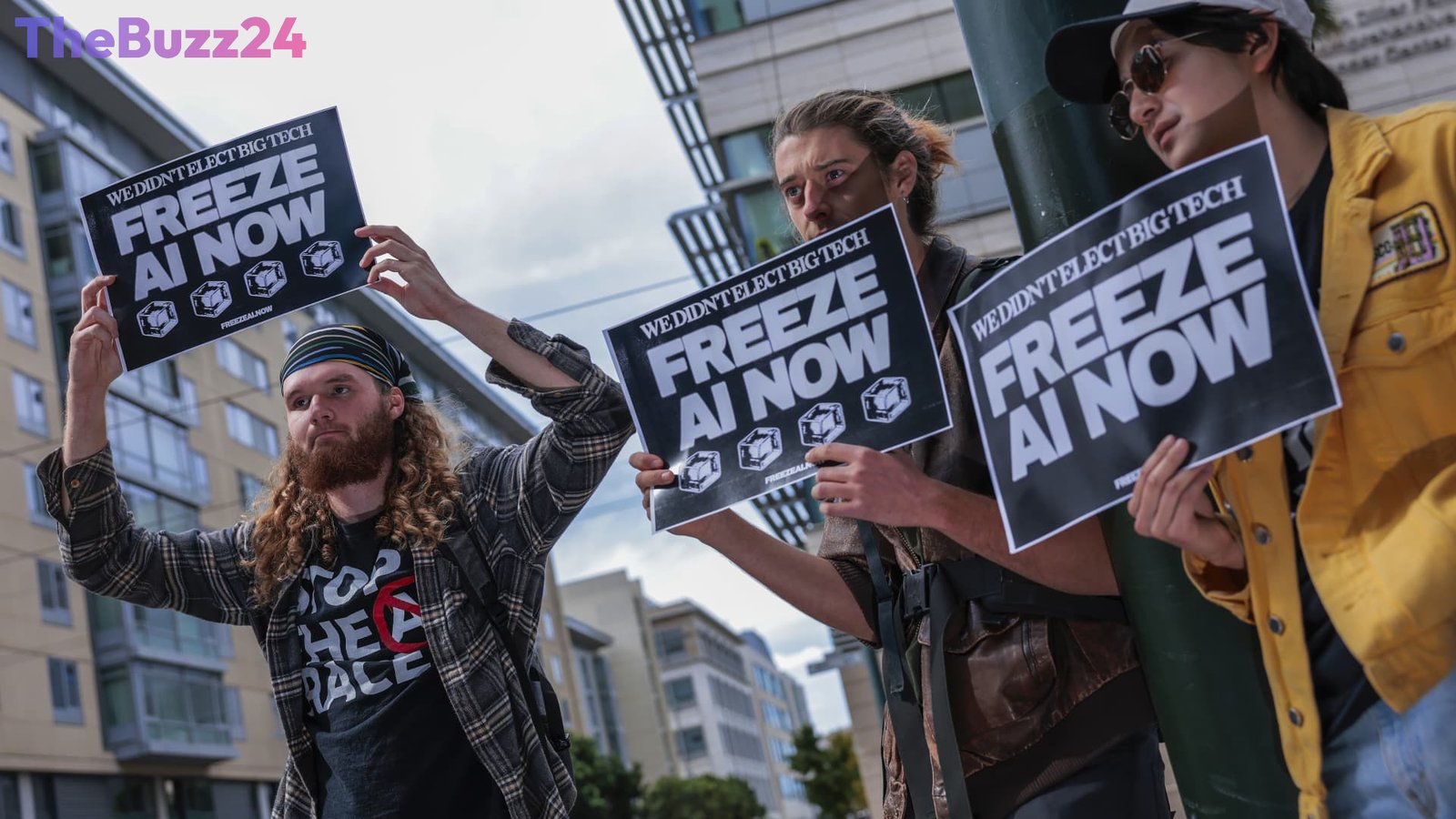
The broader implications of this internal conflict are significant. As the AI industry grapples with public perception and regulatory uncertainty, its internal divisions risk diluting its collective influence on Capitol Hill. While both sides ostensibly support innovation and the need for some form of regulation, their fundamental disagreements over the pace, scope, and locus of control are creating a volatile political dynamic. The outcome of these electoral battles could profoundly shape the trajectory of AI policy for years to come, underscoring the critical juncture at which the industry now finds itself.
Key Takeaways
- Pro-AI development groups are outspending those focused on safeguards in federal elections.
- Internal divisions within Silicon Valley are leading to direct political confrontations between industry factions.
- The AI industry's attempt to replicate the crypto playbook in politics is facing internal resistance and public scrutiny.
Editor’s Analysis & Impact
The escalating internal conflict within the AI sector over political influence and regulation signals a maturing, yet deeply divided, industry. The substantial financial commitments to electoral campaigns, mirroring past crypto strategies, highlight a desire to preemptively shape policy. However, the significant spending by both pro-development and safeguard-focused groups, coupled with public apprehension about AI’s rapid advancement, suggests a complex path forward. This internal feud could paradoxically weaken Big Tech’s lobbying power by presenting a fractured front to policymakers. The future outlook suggests continued intense lobbying efforts, but potentially with greater public and internal scrutiny, forcing a more nuanced approach to AI governance and political engagement.
Frequently Asked Questions
Q: What is the main disagreement between the AI political groups?
A: The primary disagreement centers on the pace of AI development and the extent of regulation. One faction advocates for rapid advancement with minimal rules, while the other pushes for stronger safeguards and more state-level authority.
Q: How much money has been spent by these groups?
A: Groups favoring faster AI development have spent approximately $8 million in general-election congressional races, while those advocating for safeguards have spent about $6.9 million. The total spending on federal candidates this cycle is around $78.5 million, with a significant portion directed towards primary contests.
Q: Why is this internal conflict significant?
A: This internal conflict is significant because it demonstrates a deep division within a powerful industry seeking to influence critical policy decisions. The infighting could weaken the industry's overall lobbying effectiveness and highlights public concerns about AI's rapid, unregulated growth.
AI Disclosure: This article is based on verified data and official reports. Our Team and AI have cross-referenced every financial detail with primary sources to ensure total accuracy.
More from this Category