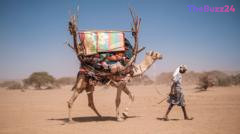
Beyond Resilience: Africa’s Camels Struggle as Extreme Heatwaves Intensify
Long regarded as the ultimate survivors of the desert, camels are increasingly succumbing to the unprecedented temperature spikes sweeping across North Africa and the Horn of Africa. While these animals have historically thrived in environments where other livestock would perish, the current climate reality—characterized by prolonged heatwaves exceeding 50C—is pushing them to their biological limits. Herders in regions like Ethiopia’s Afar are reporting alarming mortality rates, particularly among calves, as the animals suffer from heat-induced blisters, severe dehydration, and systemic immune failure.
Scientific research confirms that the physiological threshold for dromedary camels, which typically handle temperatures up to 40C through metabolic regulation, is being consistently breached. Experts note that when ambient temperatures remain above 41C to 45C for extended periods, the animals experience cellular damage, leading to lethargy, reproductive failure, and a significant drop in milk production. This decline is not merely a matter of discomfort; it is a fundamental threat to the livelihoods of pastoralist communities who have relied on these animals as their primary defense against arid conditions.
The crisis is compounded by a lack of adequate veterinary infrastructure and the rapid depletion of water and vegetation. In Somalia, some regions have reported camel mortality rates as high as 73%, forcing many traditional herders to abandon their ancestral lands in search of more sustainable environments. As the frequency of extreme heat events continues to rise, the status of the camel as a climate-proof asset is being challenged, signaling a broader ecological shift that threatens the stability of pastoral economies across the continent.
Key Takeaways
- Camels, once considered immune to desert heat, are now suffering from record-breaking temperatures exceeding 50C in North and East Africa.
- Heat stress is causing widespread health issues in camel populations, including immune system damage, reproductive failure, and increased mortality rates among calves.
- The loss of these animals is forcing pastoralist communities to abandon traditional grazing lands, threatening the economic stability of regions dependent on camel herding.
Editor’s Analysis & Impact
The decline of camel health in Africa serves as a critical indicator of the severity of current climate change trends. For decades, the camel has been the ‘last line of defense’ for pastoralists in the Horn of Africa and the Sahara, representing a biological buffer against desertification. The fact that these animals are now failing suggests that the environmental threshold for traditional agriculture and livestock management in these regions is being permanently altered. Economically, this implies a looming crisis for food security, as milk yields drop and herd sizes shrink. Future outlooks suggest that without significant investment in climate-resilient veterinary care, water management, and potential shifts in pastoralist migration patterns, the traditional desert economy may face an irreversible collapse, necessitating a transition toward more intensive, technology-backed agricultural models or alternative livelihoods.
Frequently Asked Questions
Q: Why are camels struggling now when they are known for desert resilience?
A: While camels are evolved to handle high temperatures, their biological limit is generally around 40-41C. Recent heatwaves frequently exceed 50C, causing cellular damage and heat stress that the animals' natural cooling mechanisms cannot overcome.
Q: What are the primary symptoms of heat stress in camels?
A: Symptoms include watery eyes, skin blisters, lethargy, reduced milk production, reproductive disorders, and in severe cases, death due to hyperthermia and secondary infections.
AI Disclosure: This article is based on verified data and official reports. Our Team and AI have cross-referenced every financial detail with primary sources to ensure total accuracy.
More from this Category