AI’s Growing Footprint: The Global Battle Over Data Center Expansion and Its Environmental Toll
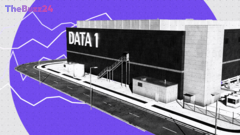
The digital infrastructure underpinning virtually all modern internet activity, from web searches and emails to streaming services and online banking, is experiencing unprecedented growth. These vast, warehouse-like facilities, known as data centers, are now at the very heart of the artificial intelligence revolution, housing the advanced computer chips and servers essential for running sophisticated services like ChatGPT and Claude.
However, this rapid expansion comes with significant environmental and societal costs, fueling a growing public backlash worldwide. Data centers are notorious for their enormous electricity consumption, with global facilities collectively using more power than entire nations, such as France. They also demand substantial amounts of water for cooling, raising concerns about potential shortages and increased carbon emissions. The sheer scale of these operations is expanding, with approximately 12,250 data centers globally, a sharp increase from around 8,000 in 2021. The United States leads this growth, hosting 4,767 sites, and is set to widen its capacity lead, particularly with the construction of massive AI-specific facilities like Colossus 2, designed to house hundreds of thousands of advanced AI chips and power services such as xAI’s chatbot Grok.
Public opposition is intensifying due to the strain on local resources, noise pollution, and the vast land areas these centers occupy. In the U.S., the issue has become a point of political contention, with at least 16 states proposing legislation to ban or temporarily halt new developments. Similar resistance is emerging in countries like Mexico, France, Indonesia, and the UK. While critics highlight environmental degradation and resource depletion, proponents argue that data centers are crucial for national security, AI development, and economic growth, attracting investment, generating tax revenue, and creating jobs, particularly for large-scale ‘hyperscale’ facilities.
Despite the mounting concerns, investment in AI infrastructure continues to surge, with the tech industry projected to spend over $1 trillion next year. This ongoing expansion is prompting the industry to explore innovative solutions to mitigate environmental impact, including futuristic concepts like placing data centers in space or on the Moon to harness abundant solar energy, or developing more efficient on-device AI processing to reduce the reliance on colossal centralized facilities.
Key Takeaways
- Data centers are rapidly expanding globally, driven by the AI boom, with the US leading in capacity and massive AI-specific facilities under construction.
- Their immense energy and water consumption are sparking significant environmental concerns and public backlash, leading to legislative opposition in various regions.
- While proponents highlight economic benefits and national security, the industry is exploring alternative solutions like space-based facilities and on-device processing to mitigate environmental impact.
Editor’s Analysis & Impact
The explosive growth of data centers, fueled by the AI revolution, presents a critical juncture for the technology and energy sectors. The market is witnessing unprecedented investment in AI infrastructure, signaling a continued demand for processing power. However, this expansion is increasingly clashing with environmental sustainability goals and local community concerns over resource strain and pollution. The future outlook suggests intensified regulatory scrutiny and a push for more sustainable data center designs, potentially accelerating innovation in renewable energy integration and cooling technologies. Broader implications include increased pressure on national power grids, a re-evaluation of land use policies, and the potential for decentralized computing models. The industry’s ability to balance technological advancement with ecological responsibility will be paramount in shaping its trajectory.
Frequently Asked Questions
Q: Why are data centers growing so rapidly?
A: Data centers are experiencing rapid growth primarily due to the exponential increase in internet activity, the expansion of cloud computing services, and especially the immense processing demands of artificial intelligence applications like ChatGPT and Claude.
Q: What are the main environmental concerns associated with data centers?
A: The primary environmental concerns stem from their massive electricity consumption, which contributes significantly to carbon emissions and strains local power grids, and their substantial water usage for cooling systems, which can lead to water shortages in affected areas.
Q: Are there any proposed solutions to mitigate the environmental impact of data centers?
A: The tech industry is actively exploring various solutions, including developing more energy-efficient hardware, integrating renewable energy sources into their operations, and even considering futuristic concepts like placing data centers in space or on the Moon to harness abundant solar energy, or increasing on-device AI processing to reduce reliance on large centralized facilities.
AI Disclosure: This article is based on verified data and official reports. Our Team and AI have cross-referenced every financial detail with primary sources to ensure total accuracy.
More from this Category