Nvidia Technology Set to Power First Ever GPU on the Moon’s Surface
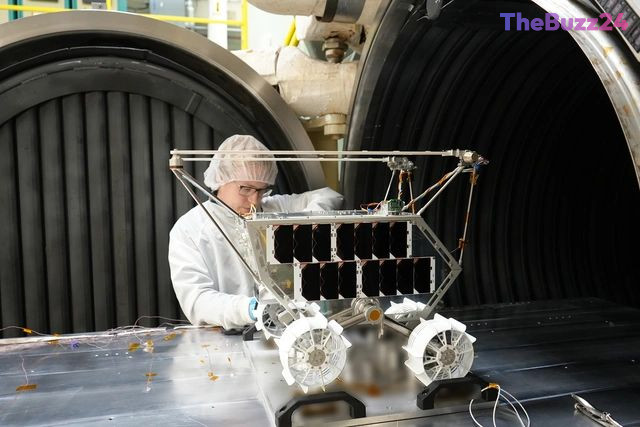
The landscape of space exploration is undergoing a rapid technological transformation as advanced computing hardware prepares for lunar deployment. Space robotics startup Lunar Outpost has announced that its upcoming lunar rover will integrate Nvidia’s Jetson chips to manage its complex lidar systems. This milestone deployment is widely anticipated to mark the very first time a Graphics Processing Unit operates directly on the lunar surface, bridging the gap between terrestrial artificial intelligence and extraterrestrial robotics.
The initiative is part of a broader government-backed campaign to leverage private sector innovation for lunar discovery. NASA has engaged various commercial technology developers to build specialized vehicles capable of transporting scientific instruments across the moon’s rugged terrain. These rovers aim to analyze local geology and search for vital resources, such as water ice, which will be essential for establishing a long-term human presence. Lunar Outpost’s upcoming rover is scheduled to journey aboard a lander engineered by Intuitive Machines, targeting difficult-to-reach craters and mysterious geological formations like the Reiner Gamma magnetic anomaly.
Deploying high-performance computing in the harsh environment of the moon presents significant engineering hurdles. Unlike satellites in low Earth orbit, hardware on the lunar surface faces intense cosmic radiation and extreme thermal fluctuations throughout the lunar cycle. Traditional space-faring electronics must be exceptionally durable and power-efficient to survive the long, freezing lunar nights. By utilizing the compact Jetson platform, engineers hope to empower autonomous rovers with advanced physical AI capabilities, allowing them to process sensor data locally and make real-time navigational decisions without relying entirely on distant Earth-based commands.
As aerospace companies look toward future milestones, including crewed missions later this decade, the demand for sophisticated robotic workforces continues to escalate. Upcoming deployments will rely heavily on heavy-lift launch vehicles to transport larger rovers and infrastructure components to the lunar destination. Despite occasional scheduling adjustments across the commercial space industry, the integration of advanced artificial intelligence into space missions signals a new era of autonomous exploration, paving the way for sustainable outposts beyond Earth.
Key Takeaways
- Lunar Outpost is integrating Nvidia Jetson chips into its upcoming moon rover, marking a historic first for GPUs on the lunar surface.
- The technology will enable advanced physical AI, allowing rovers to process sensor data and make autonomous decisions in extreme environments.
- Operating GPUs on the moon requires overcoming severe challenges, including intense cosmic radiation and extreme temperature swings during the lunar night.
Editor’s Analysis & Impact
The integration of advanced graphics processing units into lunar rovers represents a pivotal intersection of artificial intelligence and aerospace engineering. As private space companies increasingly shoulder the burden of lunar exploration alongside government agencies, the demand for edge computing capable of operating in extreme environments is surging. Successfully deploying power-efficient, high-performance chips like Nvidia’s Jetson on the moon will not only validate terrestrial AI hardware for space applications but also accelerate the development of autonomous robotic workforces. This capability is foundational for transitioning from temporary exploration missions to permanent, sustainable human outposts on the lunar surface, ultimately opening new commercial frontiers in extraterrestrial resource utilization and deep-space data processing.
Frequently Asked Questions
Q: What is the significance of Nvidia's Jetson chips going to the moon?
A: The deployment of Nvidia Jetson chips on Lunar Outpost's rover is expected to be the first time a GPU operates directly on the lunar surface, bringing advanced physical AI capabilities to space exploration.
Q: What are the main challenges of using GPUs on the moon?
A: Operating GPUs on the moon is difficult due to extreme temperature fluctuations, harsh cosmic radiation, and the need for systems to survive the long lunar night on very low power.
Q: How do these missions support NASA's goals?
A: These missions use private sector rovers to carry scientific sensors, map difficult terrain, and search for resources like water, paving the way for a sustained human presence on the moon.
AI Disclosure: This article is based on verified data and official reports. Our Team and AI have cross-referenced every financial detail with primary sources to ensure total accuracy.
More from this Category