Runway Pivots to Infrastructure with New AI Media Router
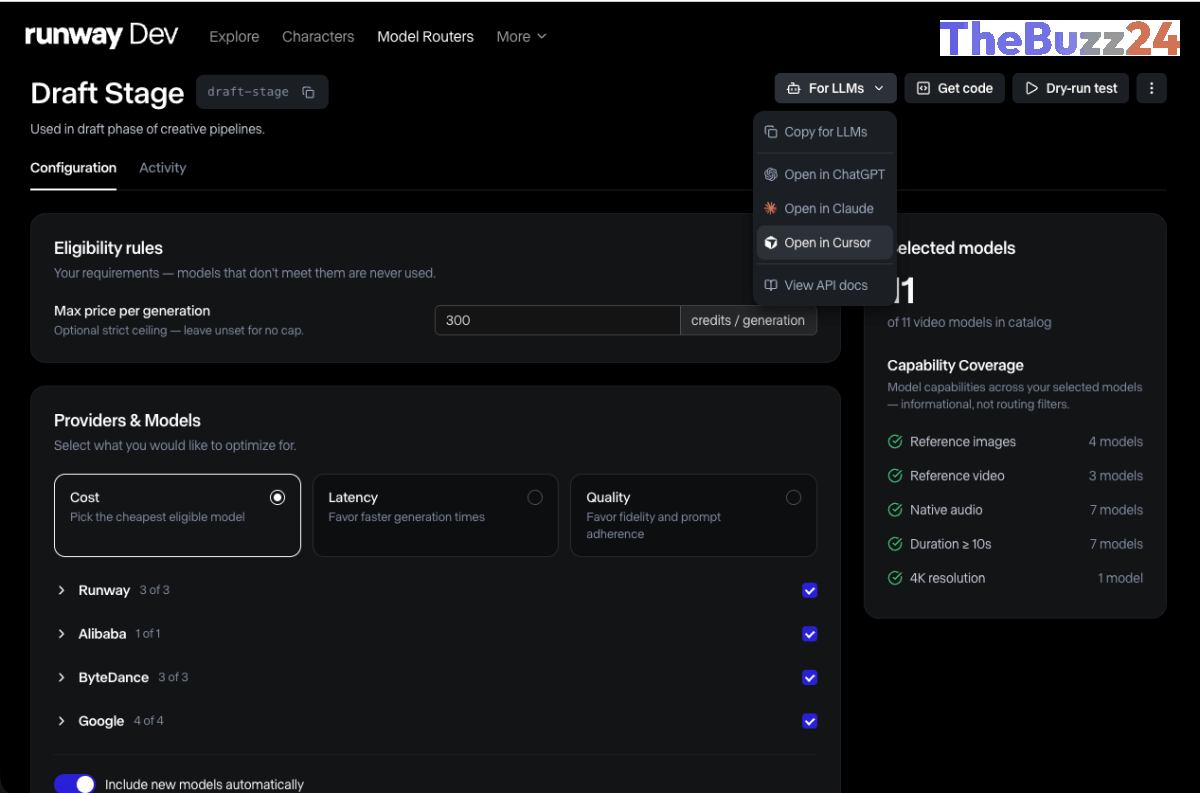
Runway is shifting its strategic focus from being a standalone AI model provider to becoming the foundational infrastructure layer for the generative media industry. The company has officially launched the Runway Media Router, a sophisticated tool integrated into its developer platform, Runway Dev. This new feature allows developers to automatically select the most appropriate image, video, or audio generation model based on specific project requirements, such as cost efficiency, processing speed, or output quality.
As the generative media landscape becomes increasingly crowded with a vast array of competing models, developers often struggle to keep pace with the rapid release cycles and varying capabilities of new technology. The Media Router addresses this by leveraging an intelligence layer built on Runway’s internal expertise in evaluating media outputs. This system helps businesses navigate the complexities of model selection, including the ability to filter providers based on geographic origin or specific performance metrics, which is becoming a critical consideration for enterprises concerned with regulatory compliance and operational costs.
This move marks a significant evolution for Runway, which has historically been recognized for its consumer-facing creative tools. By positioning itself as an orchestration layer, the company is enabling major organizations—including Adobe, Cloudflare, and Shutterstock—to integrate diverse generative capabilities directly into their own products. Rather than forcing developers to commit to a single model that may quickly become obsolete, the Media Router ensures that businesses can maintain access to the best-performing technology available at any given time.
Company leadership emphasizes that as generative media moves toward complex, multi-scene campaigns, the need for intelligent orchestration has surpassed the need for individual, isolated models. By packaging the same routing technology used in its own internal creative suites for external developers, Runway is betting that its future lies in managing the ecosystem of generative media rather than just competing in the race to build the next frontier model.
Key Takeaways
- Runway has launched a Media Router that automatically selects the best AI model for developers based on cost, speed, and quality.
- The tool aims to simplify the increasingly fragmented generative media landscape by acting as an orchestration layer for third-party models.
- Major companies like Adobe and Cloudflare are already utilizing Runway’s developer platform to integrate media generation into their own products.
Editor’s Analysis & Impact
Runway’s transition to an infrastructure-first model is a pragmatic response to the ‘model fatigue’ currently plaguing the AI industry. By moving away from the high-stakes, resource-intensive race to release the next ‘frontier’ model, Runway is securing its relevance as a middleware provider. This strategy mirrors the evolution of cloud computing, where the value shifted from raw hardware to the orchestration layers that manage it. As enterprises become more cost-conscious regarding token usage and more wary of geopolitical risks associated with model provenance, a neutral, intelligent routing layer becomes an essential business tool. If successful, this pivot allows Runway to capture value from the entire generative media ecosystem, effectively insulating itself from the volatility of individual model performance while positioning itself as the ‘operating system’ for creative AI workflows.
Frequently Asked Questions
Q: What is the primary function of the Runway Media Router?
A: The Media Router is an automated tool that selects the best image, video, or audio AI model for a developer's specific needs, prioritizing factors like cost, speed, and output quality.
Q: Why is Runway shifting its focus to infrastructure?
A: The generative media market is becoming highly fragmented with many competing models. By becoming an orchestration layer, Runway can provide value to developers regardless of which specific model is currently leading the market.
AI Disclosure: This article is based on verified data and official reports. Our Team and AI have cross-referenced every financial detail with primary sources to ensure total accuracy.
More from this Category