Progressive Surge: Can Left-Wing Democrats Win Over Crucial Swing Voters?
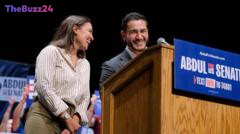
In a significant display of the Democratic Party’s internal dynamics, prominent progressive figures Senator Bernie Sanders and Representative Alexandria Ocasio-Cortez recently rallied in Detroit to support Senate hopeful Abdul El-Sayed. El-Sayed, a doctor campaigning on a platform of universal healthcare and an end to US aid to Israel, is vying for the Democratic nomination in a key Michigan race. His campaign, bolstered by grassroots enthusiasm and a focus on issues like “Medicare for All,” represents a challenge to the party’s more centrist establishment, which is backed by traditional power brokers and corporate donations.
The race in Michigan, a critical swing state that has seen shifts in voter allegiance, highlights a broader trend. While left-wing candidates have experienced a string of primary victories across the country this summer, the ultimate question remains whether this progressive momentum can translate into broader electoral success. Specifically, the challenge lies in recapturing the support of working-class voters who have previously gravitated towards Republican candidates, including former President Donald Trump. The outcome of El-Sayed’s primary, and the subsequent general election, is seen as vital for Democrats aiming to regain control of Congress and counter the Republican agenda.
However, the path forward is not without its internal divisions. While El-Sayed’s supporters are energized by his progressive policies and his rejection of corporate campaign funding, some voters express concerns about electability. Figures like Colleen Houlihan, a Michigan resident, acknowledge the appeal of El-Sayed’s policy proposals but lean towards his opponent, Congresswoman Haley Stevens, believing a more moderate candidate is necessary to secure victory. Stevens, endorsed by Governor Gretchen Whitmer and Senator Gary Peters, presents herself as a more experienced politician, highlighting the strategic considerations at play within the party as it navigates its ideological landscape and seeks to appeal to a diverse electorate.
The debate over progressive policies versus electability is further complicated by foreign policy issues, particularly the conflict in Gaza. El-Sayed’s strong stance against US aid to Israel resonates with a segment of the electorate, especially in Michigan’s significant Arab-American community. This position contrasts with more moderate Democrats, like Stevens, who generally support continued US aid. This issue presents a complex challenge for the Democratic Party, which historically relies on support from both Jewish and Arab communities. Ultimately, the party faces the daunting task of unifying its progressive and centrist wings to present a cohesive front capable of winning in a politically divided nation.
Key Takeaways
- Progressive Democrats, led by figures like Bernie Sanders and Alexandria Ocasio-Cortez, are actively campaigning for candidates like Abdul El-Sayed, who champions universal healthcare and critical foreign policy stances.
- The Democratic Party faces a challenge in translating recent progressive primary victories into broader electoral success, particularly in winning back disillusioned working-class voters in swing states.
- Internal party divisions, especially concerning electability versus progressive ideals and foreign policy issues like the Israel-Gaza conflict, pose significant hurdles for Democratic unity and future electoral prospects.
Editor’s Analysis & Impact
The current surge of progressive influence within the Democratic Party, exemplified by the push for candidates like Abdul El-Sayed, signals a potential realignment of the party’s base. While these candidates are energizing a core group of voters with policies focused on social safety nets and a critical foreign policy, their ability to win over moderate and swing voters remains a significant question mark. The party’s success in upcoming elections hinges on its capacity to bridge the ideological gap between its progressive and centrist factions. Failure to do so could lead to continued electoral setbacks, particularly in crucial battleground states where a unified message and broad appeal are paramount. The coming months will be a critical test of the Democratic Party’s ability to adapt and unify.
Frequently Asked Questions
Q: Who is Abdul El-Sayed and what is his platform?
A: Abdul El-Sayed is a doctor and a Senate hopeful in Michigan running on a progressive platform. His key policy proposals include universal healthcare ('Medicare for All') and a reduction in US aid to Israel, advocating for a wealth tax on billionaires and opposing corporate funding in politics.
Q: What is the main challenge facing the Democratic Party in swing states?
A: The primary challenge for the Democratic Party in swing states is bridging the divide between its progressive wing and centrist establishment. They need to appeal to a broad range of voters, including disillusioned working-class individuals who have previously supported Republican candidates, while maintaining the enthusiasm of their progressive base.
Q: How does the Israel-Gaza conflict impact the Democratic Party's electoral strategy?
A: The Israel-Gaza conflict presents a complex dilemma for the Democratic Party, particularly in diverse states like Michigan. Candidates with strong stances against US support for Israel, like El-Sayed, can energize certain demographics but may alienate other key voting blocs, creating internal party friction and complicating efforts to build a unified electoral coalition.
AI Disclosure: This article is based on verified data and official reports. Our Team and AI have cross-referenced every financial detail with primary sources to ensure total accuracy.
More from this Category