Brainwave Data: Pioneering the Next Frontier in Physical AI Robotics Training
A novel approach to accelerating the development of physical AI robotics is underway, with companies like Encord exploring the integration of human brainwave data into training models. At a facility dedicated to generating crucial data for artificial intelligence, a pilot named Andrew Ceja demonstrates this cutting-edge technique, carefully extracting wooden blocks from a Jenga tower while wearing a headset. This device not only tracks his visual input but also measures his brain activity, aiming to capture the nuances of human intent and error.
Encord, a company specializing in data tooling for AI models, is among a select group of startups betting that the primary hurdle for advanced humanoid and warehouse robotics isn’t model architecture, but rather the acute shortage of real-world physical training data. Instead of merely managing existing data, Encord is building a business around actively manufacturing the data that simply doesn’t exist yet. The brainwave headset utilized in their trials is a product of Zander Labs, a German neuroscience startup. Their hypothesis is that by measuring brain activity to infer mental states such as error, intent, and surprise, a significantly more useful dataset can be created for training AI models. This collaboration is currently in a trial phase, with the goal of evaluating whether brainwave-tagged data genuinely enhances robot performance before scaling up.
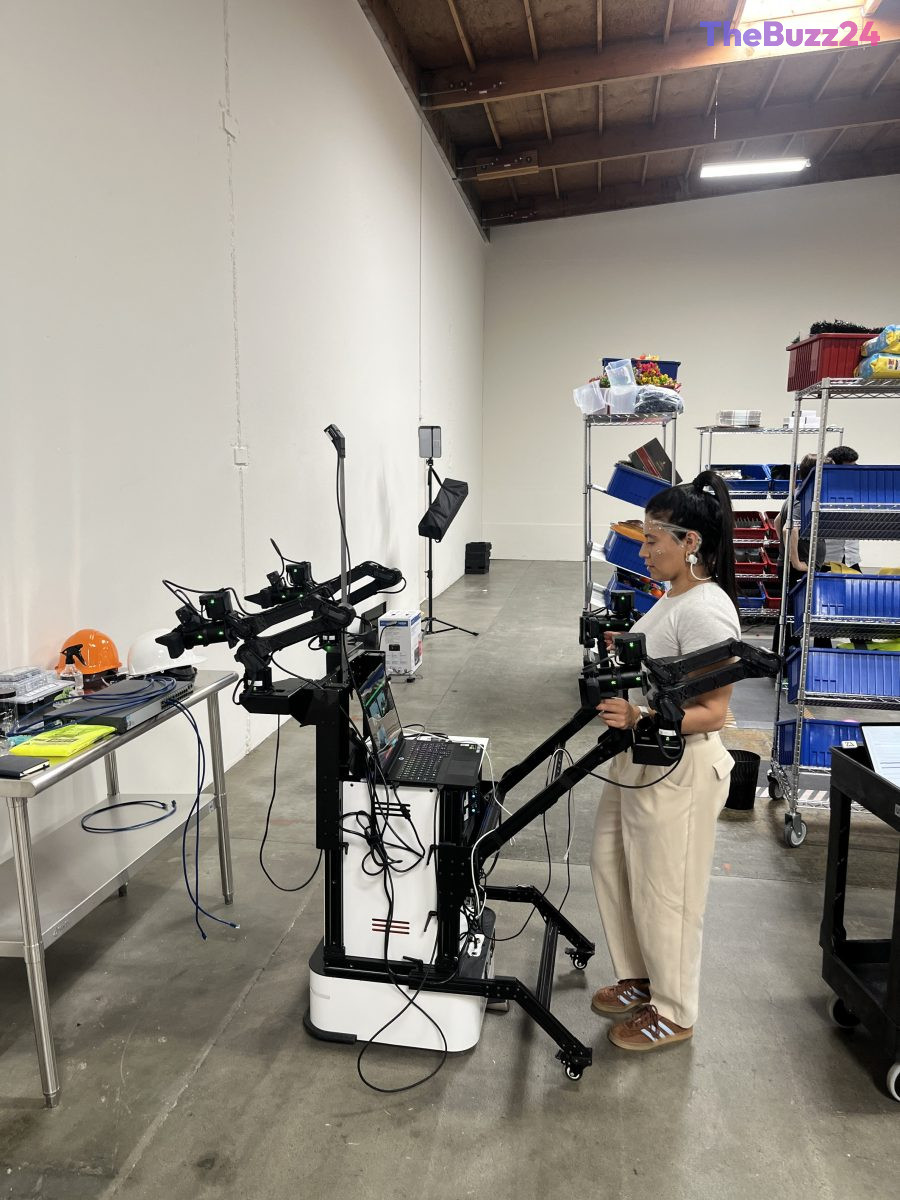
Vineeth Velmurugan, Encord’s head of robot learning and a veteran of OpenAI’s robot lab, describes this effort as the “bleeding edge” of solving the robotics data bottleneck. The challenge of generating physical-world data for robots is immense, far surpassing the ease of collecting data for large language models (LLMs) from the internet. While self-driving car companies collect their own physical data, scaling this is difficult, and video training often lacks the necessary fidelity. Encord addresses this by collecting “egocentric” video from workers wearing cameras globally and experimenting with new modalities like brainwaves and muscle sensors at its San Leandro facility. Pilots use specialized rigs to create data for complex tasks, from pouring coffee to plugging ethernet cables, highlighting the dexterity gap between human hands and robotic manipulators.
This process of manufacturing highly annotated physical training data is significantly more costly than scraping text, underscoring a fundamental economic difference between digital and physical AI development. However, Encord believes the value of such densely annotated data, which can be 100 times more effective for specific tasks, justifies the increased production cost. With its unique vantage point across numerous robotics firms, Encord is strategically positioned to identify and develop the most effective data generation techniques, ensuring a steady supply of high-quality training data for the burgeoning field of physical AI.
Key Takeaways
- Encord and Zander Labs are pioneering the use of human brainwave data to create richer, more effective training datasets for AI robotics.
- The initiative directly addresses the critical scarcity of real-world physical training data, which is a major bottleneck in developing advanced humanoid and warehouse robots.
- Generating high-fidelity, annotated physical training data is a complex and costly endeavor, fundamentally different from the data collection methods used for large language models.
Editor’s Analysis & Impact
This development represents a significant leap in addressing one of the most persistent challenges in robotics: the scarcity of high-quality physical training data. If successful, integrating brainwave data could dramatically accelerate the learning capabilities of AI robots, enabling them to perform complex manipulation tasks with greater precision and adaptability. This could unlock new applications in manufacturing, logistics, and even domestic environments, creating a new sub-industry focused on specialized data generation. The economic implications are substantial, as the high cost of manufacturing this data will shape the business models of robotics companies. It also highlights a growing divergence in data acquisition strategies between purely digital AI and physical AI, pushing the boundaries of human-machine interaction and raising new questions about the role of human cognition in AI development.
Frequently Asked Questions
Q: What is the main challenge Encord and Zander Labs are trying to solve?
A: They are addressing the critical scarcity of high-quality, real-world physical training data for AI robotics, which is a major bottleneck in developing advanced humanoid and warehouse robots.
Q: How does brainwave data help train AI models for robots?
A: By measuring brain activity, Zander Labs aims to deduce human mental states like error, intent, and surprise during tasks. This 'brainwave-tagged' data can provide richer context and more useful signals for AI models, potentially improving robot performance and learning efficiency.
Q: Why is generating physical training data so difficult compared to data for large language models?
A: Unlike text data, which can be scraped cheaply from the internet, physical training data requires active 'manufacturing' through human interaction with robots, specialized sensor setups, and extensive annotation. This makes it significantly more costly and complex to produce at scale.
AI Disclosure: This article is based on verified data and official reports. Our Team and AI have cross-referenced every financial detail with primary sources to ensure total accuracy.
More from this Category