Europe Engulfed: Historic Wildfires Force Mass Evacuations Across France and Spain
A colossal wave of wildfires is sweeping across southern Europe, triggering the largest evacuations in France’s history and causing widespread devastation in Spain. Over 300,000 individuals have been forced to abandon their homes as blazes rage, prompting urgent government responses and raising alarms about climate change’s escalating impact. French President Emmanuel Macron is slated to convene a crisis cabinet meeting, while Spanish Prime Minister Pedro Sanchez plans to visit the fire-stricken regions of Valencia.
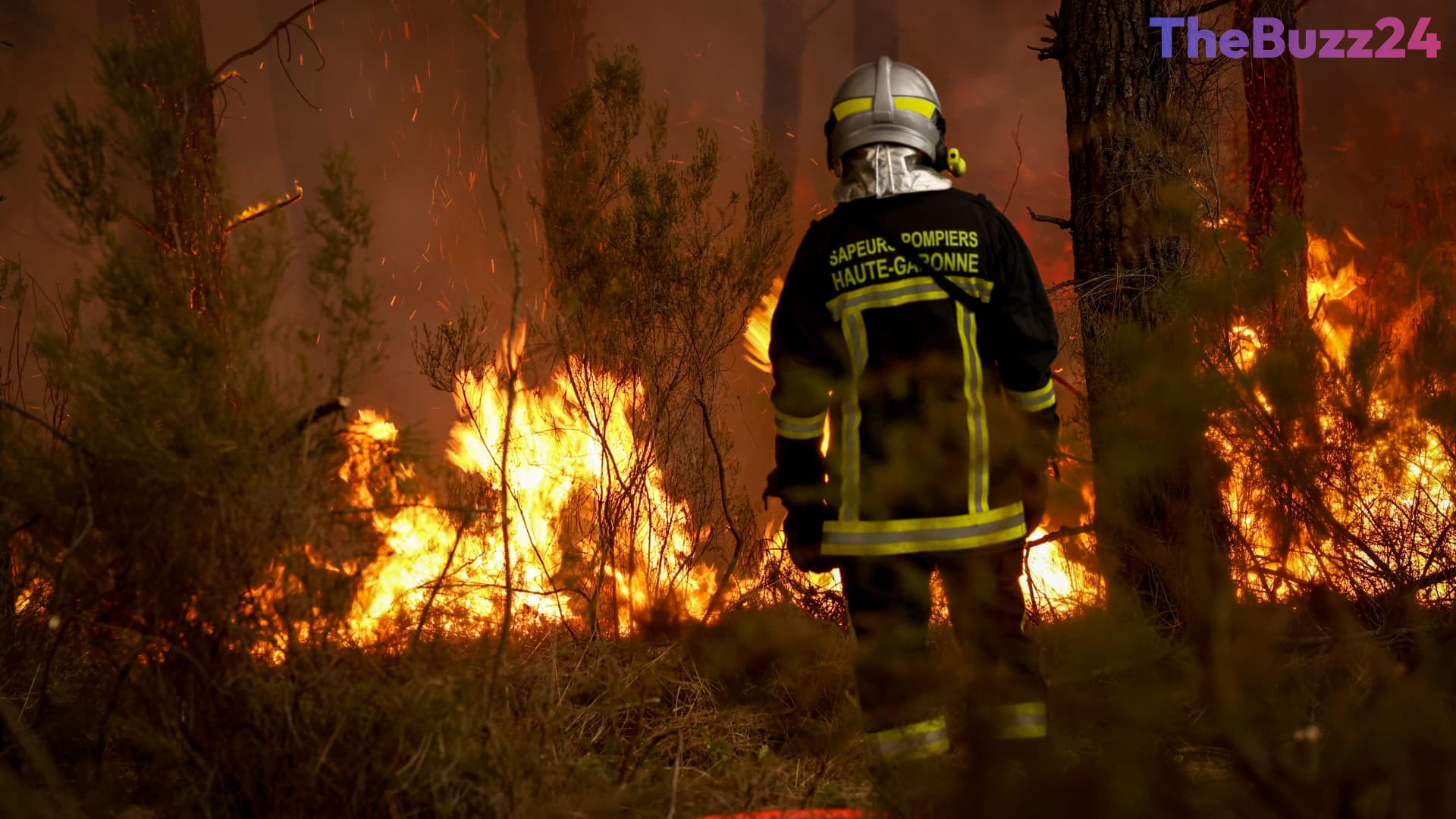
The infernos have delivered a significant blow to local economies, as noted by French Finance Minister Roland Lescure. Originating in France’s southwestern Gironde region, one fire alone has consumed 42,000 hectares, pushing evacuation efforts to unprecedented levels. Simultaneously, vast areas in Spain, including 77,000 hectares in the Avila and Toledo regions west of Madrid, have been ravaged. French Interior Minister Laurent Nunez described the situation as “highly unfavorable,” with fires becoming “extremely virulent and unpredictable,” generating their own winds and spreading erratically. The gigantic fire has even been identified as a rare “pyrocumulonimbus”—a fire cloud capable of generating its own winds and whirlwinds, making it “erratic and unmanageable,” according to firefighter Captain Nicolas Braz. French Prime Minister Sébastien Lecornu characterized the situation as “historic,” with nearly 100,000 hectares burned across the country this year—an “unprecedented” figure. To combat the crisis, a massive deployment of 2,500 firefighters, 1,500 military personnel, and nearly 1,200 police has been mobilized.
Experts point to a confluence of factors exacerbating the crisis. Professor Stefan Doerr, a wildland fire science expert at Swansea University, highlights climate change as a major contributor, alongside inadequate landscape management. He explains that the abandonment of agricultural land in parts of southern Europe, particularly the Mediterranean, has led to the proliferation of flammable grasses, shrubs, and dense forests. This, combined with extensive conifer plantations—a result of thousands of years of human activity shaping the European landscape—creates an “artificial” environment highly susceptible to intense wildfires during periods of extreme heat and drought.
While Europe possesses robust firefighting capabilities, Professor Doerr argues that the current scale of events surpasses existing capacities. The continent has experienced a third consecutive heatwave, severely drying out the landscape and enabling ignitions to escalate rapidly into severe blazes. This underscores a critical need for greater emphasis on proactive wildfire risk reduction through improved land management, better preparation, enhanced communication, and advanced scientific understanding, rather than solely relying on reactive firefighting resources that are increasingly stretched thin.
Key Takeaways
- Massive wildfires in France and Spain have forced over 300,000 evacuations and caused significant economic damage.
- The fires, exacerbated by extreme heatwaves and a rare "pyrocumulonimbus" phenomenon, are deemed historic and unprecedented in scale.
- Experts attribute the intensity to climate change and poor landscape management, highlighting the urgent need for better prevention strategies beyond just firefighting.
Editor’s Analysis & Impact
These unprecedented wildfires across France and Spain signal a critical juncture for European climate policy and disaster preparedness. The immediate economic impact on local communities, particularly in tourism and agriculture, will be substantial, requiring significant recovery efforts. Looking ahead, the increasing frequency and intensity of such events, driven by climate change and inadequate land management, necessitate a fundamental shift in strategy. Governments and regional authorities must prioritize proactive measures like sustainable forestry, controlled burns, and re-evaluating land use policies to create more resilient landscapes. The strain on emergency services highlights the urgent need for enhanced cross-border cooperation and investment in advanced prevention technologies. This crisis serves as a stark reminder that climate adaptation is no longer a distant concern but an immediate imperative with profound societal and economic implications.
Frequently Asked Questions
Q: What areas are most affected by the current wildfires?
A: The most severely impacted regions include Gironde in southwestern France, and the Valencia, Avila, and Toledo areas in Spain.
Q: What makes these wildfires particularly challenging to control?
A: These fires are exacerbated by extreme heatwaves and drought conditions. Some have developed into "pyrocumulonimbus" clouds, which generate their own erratic winds, making them highly unpredictable and difficult for firefighters to manage.
Q: How do experts explain the increasing intensity of these European wildfires?
A: Experts attribute the heightened intensity to a combination of climate change, which leads to hotter and drier conditions, and poor landscape management, including the abandonment of agricultural land and the prevalence of dense, flammable conifer plantations.
AI Disclosure: This article is based on verified data and official reports. Our Team and AI have cross-referenced every financial detail with primary sources to ensure total accuracy.
More from this Category