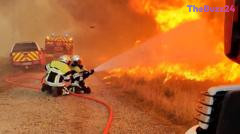
South-West France Braces for Extreme Heatwave as Relentless Wildfires Flare Up
Emergency responders in south-west France are working tirelessly to control persistent wildfires ravaging the Gironde region, even as authorities prepare for another punishing heatwave. Thousands of firefighters have been deployed to combat the flames burning between the coastline and Bordeaux, facing unprecedented conditions as temperatures threaten to reach 40C once again. The ongoing crisis has strained regional resources, with multiple locations experiencing severe flare-ups following days of destructive blazes.
The human and economic toll continues to mount across the affected areas. Over the past week, tens of thousands of residents and tourists have been forced to evacuate their homes and campsites, while hundreds of properties have sustained heavy damage. Local tourism, hospitality, and viticulture sectors are feeling the severe impacts as visitors desert the region and businesses are forced to temporarily close due to hazardous air quality and heavy smoke drifting into major metropolitan centers like Bordeaux.
Neighboring Spain and Portugal are similarly grappling with catastrophic wildfire outbreaks amid the severe meteorological conditions. Iberian authorities have mobilized hundreds of personnel to tackle active fronts, though extreme weather continues to hamper containment efforts. Meanwhile, French law enforcement has cracked down on suspected arsonists, arresting numerous individuals in connection with intentionally set blazes as the nation remains on high alert.
Public health officials have urged vulnerable populations to remain indoors and monitor air pollution levels closely as smoke blankets communities. While some evacuation orders have been lifted in certain zones, coastal and wooded areas remain heavily vulnerable. Officials stress that the ongoing emergency is far from over, requiring sustained vigilance from both emergency services and the public as the region navigates one of its most challenging summers on record.
Key Takeaways
- Thousands of firefighters are deployed in the Gironde region of France to contain persistent wildfires amid extreme heat.
- A new 40C heatwave is expected to exacerbate fire risks across south-west France and neighboring Spain.
- Tourism, local businesses, and agriculture are suffering significant disruptions as tens of thousands face evacuations and poor air quality.
Editor’s Analysis & Impact
The catastrophic wildfires sweeping through south-west France, Spain, and Portugal highlight the accelerating vulnerability of Southern Europe to extreme climate events. Beyond the immediate ecological devastation and loss of property, these recurring crises inflict severe long-term economic scars on vital regional industries, particularly tourism, hospitality, and winemaking. As summer heatwaves become more intense and frequent, municipal and national governments will be forced to rethink emergency infrastructure, forest management practices, and early-warning systems. The strain on emergency personnel also underscores the urgent need for enhanced cross-border resource sharing and advanced technological interventions to mitigate future climate-driven disasters across the continent.
Frequently Asked Questions
Q: What is causing the severe wildfires in south-west France?
A: The wildfires are being driven by a combination of severe, prolonged heatwaves, dry conditions, high temperatures reaching up to 40C, and in some cases, suspected human intervention resulting in arrests.
Q: How are local businesses and tourism affected by the fires?
A: Tourism has dropped significantly as visitors evacuate or avoid the region. Many restaurants, shops, and wine estates have experienced temporary closures due to heavy smoke, poor air quality, and safety evacuations.
Q: Are major cities like Bordeaux currently in danger?
A: While fires have come within miles of Bordeaux's periphery and severely impacted air quality, officials note the city itself is not immediately threatened, though surrounding forests and coastal campsites remain heavily at risk.
AI Disclosure: This article is based on verified data and official reports. Our Team and AI have cross-referenced every financial detail with primary sources to ensure total accuracy.
More from this Category