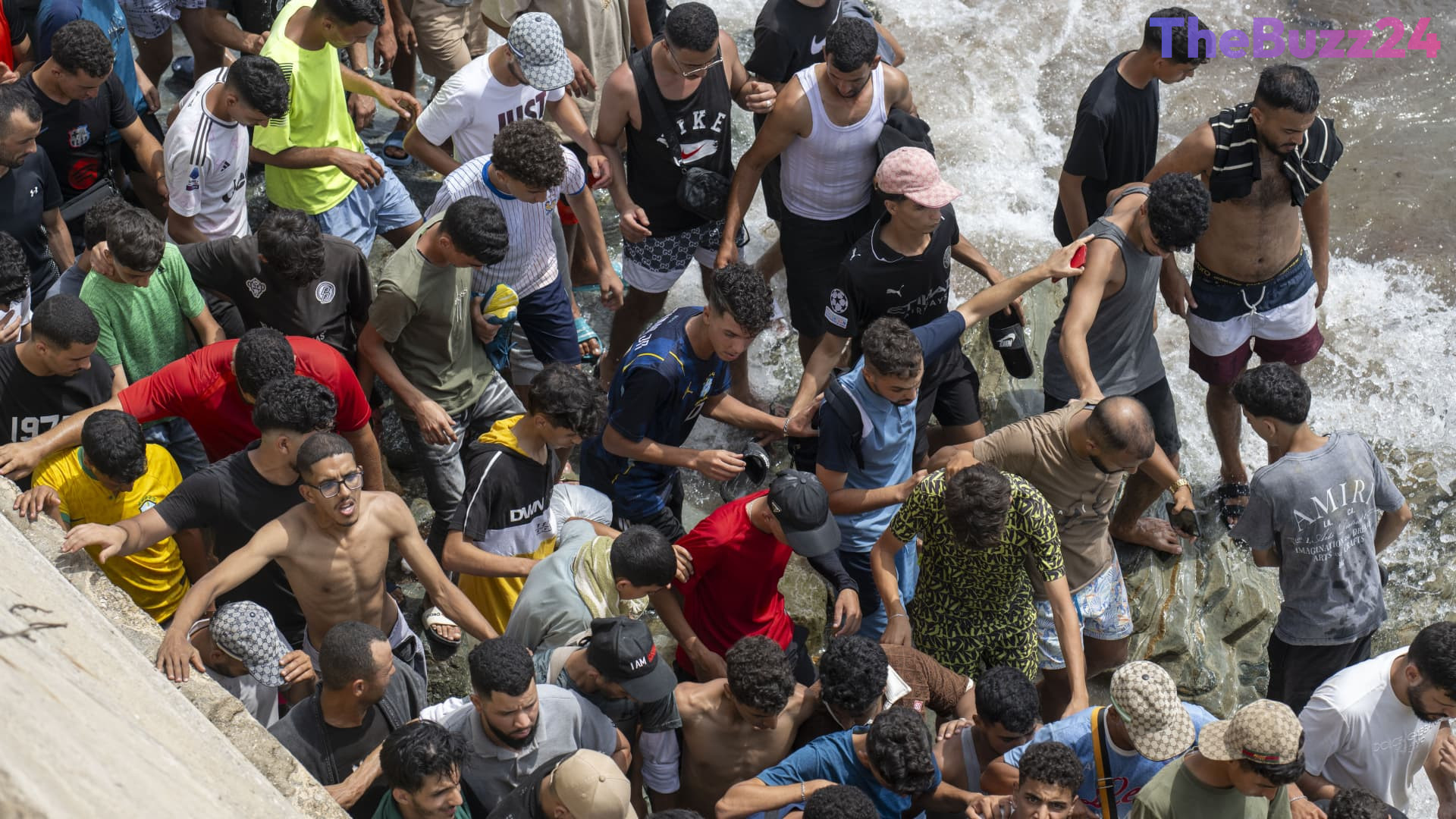
Spain Fortifies Ceuta Border With Floating Barrier After Mass Crossing Crisis
Spanish authorities have moved swiftly to install a 500-meter floating barrier off the coast of Ceuta following an unprecedented mass border rush that resulted in at least 67 fatalities. The pneumatic barrier, anchored by naval buoys along the Tarajal breakwater, is designed to deter unauthorized maritime entries into the Spanish enclave in North Africa while permitting patrol vessels to navigate the area.
The crisis unfolded over a two-day period, during which an estimated 50,000 individuals crossed into the tiny territory by land and sea, driven largely by economic desperation and misleading social media rumors regarding European migration policies. While the vast majority of those who crossed returned to Morocco within 48 hours, the tragedy has prompted heightened security measures, with military and police personnel maintaining a heavy presence along the previously unguarded stretches of beach.
In response to the sudden influx, 22 European Union governments formally requested an emergency meeting of interior ministers to address external border security and evaluate the broader implications for the Schengen Area. The situation has sparked internal political friction within the bloc, notably after Italy temporarily suspended Schengen travel arrangements with Spain, drawing sharp criticism from Spanish leadership regarding European solidarity.
Madrid continues to defend its border management protocols, emphasizing that exit checks are strictly enforced to prevent individuals from traveling onward to mainland Europe without authorization. Meanwhile, Spanish officials have reaffirmed their diplomatic partnership with Morocco, citing joint efforts to stabilize the frontier and dismantle people-smuggling networks that exploit vulnerable populations.
Key Takeaways
- Spain has begun installing a 500-meter floating barrier along the Ceuta breakwater to prevent future unauthorized maritime crossings.
- The recent mass border surge saw approximately 50,000 people enter the North African enclave, resulting in a death toll of at least 67.
- Twenty-two EU governments have called for an emergency interior ministers meeting to coordinate a response to the external border security challenge.
Editor’s Analysis & Impact
The recent crisis in Ceuta highlights the ongoing fragility of Europe’s southern external borders and the complex geopolitical dynamics surrounding migration from North Africa. Beyond the immediate humanitarian tragedy, the incident has exposed significant policy fractures within the European Union, evidenced by unilateral border suspensions and sharp debates over the integrity of the Schengen Area. In the near term, Spain’s deployment of physical barriers and its reinforced reliance on Moroccan cooperation will temporarily stem illegal crossings. However, the broader structural drivers of migration—economic hardship and sophisticated smuggling rings—ensure that border management will remain a high-stakes, contentious issue for European policymakers. The upcoming emergency EU interior ministers meeting will serve as a critical test for whether the bloc can forge a unified, cohesive strategy on border security and burden-sharing.
Frequently Asked Questions
Q: What triggered the recent border crisis in Ceuta?
A: The crisis was triggered by an unprecedented rush of approximately 50,000 people crossing into Ceuta from Morocco by land and sea, driven by economic hardship and misleading social media rumors.
Q: How is Spain responding to the security challenge?
A: Spain has deployed military and police patrols, accelerated returns with Moroccan cooperation, and begun installing a 500-meter floating barrier along the Tarajal breakwater.
Q: Why are EU governments calling for an emergency meeting?
A: Twenty-two EU governments requested the meeting to address external frontier security, evaluate regional cooperation with Morocco, and establish a coordinated response to prevent further illegal migration challenges.
AI Disclosure: This article is based on verified data and official reports. Our Team and AI have cross-referenced every financial detail with primary sources to ensure total accuracy.
More from this Category