Digital Borders and Political Upheaval: Inside the Ceuta Migration Crisis
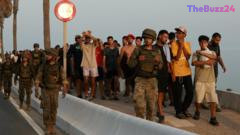
The recent mass migration surge into the Spanish exclave of Ceuta has sent shockwaves across Europe, exposing deep-seated political divisions and highlighting the powerful, sometimes volatile role of social media in modern geopolitical crises. Tens of thousands of individuals attempted to swim toward the Spanish territory, resulting in a tragic loss of life and leaving authorities scrambling to manage the sudden influx.
While the immediate physical crisis was largely contained as most participants returned to Morocco, the event ignited a fierce diplomatic storm within the European Union. Prime Minister Pedro Sanchez expressed profound frustration with international responses, singling out nations like Italy for political grandstanding rather than offering solidarity. Italian leadership quickly leveraged the imagery of the crossings to push domestic political agendas, temporarily suspending Schengen border agreements with Spain and amplifying tensions surrounding European migration policies.
Beyond inter-state friction, investigators point to coordinated misinformation campaigns on social media as a primary catalyst for the surge. Viral videos and false promises propagated online convinced many individuals that Spain had opened its borders completely, masking the harsh reality that awaited them upon arrival. With international leaders and external geopolitical actors capitalizing on the chaos, the incident has renewed urgent debates among EU member states regarding external border security, deterrence strategies, and the urgent need for cohesive immigration frameworks.
Key Takeaways
- A massive influx of migrants into the Spanish enclave of Ceuta led to dozens of tragic fatalities and a sharp diplomatic standoff in Europe.
- Viral social media misinformation played a central role in driving the sudden surge by falsely claiming that Spain had opened its borders.
- European leaders are facing renewed pressure to overhaul migration policies and strengthen external border security in the wake of the crisis.
Editor’s Analysis & Impact
The Ceuta migration crisis serves as a stark reminder of how rapidly regional humanitarian events can transform into volatile geopolitical flashpoints. The intersection of migration policy, opportunistic political maneuvering, and unregulated social media narratives highlights vulnerabilities in Europe’s collective security and border management frameworks. As populist factions across the continent leverage these events for electoral gains, the pressure on the European Union to establish unified, resilient migration policies has never been more urgent. In the long term, failing to address the root causes of digital misinformation and cross-border coordination will likely lead to recurring diplomatic friction and heightened security measures within the Schengen area.
Frequently Asked Questions
Q: What triggered the sudden surge of migrants in Ceuta?
A: The influx was largely driven by viral social media posts and misinformation falsely promising an open and easy path into Europe via Spain.
Q: How did other European nations react to the crisis?
A: The crisis exposed deep divisions within the EU, with countries like Italy criticizing Spanish policies and temporarily implementing random border checks, while numerous member states called for emergency meetings to address migration pull factors.
Q: What measures is Spain taking to prevent future incidents?
A: Spain is actively reinforcing the border around Ceuta by extending fences out to sea with buoys and deploying increased naval patrols to deter future unauthorized crossings.
AI Disclosure: This article is based on verified data and official reports. Our Team and AI have cross-referenced every financial detail with primary sources to ensure total accuracy.
More from this Category