Gaza Strikes Persist as Israel Expresses Deep Skepticism Over Trump-Backed Disarmament Deal
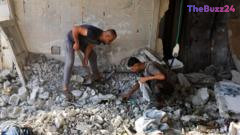
A fresh wave of Israeli airstrikes has struck multiple locations across the Gaza Strip, resulting in the deaths of at least 13 people, including several children. The military operations, which targeted Gaza City, Khan Younis, and Deir el-Balah, mark the second consecutive night of bombardments. These strikes occurred just days after Hamas reportedly agreed to a US-brokered disarmament proposal, under which the group would surrender its weapons to a newly proposed “Board of Peace” established by US President Donald Trump.
The Israel Defense Forces defended the operations, stating that the strikes targeted and killed key military operatives, including commanders from Hamas’s elite Nukbha force and the Maghazi Battalion. However, the ongoing violence highlights a deep rift over the proposed peace roadmap. Israeli Energy Minister Eli Cohen emphasized that no agreement has been finalized to halt military actions in Gaza, where Israel currently maintains control over approximately 70% of the territory. Cohen asserted that full Israeli control over the enclave remains necessary unless Hamas undergoes complete disarmament, directly challenging the Board of Peace’s framework for an Israeli military withdrawal.
The disarmament initiative is part of a broader 20-point, US-brokered ceasefire plan aimed at ending the conflict. The roadmap outlines a process to inventory and store heavy weaponry under the supervision of the Palestinian National Committee, a technocratic group currently based in Cairo. While President Trump has expressed optimism, claiming Israel is supportive of the “complete disarmament” framework, internal Israeli political opposition remains strong. Far-right National Security Minister Itamar Ben Gvir dismissed the draft agreement as unacceptable, reflecting widespread skepticism within the Israeli government regarding Hamas’s willingness to actually relinquish its arsenal.
The humanitarian cost of the protracted conflict continues to mount, with over 1,100 Palestinians reported killed since a nominal ceasefire was initiated last October. Beyond the loss of life, the physical infrastructure of Gaza has been devastated. Satellite analysis indicates that more than 1,500 buildings have been demolished in Israeli-controlled zones, contributing to an estimated 60 million tonnes of debris accumulated since late 2023. As diplomatic efforts stall, the prospects for implementing the peace roadmap remain highly uncertain.
Key Takeaways
- At least 13 Palestinians, including children, were killed in consecutive nights of Israeli airstrikes targeting Gaza City, Khan Younis, and Deir el-Balah.
- The strikes occurred despite Hamas accepting a US-brokered disarmament plan to hand over weapons to Donald Trump's Board of Peace.
- Israeli officials remain highly skeptical of the deal, with some advocating for full control of Gaza if complete disarmament is not achieved.
Editor’s Analysis & Impact
The disconnect between Washington’s diplomatic optimism and the reality on the ground in Gaza highlights the immense difficulty of enforcing a lasting peace agreement. While the Trump administration pushes the ‘Board of Peace’ framework as a breakthrough, Israel’s continued military operations and internal political resistance—particularly from far-right figures like Itamar Ben Gvir—suggest that a diplomatic resolution is far from secure. Israel’s insistence on maintaining security control over 70% of Gaza directly conflicts with the proposed withdrawal terms. Furthermore, the logistical challenge of transferring weapons to a Cairo-based technocratic committee while Gaza lies in ruins, buried under 60 million tonnes of debris, presents an almost insurmountable hurdle. Without genuine buy-in from Israel’s leadership and a viable security transition plan, the roadmap risks becoming another failed diplomatic effort while the humanitarian crisis deepens.
Frequently Asked Questions
Q: What is the Board of Peace disarmament plan?
A: It is a US-brokered initiative proposed under the Trump administration that requires Hamas and other armed groups in Gaza to surrender their heavy weapons to an independent oversight body, paving the way for Israeli troop withdrawal and reconstruction.
Q: Why is Israel continuing airstrikes despite the proposed agreement?
A: Israeli leadership remains highly skeptical of Hamas's commitment to disarm. Officials argue that military operations must continue to neutralize active threats, and some ministers insist on full Israeli control of the territory unless complete disarmament is verified.
Q: Who would manage Gaza under the new peace roadmap?
A: The plan proposes that heavy weapons be managed by the Palestinian National Committee, a group of independent technocrats to whom Hamas has agreed to hand over administrative power, though the committee currently operates out of Cairo.
AI Disclosure: This article is based on verified data and official reports. Our Team and AI have cross-referenced every financial detail with primary sources to ensure total accuracy.
More from this Category