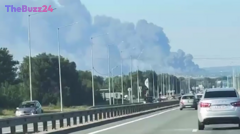
Ukraine Targets Russian Oil and Airfield in Deep Strikes; Moscow Reports Casualties
Ukraine has claimed responsibility for a series of overnight drone attacks deep within Russian territory, striking a significant oil refinery and a key airfield housing strategic bombers. President Volodymyr Zelensky characterized these operations as “long-range sanctions” aimed at disrupting the financial resources fueling Moscow’s ongoing conflict.
The targeted facilities, including the Engels airfield and a refinery in the Saratov region, are located approximately 600 kilometers (373 miles) from Ukraine’s border. Additional strikes were reported against an oil depot in the Kaluga region and a drone launch site in Bryansk. Russia, in response, stated that its forces intercepted or shot down 635 drones and reported eight fatalities resulting from the Ukrainian attacks. The Russian government also indicated a separate strike on a warehouse belonging to Wildberries, Russia’s largest online retailer.
These escalations follow a pattern of intensified attacks by both nations, focusing on critical infrastructure such as energy facilities and logistics hubs. The strikes come as the front lines in Ukraine remain largely static, and diplomatic efforts to broker a peace settlement have yielded no significant breakthroughs. President Zelensky emphasized the strategic importance of the Engels airfield, a primary base for Russia’s strategic aviation, noting that bombers stationed there are frequently used to launch missile attacks against Ukraine. The governor of the Saratov region confirmed damage to civilian infrastructure, including the airfield and refinery, and reported two deaths.
Ukraine has previously identified logistics hubs like those operated by Wildberries as legitimate targets, asserting they supply the Russian military with essential components. These Ukrainian operations are reportedly having a notable impact on the Russian economy, particularly affecting small and medium-sized businesses that rely on these retail platforms. Concurrently, Russia has continued its own campaign, targeting Ukrainian postal services and major online retailers.
Key Takeaways
- Ukraine conducted drone strikes targeting a major Russian oil refinery and a strategic airfield in the Saratov region.
- Russia reported eight deaths and the interception of 635 drones, while also claiming strikes on Ukrainian ports and vessels.
- The attacks highlight a recent escalation in targeting critical infrastructure and logistics by both nations amidst a static front line.
Editor’s Analysis & Impact
This latest exchange of strikes underscores the escalating nature of the conflict, with Ukraine increasingly demonstrating its capability to strike deep within Russian territory. Targeting energy infrastructure and military airfields represents a strategic shift, aiming to degrade Russia’s war-fighting capacity and economic resilience. The impact on Russian logistics, particularly through attacks on major retailers like Wildberries, could have broader economic repercussions, affecting supply chains and smaller businesses. Conversely, Russia’s continued targeting of Ukrainian logistics and infrastructure signals a persistent effort to disrupt Ukraine’s economy and war effort. The lack of a diplomatic breakthrough suggests a prolonged period of such asymmetric warfare, with significant implications for regional stability and global energy markets.
Frequently Asked Questions
Q: What specific Russian facilities did Ukraine claim to hit?
A: Ukraine stated it struck the Engels airfield and a major oil refinery in the Saratov region, along with an oil depot in Kaluga and a drone launch site in Bryansk.
Q: What was Russia's reported response to the Ukrainian strikes?
A: Russia reported that its forces shot down or intercepted 635 drones and claimed eight fatalities from the Ukrainian attacks. Moscow also stated it attacked two Ukrainian ports and two vessels in the Black Sea.
Q: Why does Ukraine consider facilities like Wildberries warehouses legitimate targets?
A: Ukraine views these logistics hubs as legitimate targets because they allegedly provide the Russian military with essential components, such as drone parts and navigation equipment.
AI Disclosure: This article is based on verified data and official reports. Our Team and AI have cross-referenced every financial detail with primary sources to ensure total accuracy.
More from this Category