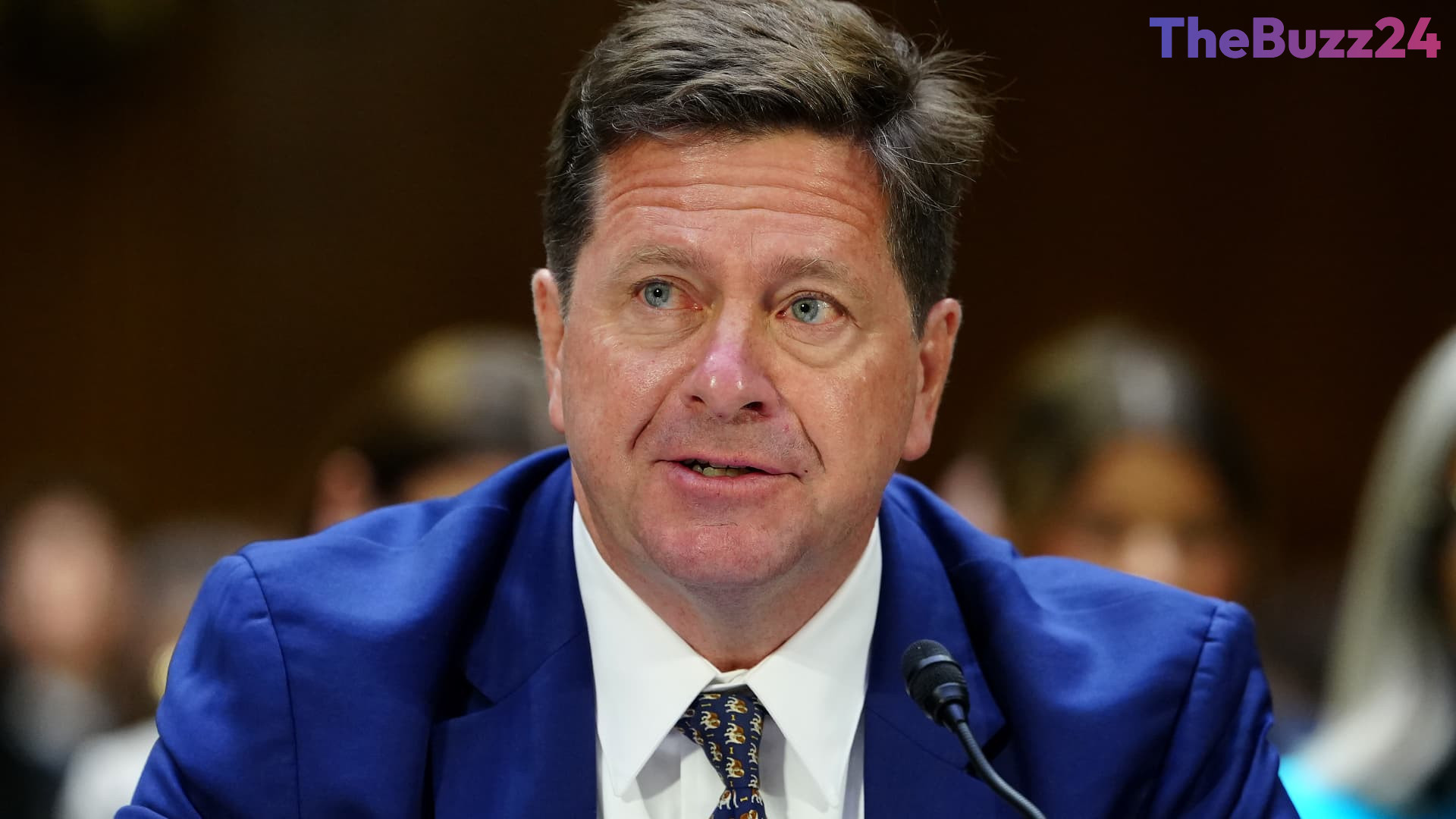
Jay Clayton Assumes Office as Director of National Intelligence Following Senate Confirmation
Jay Clayton has officially taken the oath of office to become the U.S. Director of National Intelligence, stepping into the key cabinet-level role after a closely watched and contentious Senate confirmation process. Clayton, who previously served as the U.S. Attorney for the Southern District of New York, now assumes leadership over the nation’s 18 federal intelligence agencies during a critical period preceding the upcoming midterm elections.
The leadership transition comes after Tulsi Gabbard departed the position in June, concluding a tenure marked by repeated clashes with congressional Democrats. In his inaugural official statement following the ceremony, Clayton outlined his vision for the intelligence apparatus, asserting that the safety and security of the public would serve as the agency’s primary mission. He further emphasized the need for rigorous oversight, institutional transparency, and absolute accountability across all branches under his command.
Clayton’s confirmation was met with solid pushback from Senate Democrats, primarily centered on sharp exchanges during confirmation hearings regarding previous presidential election outcomes. However, Senate Republicans held sufficient support to approve his nomination. Moving forward, Clayton faces the dual challenge of restoring public trust in intelligence operations while managing complex national security priorities across multiple global fronts.
Key Takeaways
- Jay Clayton has officially been sworn in as the U.S. Director of National Intelligence following a partisan Senate confirmation vote.
- The former U.S. Attorney for the Southern District of New York fills the position left vacant by Tulsi Gabbard's resignation in June.
- Clayton will oversee 18 U.S. intelligence agencies, pledging to focus on transparency, institutional accountability, and national security.
Editor’s Analysis & Impact
The appointment of Jay Clayton as Director of National Intelligence arrives at a delicate moment for the American intelligence apparatus. Taking command of 18 separate intelligence agencies requires a balancing act between addressing global national security risks and handling severe domestic political scrutiny. Clayton’s publicly stated focus on transparency and non-partisanship reflects an effort to stabilize an office that has recently faced intense congressional critique. Moving forward into a high-stakes election cycle, Clayton’s primary challenge will be demonstrating the structural independence of intelligence reporting while keeping federal agencies unified and focused on emerging geopolitical threats.
Frequently Asked Questions
Q: Who is Jay Clayton and what is his new position?
A: Jay Clayton is the former U.S. Attorney for the Southern District of New York who now serves as the Director of National Intelligence, leading 18 federal intelligence agencies.
Q: Who previously held the post of Director of National Intelligence?
A: Clayton succeeded Tulsi Gabbard, who stepped down from the role in June after a turbulent tenure marked by political disagreements with congressional lawmakers.
Q: What primary commitments did Jay Clayton make upon taking office?
A: Clayton pledged that public security would be the agency's chief objective, promising enhanced transparency, strict oversight, and protection against the political misuse of intelligence services.
AI Disclosure: This article is based on verified data and official reports. Our Team and AI have cross-referenced every financial detail with primary sources to ensure total accuracy.
More from this Category