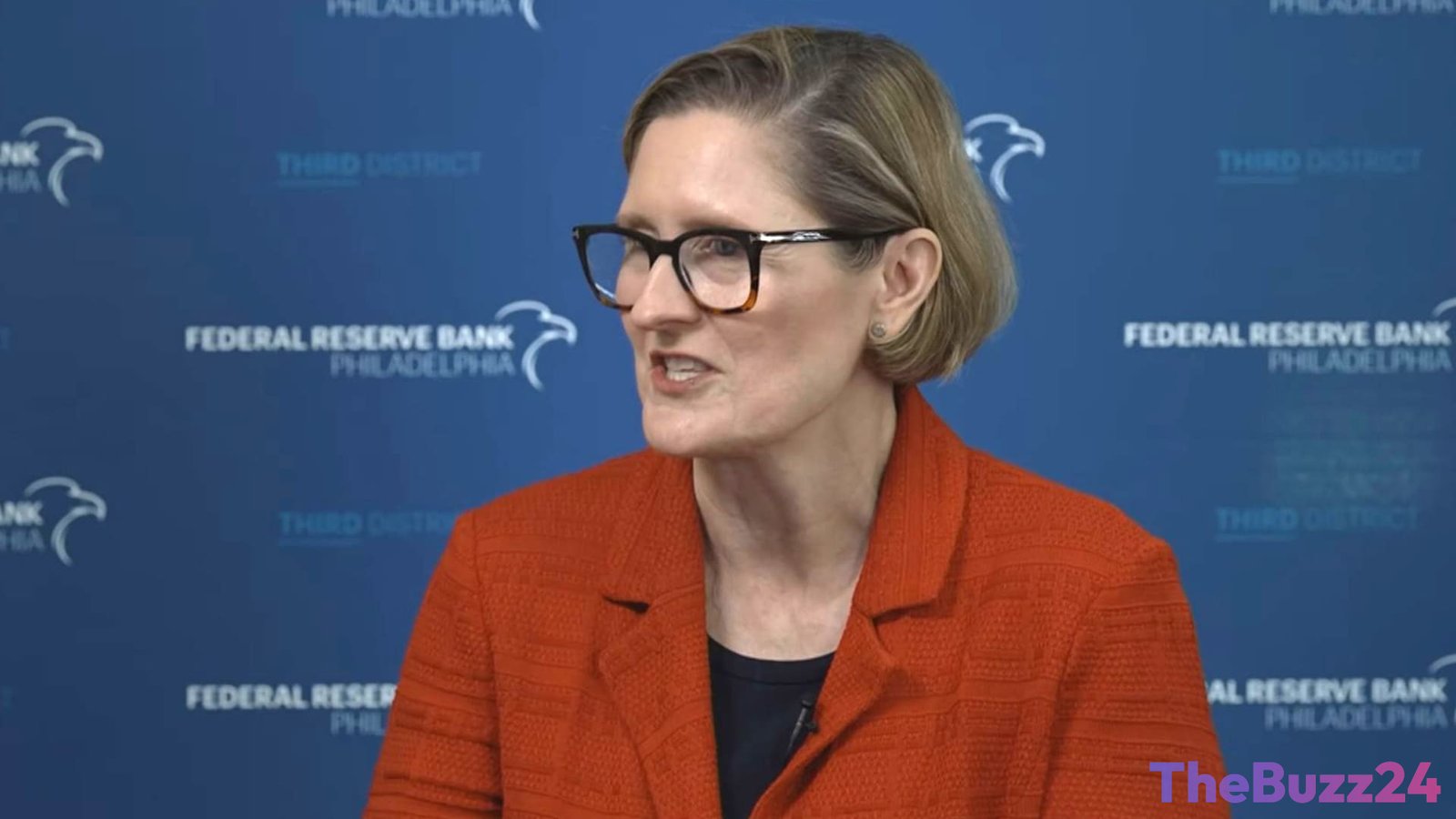
Philadelphia Fed President Paulson Confident in Current Rates, Signals Openness to Future Adjustments
Philadelphia Federal Reserve President Anna Paulson has expressed confidence that the current level of interest rates is adequate to steer inflation back towards the central bank’s target. Her remarks come after she voted with the majority of the Federal Open Market Committee (FOMC) last week to maintain rates at their present level, a decision she described as “not a close call” for her, despite a 9-3 split among the panel members.
Paulson articulated her belief that the prevailing monetary policy is “mildly restrictive,” a necessary condition to bring underlying inflation down to 2% within an acceptable timeframe. While acknowledging some mild progress in recent months, she emphasized the need for continued improvement in inflation data. She noted that her estimate for underlying inflation, excluding volatile factors like energy shocks and tariffs, hovers between 2.4% and 2.8%, contrasting with the 3.3% core inflation figure reported by the Commerce Department for June, which the Fed uses as a primary forecasting tool.
Should the desired progress in lowering inflation not materialize, Paulson indicated a readiness to recalibrate monetary policy. She stressed the imperative of reaching the 2% inflation target. Furthermore, Paulson revealed an open mind regarding broader operational changes within the Fed, including discussions initiated by Chairman Kevin Warsh about potentially reducing the frequency of FOMC meetings from the current eight per year, deeming such discussions “healthy.”
Key Takeaways
- Philadelphia Fed President Anna Paulson believes current interest rates are sufficient to guide inflation towards the central bank's 2% target.
- Paulson voted with the FOMC majority to hold rates steady, considering it a clear-cut decision despite a 9-3 internal divide.
- She is open to adjusting monetary policy if inflation progress stalls and supports discussions on potential operational changes, such as reducing FOMC meeting frequency.
Editor’s Analysis & Impact
Philadelphia Fed President Anna Paulson’s comments offer a nuanced perspective on the central bank’s monetary policy. Her confidence in current rates, coupled with a willingness to recalibrate if inflation progress falters, suggests a data-dependent approach. This stance could be interpreted by markets as a signal that aggressive rate hikes might be less likely in the immediate future, potentially easing pressure on borrowing costs and bond yields. However, the explicit mention of a 9-3 FOMC vote highlights ongoing internal debate, indicating that future policy decisions may not be unanimous and could lead to market volatility as investors weigh differing viewpoints. The discussion around reducing FOMC meeting frequency, while seemingly procedural, could have long-term implications for the transparency and responsiveness of monetary policy communication, potentially impacting how markets anticipate and react to Fed actions.
Frequently Asked Questions
Q: What is Philadelphia Fed President Anna Paulson's current view on interest rates?
A: Anna Paulson believes the current level of interest rates is sufficient to bring inflation back to the central bank's 2% target, describing the policy as 'mildly restrictive'.
Q: Why was the FOMC vote to hold rates steady not unanimous?
A: While Paulson and the majority felt current rates were adequate, three FOMC members dissented, questioning whether the existing rate level was restrictive enough to effectively lower inflation.
Q: What would prompt Paulson to consider adjusting monetary policy?
A: Paulson stated that if sufficient progress is not observed in bringing underlying inflation lower, she would be open to recalibrating monetary policy to ensure the 2% target is met.
AI Disclosure: This article is based on verified data and official reports. Our Team and AI have cross-referenced every financial detail with primary sources to ensure total accuracy.
More from this Category