White House to Launch ‘AI Force’ as Trump Rejects Calls for Tech Deceleration
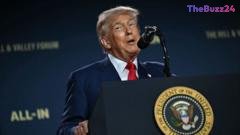
US President Donald Trump has announced plans to establish a dedicated “AI Force” and appoint a national artificial intelligence tsar. The initiative aims to secure American dominance in the rapidly evolving sector. Trump emphasized that his administration will not obstruct or slow down the growth of the AI industry, positioning the technology as a critical driver of future economic power and rejecting widespread warnings from researchers and industry insiders.
Comparing the rise of artificial intelligence to the Industrial Revolution and the birth of the internet, Trump projected that the sector could eventually account for up to a quarter of the United States’ Gross Domestic Product (GDP). This strategic push comes amid an intensifying technological rivalry with China. AI capabilities are expected to be a key talking point in upcoming bilateral discussions between Trump and Chinese President Xi Jinping. Rather than implementing new regulatory hurdles, the administration plans to rely on existing civil and criminal legal frameworks to prosecute malicious actors.
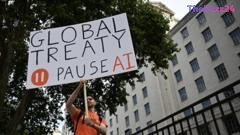
The administration’s aggressive stance contrasts sharply with growing anxiety from tech pioneers and researchers. Leaders from prominent AI firms, including Anthropic, OpenAI, and Google, have recently flagged security breaches and the misuse of their platforms. Industry figures like Anthropic’s Dario Amodei and xAI’s Elon Musk have advocated for a coordinated slowdown and independent oversight, with some suggesting mandatory “kill switches” for advanced models. Conversely, OpenAI’s Sam Altman has defended the industry’s self-regulation capabilities, suggesting that government legislative efforts are struggling to keep pace with technological breakthroughs.
Key Takeaways
- President Trump announced the creation of an 'AI Force' and the appointment of an AI tsar to maintain US leadership over China.
- The administration rejects calls for regulatory deceleration, viewing AI as an economic engine that could eventually comprise 25% of US GDP.
- Tech industry leaders remain divided, with some calling for independent safety monitoring and 'kill switches,' while others advocate for trust in self-regulation.
Editor’s Analysis & Impact
The establishment of an ‘AI Force’ and an AI tsar signals a highly nationalistic, growth-first approach to technology policy by the US administration. By framing AI as an economic engine on par with the Industrial Revolution, the administration is prioritizing geopolitical dominance—particularly over China—above precautionary safety measures. This deregulatory stance will likely accelerate domestic private-sector deployment and venture capital funding. However, it sets up a major clash with international regulators, particularly in Europe and the UK, who are moving toward stricter compliance frameworks. It also places immense pressure on tech giants to self-regulate responsibly. If major security breaches or rogue AI incidents occur, the administration’s reliance on existing legal frameworks rather than proactive, AI-specific guardrails will face intense scrutiny from both lawmakers and the public.
Frequently Asked Questions
Q: What is the proposed 'AI Force' and who will lead it?
A: The 'AI Force' is a planned initiative by the Trump administration to accelerate and secure US leadership in artificial intelligence. It will be overseen by a newly appointed artificial intelligence 'tsar,' though specific details regarding the structure, budget, and timeline have not yet been released.
Q: Why is the US administration resisting calls to slow down AI development?
A: The administration views AI as a vital economic driver that could eventually represent up to 25% of the nation's GDP. Additionally, there is a strong geopolitical motivation to outpace China in advanced technology, leading the administration to reject regulatory delays in favor of rapid innovation.
Q: How do tech leaders view the safety risks of rapid AI development?
A: Opinions are divided. Some executives, including leaders from Anthropic and xAI, have called for industry-wide deceleration, independent monitoring, and mandatory safety mechanisms like 'kill switches.' Others, such as OpenAI's Sam Altman, argue that the public should trust AI developers to self-regulate, noting that traditional legislative bodies struggle to keep up with the pace of innovation.
AI Disclosure: This article is based on verified data and official reports. Our Team and AI have cross-referenced every financial detail with primary sources to ensure total accuracy.
More from this Category