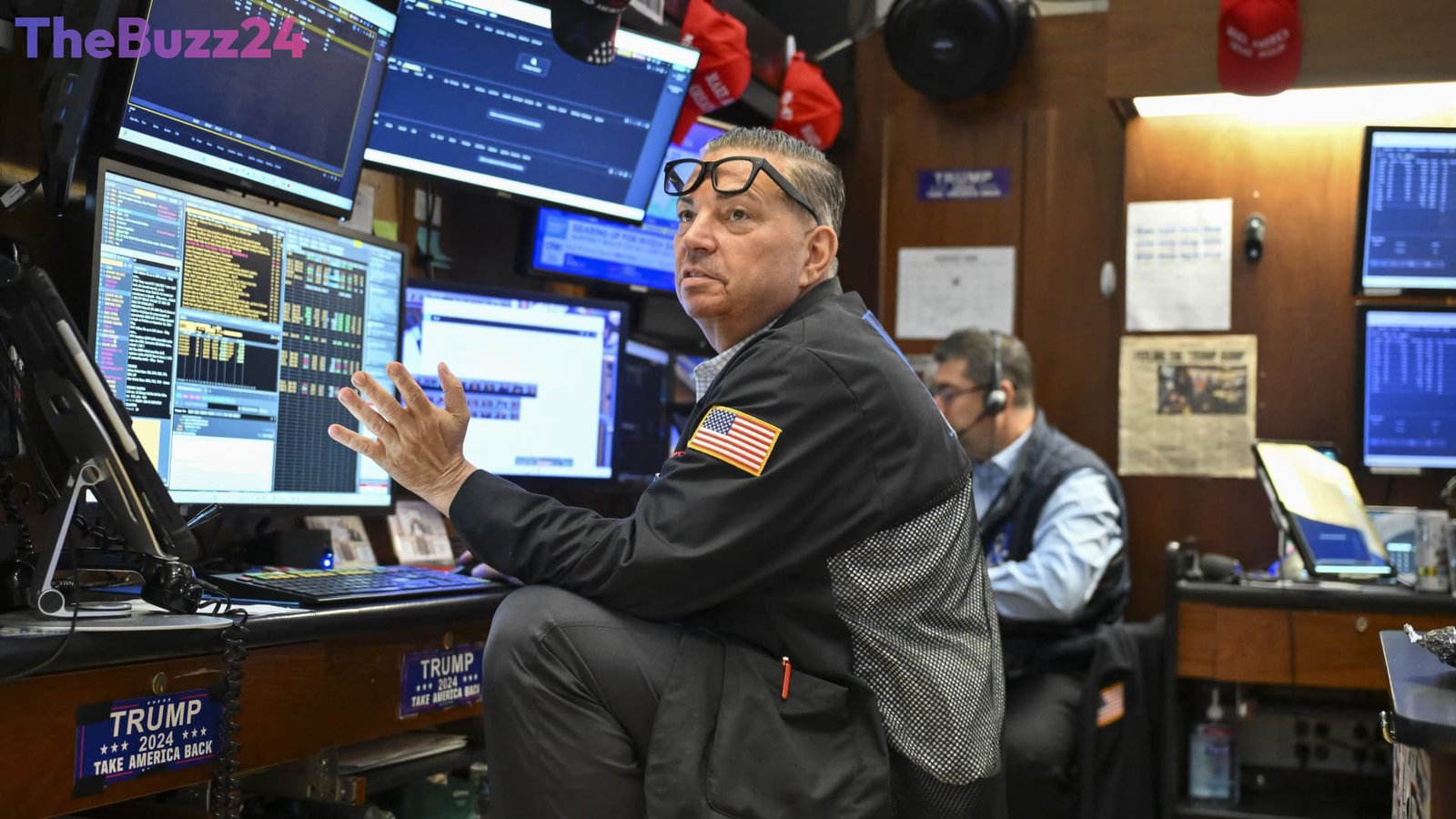
Treasury Yields Dip as Democrats Secure Control of Congress
U.S. Treasury yields experienced a slight decline on Wednesday following the Democratic Party’s successful acquisition of majorities in both the House of Representatives and the Senate. This electoral outcome has prompted investors to reassess the economic landscape, particularly concerning future government fiscal policies.
The benchmark 10-year Treasury note yield hovered near its previous closing level, showing a minimal increase of less than a basis point to trade around 4.954%. Similarly, the 30-year bond yield saw a modest uptick of one basis point, reaching 5.334%, while the yield on the shorter-term 2-year note also rose by one basis point to 4.627%. It is important to note that a basis point is equivalent to 0.01%, and bond yields move in opposition to their prices.
The Democratic victories, which included flipping several Senate seats previously held by Republicans across key states like Iowa, Kansas, North Carolina, Ohio, South Carolina, Maine, and Texas, alongside significant gubernatorial wins, are being interpreted by market participants as a potential catalyst for a more restrained approach to government spending. Analysts suggest that a divided Congress, or in this case, unified control by one party, can influence the administration’s ability to enact its legislative agenda, potentially leading to tighter fiscal management.
Market observers, including traders at JPMorgan, are highlighting the prospect of “reduced deficit spending” as a primary focus for Wall Street in the post-election environment. This outlook suggests that the new congressional landscape might lead to greater scrutiny over the federal budget, potentially impacting the trajectory of national debt and inflation expectations. The possibility of navigating government funding challenges, such as avoiding shutdowns, is also being factored into market sentiment.
Key Takeaways
- Democrats have secured majorities in both the U.S. House and Senate following the midterm elections.
- Treasury yields showed a slight decrease as investors reacted to the election results.
- Market analysts anticipate a potential reduction in government deficit spending under the new congressional control.
Editor’s Analysis & Impact
The Democratic victories in the midterm elections are poised to reshape fiscal policy discussions, with a notable impact on Treasury yields. The market’s immediate reaction suggests an expectation of more conservative government spending, which typically correlates with lower bond yields as inflation expectations may moderate. This shift could influence borrowing costs for the government and potentially affect broader economic growth strategies. Investors will be closely monitoring how the new congressional majorities translate into actual legislative action regarding the budget and deficit reduction, as this will be a key determinant of market sentiment and economic trajectory in the coming months.
Frequently Asked Questions
Q: What are Treasury yields?
A: Treasury yields represent the return an investor receives on U.S. Treasury bonds, notes, and bills. They are a key indicator of interest rates and investor sentiment towards the economy and government debt. Yields move inversely to bond prices; when prices go up, yields go down, and vice versa.
Q: Why do Treasury yields fall after election wins?
A: Treasury yields can fall after election results if investors anticipate that the winning party's policies will lead to reduced government spending and deficits. Lower expected deficits can reduce the supply of new government debt and temper inflation expectations, both of which tend to push bond prices up and yields down.
Q: What is the significance of the 10-year Treasury yield?
A: The 10-year Treasury yield is closely watched as it serves as a benchmark for many other interest rates, including mortgage rates and corporate bond yields. It is often seen as a barometer of economic growth and inflation expectations over the medium term.
AI Disclosure: This article is based on verified data and official reports. Our Team and AI have cross-referenced every financial detail with primary sources to ensure total accuracy.
More from this Category