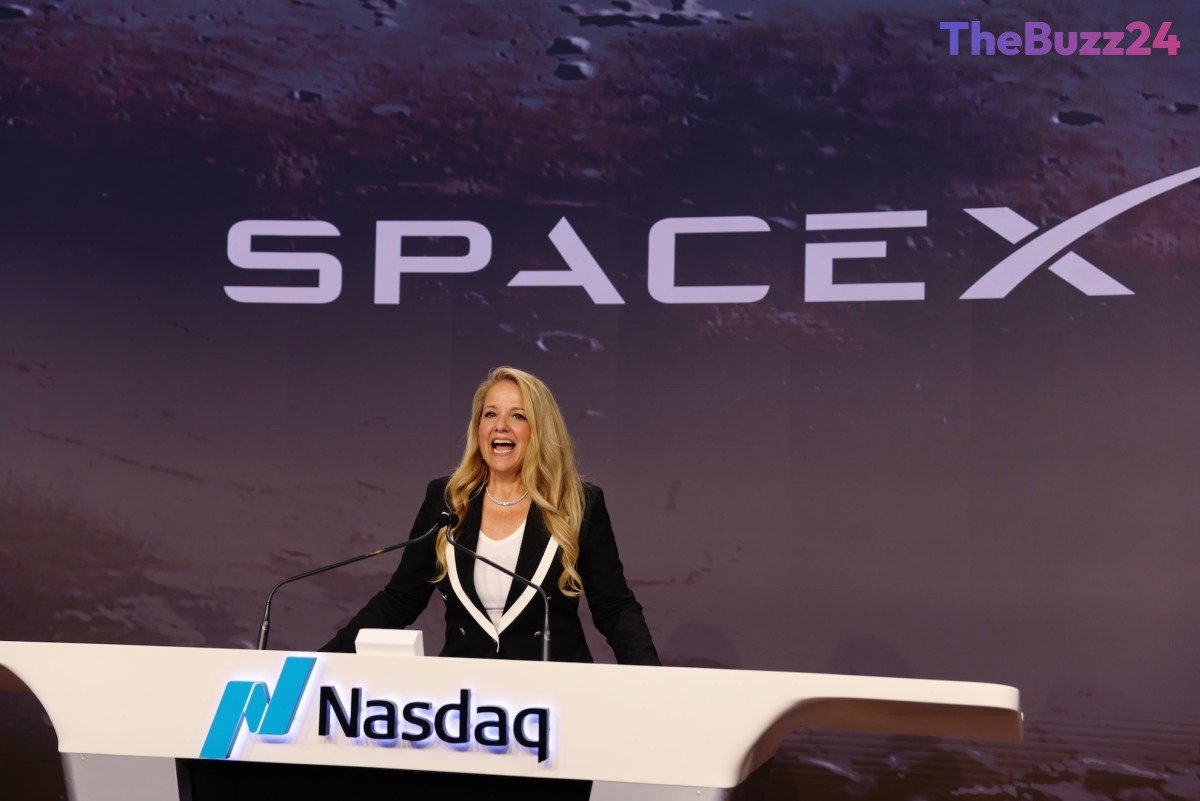
SpaceX Doubles Revenue to $7.8 Billion Driven by Starlink and Massive AI Compute Deals
SpaceX has experienced a staggering surge in financial performance, doubling its quarterly revenue year-over-year. The aerospace and satellite communications giant attributed this massive growth primarily to the rapid expansion of its Starlink internet service and lucrative agreements to lease out computing infrastructure to prominent tech firms such as Google and Anthropic. This financial milestone marks the company’s inaugural quarterly earnings report since its historic initial public offering earlier this year.
Total sales surged by 92%, climbing from $4 billion in the second quarter of the previous year to $7.8 billion in the most recent quarter. A significant portion of this financial leap was fueled by the company’s artificial intelligence division, which contributed nearly $2 billion, alongside a $1.7 billion increase in Starlink earnings. Despite posting a net loss of $541 million for the quarter, this figure represents a notable improvement compared to the $1 billion loss recorded during the same period last year, demonstrating narrowing margins as operations scale.
Executives expressed immense optimism regarding future financial health, pointing to billions of dollars in contracted cloud services slated to begin ramping up in the coming months. Leadership projects an annualized revenue run-rate reaching monumental heights by the conclusion of the year, bolstered by aggressive capital expenditures and successful post-offering fundraising efforts that have equipped the firm with a substantial financial reserve for ongoing expansion and technological development.
Key Takeaways
- SpaceX reported a 92% jump in quarterly revenue, reaching $7.8 billion compared to $4 billion in the previous year.
- Growth was heavily driven by Starlink's expansion and high-value cloud compute rental deals with Anthropic and Google.
- Despite narrowing quarterly losses to $541 million, the company continues aggressive capital expenditures exceeding $28 billion in the first half of the year.
Editor’s Analysis & Impact
SpaceX’s transition from a pure-play aerospace manufacturer into a diversified conglomerate spanning satellite internet and cloud-based AI infrastructure represents a paradigm shift in the technology and space sectors. By pivoting surplus data center capacity—originally intended for internal AI development—toward enterprise clients like Google and Anthropic, the firm has unlocked a high-margin revenue stream that diversifies its income beyond traditional launch services and Starlink subscriptions. However, the market’s mixed reaction to its post-IPO valuation highlights the immense pressure facing management to justify a trillion-dollar valuation amid heavy capital expenditure. If executives achieve their ambitious annualized revenue run-rate targets, it could cement the company’s position as one of the most financially formidable enterprises globally, fundamentally altering the competitive landscape of both commercial spaceflight and enterprise cloud computing.
Frequently Asked Questions
Q: What drove SpaceX's revenue doubling?
A: The revenue surge was primarily driven by the growth of the Starlink satellite internet service and newly secured deals to rent out computing power to AI firms like Google and Anthropic.
Q: Did SpaceX turn a profit in its recent quarter?
A: No, the company still reported a net loss of $541 million for the quarter, though this was significantly lower than the $1 billion loss recorded in the same period the previous year.
Q: How much capital has SpaceX spent recently?
A: SpaceX reported more than $28 billion in capital expenditures through the first half of the year, a substantial increase from the $7 billion spent during the first six months of the prior year.
AI Disclosure: This article is based on verified data and official reports. Our Team and AI have cross-referenced every financial detail with primary sources to ensure total accuracy.
More from this Category