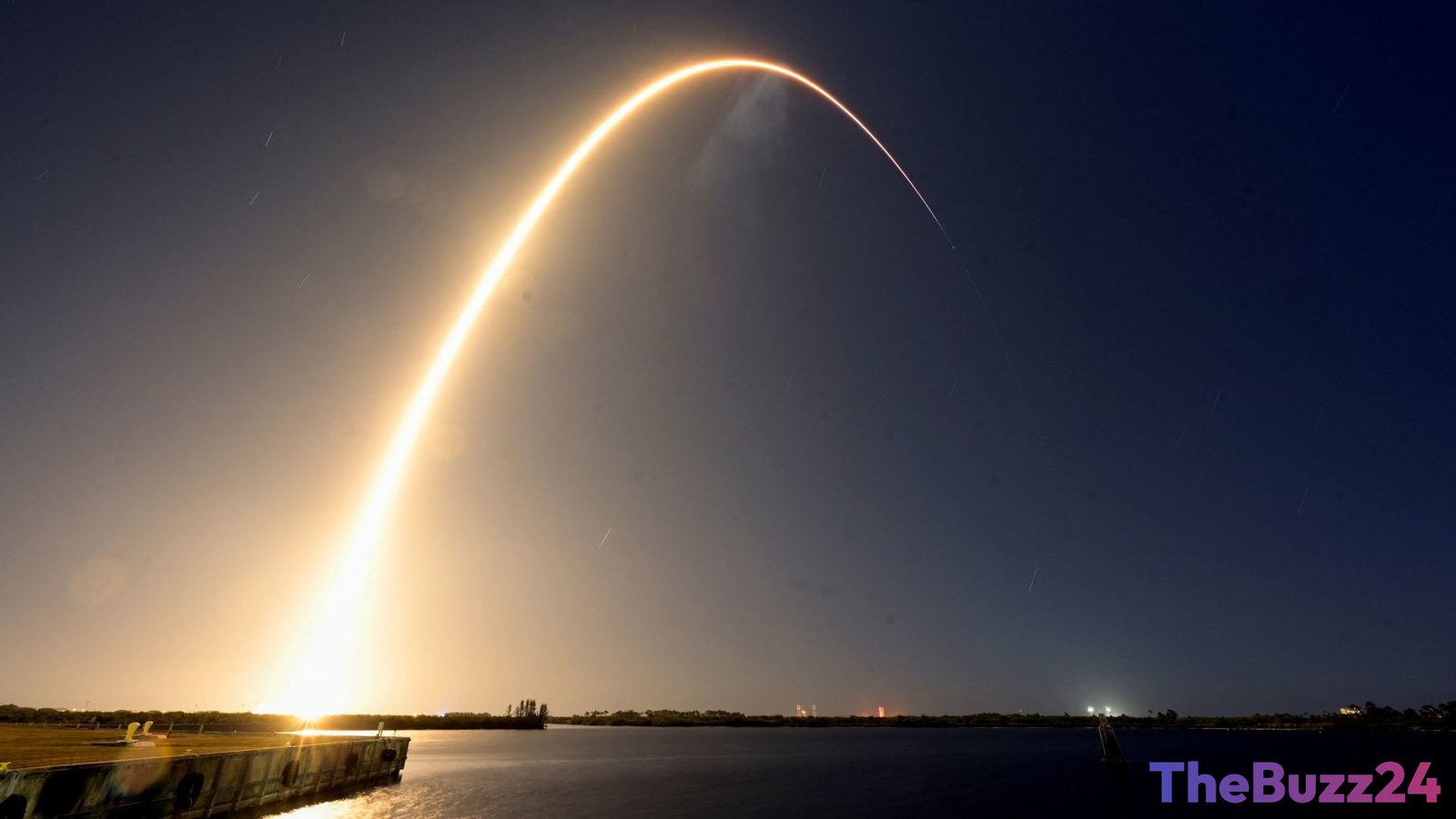
SpaceX Stock Plummets Below IPO Price as Massive AI Spending Spook Investors Amid Lunar Rocket Crash
SpaceX experienced a sharp decline in its share price during Wednesday’s trading session, falling more than 7% and slipping below its initial public offering (IPO) price of $135. The market downturn came immediately after the aerospace giant released its first quarterly earnings report as a publicly traded company. Although the company posted impressive revenue growth—surging 92% to $7.81 billion and beating consensus estimates of $6.93 billion—investors were deeply unsettled by a massive surge in capital expenditures.
The primary catalyst for the investor sell-off was SpaceX’s capital expenditure, which ballooned sixfold to $18.4 billion during the second quarter. The vast majority of this capital was directed toward artificial intelligence initiatives. Unlike other major technology firms heavily investing in the AI race, SpaceX does not yet generate the substantial cash flow required to easily offset such aggressive spending. This financial strain overshadowed positive developments, including narrower-than-expected losses and the continued strong performance of Starlink, the company’s satellite internet division and primary revenue engine.
Adding a dramatic backdrop to the financial slide, a discarded four-metric-ton piece of a SpaceX Falcon 9 rocket was projected to collide with the moon on the same day. The rocket component, left over from a January 2025 mission involving commercial lunar landers, was traveling at speeds exceeding 5,400 mph when it was estimated to have struck the lunar surface. Market analysts quickly drew parallels between the literal lunar impact and the downward trajectory of the company’s stock, describing the collision as an uncanny metaphor for the post-earnings market reaction.
Looking ahead, SpaceX faces further headwinds as its first major investor lockup period expires this week. This milestone will free up more than 900 million shares for potential sale, many of which are held by early insiders who acquired their stakes well below the $135 IPO price. Meanwhile, Elon Musk’s recent assertions that Starlink could eventually expand into terrestrial networks to challenge telecom giants like AT&T, T-Mobile, and Verizon have introduced new competitive dynamics, though immediate profitability remains the primary concern for Wall Street.
Key Takeaways
- SpaceX shares fell over 7%, dropping below the $135 IPO price despite beating Q2 revenue expectations with $7.81 billion.
- Investors were spooked by an $18.4 billion capital expenditure bill, representing a sixfold increase driven primarily by AI investments.
- The financial downturn coincided with a 4-metric-ton Falcon 9 rocket fragment crashing into the moon at over 5,400 mph.
Editor’s Analysis & Impact
The market’s reaction to SpaceX’s debut earnings highlights a growing skepticism toward aggressive AI spending when not backed by robust cash flows. While tech giants like Microsoft or Alphabet can absorb multi-billion-dollar AI expenditures due to their highly profitable core businesses, SpaceX remains heavily reliant on Starlink to drive its revenue. By scaling up capital expenditures sixfold to $18.4 billion, SpaceX has entered a high-stakes arms race that threatens its near-term path to profitability. Furthermore, the impending expiration of the investor lockup period presents a significant technical headwind. If insiders choose to cash out, the stock could face prolonged downward pressure. Over the long term, SpaceX’s ability to stabilize its stock will depend on proving that its massive AI investments can yield tangible commercial applications, while simultaneously scaling Starlink to compete with traditional telecom giants.
Frequently Asked Questions
Q: Why did SpaceX's stock drop despite beating revenue expectations?
A: While SpaceX reported strong revenue of $7.81 billion, beating expectations, investors were alarmed by a sixfold increase in capital expenditures to $18.4 billion, which was heavily directed toward artificial intelligence.
Q: What was the significance of the Falcon 9 rocket crashing into the moon?
A: A discarded 4-metric-ton piece of a Falcon 9 rocket from a January 2025 mission struck the moon at 5,400 mph. Market analysts noted the literal crash served as a striking metaphor for the company's tumbling stock price on the same day.
Q: What is the investor lockup expiration, and how could it affect SpaceX stock?
A: The lockup expiration frees up over 900 million shares for potential sale by early insiders. Because many of these insiders acquired their shares at prices far below the $135 IPO price, there is a strong incentive for them to sell, which could put further downward pressure on the stock.
AI Disclosure: This article is based on verified data and official reports. Our Team and AI have cross-referenced every financial detail with primary sources to ensure total accuracy.
More from this Category