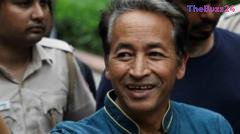
Youth Uprising: Activist Sonam Wangchuk Declares Protests Have ‘Terribly Weakened’ Modi Government
Leading Indian activist Sonam Wangchuk asserts that recent youth-led protests have significantly undermined Prime Minister Narendra Modi’s government. Wangchuk, whose 26-day hunger strike galvanized the movement, believes a palpable shift in the country’s atmosphere followed mass demonstrations that culminated in the resignation of Education Minister Dharmendra Pradhan on July 25.
According to Wangchuk, young people now possess greater confidence in their ability to effect change and are less inclined to passively accept the status quo. The movement, dubbed the “cockroach” movement after a controversial remark by India’s chief justice comparing unemployed youth to cockroaches, represents one of the most substantial public displays of dissent against the Modi administration since it came to power in 2014.
Wangchuk’s fast in Delhi, during which he consumed only salt and water, saw him forcibly hospitalized for its final six days. By this point, the protests had escalated from initial anger over leaked exam papers into some of India’s largest anti-government demonstrations in years. In response, Modi’s government announced fast-track courts for those accused in the leaks, appointed a tech billionaire to spearhead examination system reforms, and pledged compensation to families of students who took their own lives following the leaks.
However, the underlying issues run deeper, with graduate unemployment persistently high, hovering between 35-40% for the past quarter-century. Wangchuk, an engineer and education specialist, argues for fundamental education reform, contending that current exams, often multiple-choice, prioritize efficient assessment over measuring skills and understanding relevant to the job market. He suggests that a greater emphasis on hands-on experience and aptitude could transform teaching methods and help alleviate India’s jobs crisis. Despite the government’s defense of its economic policies, Wangchuk believes the ruling BJP is feeling the political repercussions, citing recent by-election losses. He remains optimistic that leaders can still amend their approach, drawing inspiration from Mahatma Gandhi’s philosophy of non-violent resistance.
Key Takeaways
- Activist Sonam Wangchuk claims youth protests have significantly weakened the Modi government, leading to the the Education Minister's resignation.
- The protests, initially sparked by exam paper leaks, escalated into a broader movement highlighting deep-seated issues like high graduate unemployment and the irrelevance of current education to the job market.
- Wangchuk advocates for fundamental education reform focusing on practical skills and aptitude, believing non-violent resistance can compel government change and has already impacted the ruling BJP's political standing.
Editor’s Analysis & Impact
The youth-led protests in India, galvanized by Sonam Wangchuk’s hunger strike, signal a significant shift in the political landscape and public discourse. While directly impacting the education sector, the broader implications extend to investor confidence, as sustained social unrest could deter foreign investment. The demand for education reform, particularly a shift towards skill-based learning, could spur innovation in vocational training and ed-tech industries. For the Modi government, addressing these deep-seated issues of unemployment and educational relevance is paramount to maintaining stability and public trust. Failure to implement meaningful reforms could lead to further political challenges for the ruling BJP and underscore the growing power of youth activism as a force for change in India.
Frequently Asked Questions
Q: Who is Sonam Wangchuk and what was his role in the protests?
A: Sonam Wangchuk is a prominent Indian engineer and education specialist whose 26-day hunger strike galvanized youth-led protests against the Modi government, demanding education reform and highlighting issues like exam paper leaks and graduate unemployment.
Q: What were the main grievances of the youth protesters?
A: The protests initially erupted over widespread exam paper leaks, but quickly broadened to address deeper concerns such as high graduate unemployment (hovering around 35-40% for decades) and the perceived irrelevance of the current education system to the job market.
Q: How has the Indian government responded to these protests?
A: Following the protests and the resignation of Education Minister Dharmendra Pradhan, the government announced fast-track courts for those accused in leaks, appointed a tech billionaire to reform the examination system, and offered compensation to families affected by student suicides related to the leaks.
AI Disclosure: This article is based on verified data and official reports. Our Team and AI have cross-referenced every financial detail with primary sources to ensure total accuracy.
More from this Category