Lunar Orbiter Captures Aftermath of SpaceX Rocket Collision on Moon
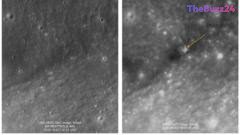
South Korea’s space agency, the Korean AeroSpace Administration (KASA), has released compelling images of the Moon’s surface following the unintentional impact of a SpaceX rocket part. The lunar orbiter Danuri successfully captured these post-impact visuals, which KASA shared alongside earlier photographs depicting the Moon’s appearance before the incident.
The rocket debris, specifically an empty upper stage of a SpaceX Falcon 9, struck the lunar surface at approximately 06:35 GMT on Wednesday. This particular Falcon 9 stage had been in orbit since January of the previous year, having launched from Florida carrying two lunar landers. Its mission was to propel these landers out of Earth’s orbit and onto a trajectory towards the Moon. After fulfilling its primary role, the spent stage was left drifting in a long, looping orbit, gradually nudged towards the Moon by the subtle gravitational forces of Earth, the Moon, and the Sun, along with solar light pressure.
Scientists had predicted the impact, with the spent upper stage – roughly the size of a five-story building and weighing about 4,000kg on Earth – hitting the Moon at an estimated speed of 5,400mph (8,700km/h). While the resulting flash would have been too faint for amateur astronomers to observe, even with high-end telescopes, larger observatories, including KASA, are now meticulously analyzing the data. The incident, though posing no danger to Earth, has reignited discussions among experts regarding the escalating issue of space debris.
Astronomer Matt Bothwell from the University of Cambridge voiced concerns about the increasing congestion in space. He highlighted that with more objects launched into orbit each year, it could become significantly more challenging to navigate beyond Earth’s orbit within a few decades due to the sheer volume of debris. This event underscores the growing need for sustainable practices in space exploration and satellite deployment.
Key Takeaways
- South Korea's KASA released images from its Danuri orbiter showing the Moon's surface after a SpaceX Falcon 9 rocket upper stage unintentionally impacted it.
- The spent Falcon 9 upper stage, launched in January last year, was approximately the size of a five-story building and struck the Moon at high speed.
- The incident highlights growing concerns among astronomers about the increasing amount of space debris and its potential long-term implications for future space missions.
Editor’s Analysis & Impact
The unintentional lunar impact of a spent SpaceX Falcon 9 rocket stage, while not immediately catastrophic, serves as a significant reminder of the growing challenge of space debris. For the space industry, it underscores the need for more robust end-of-life disposal strategies for rocket components, potentially influencing future mission planning and regulatory frameworks. While SpaceX’s reputation remains largely unaffected given the unintentional nature and the age of the debris, the broader implications point towards increased scrutiny on all spacefaring entities to mitigate orbital junk. The future outlook suggests a push for international collaboration on debris tracking and active removal technologies, as unchecked accumulation could severely impede future space exploration and commercial satellite operations, making Earth’s orbit a hazardous environment.
Frequently Asked Questions
Q: What exactly hit the Moon?
A: An empty upper stage of a SpaceX Falcon 9 rocket, which had been in orbit since January of the previous year after deploying lunar landers.
Q: Was the impact intentional?
A: No, SpaceX stated the impact was unintentional. The spent stage was left drifting and was gradually nudged towards the Moon by gravitational forces over many months.
Q: What are the concerns related to this incident?
A: While this specific impact posed no danger to Earth, astronomers like Matt Bothwell have raised concerns about the increasing amount of space debris, which could make future space travel more challenging and risky due to potential collisions with operational satellites or spacecraft.
AI Disclosure: This article is based on verified data and official reports. Our Team and AI have cross-referenced every financial detail with primary sources to ensure total accuracy.
More from this Category