Congo River Vessel Placed Under Strict Quarantine Amid Ebola Fears
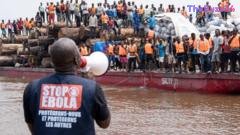
Health officials in the Democratic Republic of Congo have intercepted and quarantined a passenger vessel on the Congo River as part of an urgent public health response. The Yingfeng 2, operated by a Chinese company and carrying 255 passengers, was halted near the Bende Bende port, situated roughly 65 kilometers upstream from the capital city of Kinshasa. The intervention was triggered following the death of a passenger who disembarked earlier with severe symptoms including fever and diarrhea.
Authorities confirmed that in addition to the initial fatality, four other individuals aboard or associated with the vessel—including two adults, a young child, and a newborn—have also passed away. In response to the crisis, specialized medical teams equipped with a mobile laboratory boarded the vessel to conduct rigorous screening and testing protocols for both Ebola and cholera.
Despite the alarming circumstances, health officials have noted that no passengers have tested positive for the virus thus far. The vessel had originally departed from the north-western Mongala Province weeks prior, and security forces have maintained strict offshore quarantine measures in alignment with international guidelines to safeguard Kinshasa from potential contamination as the nation battles its seventeenth recorded Ebola epidemic.
Key Takeaways
- A passenger boat carrying 255 people was intercepted and quarantined on the Congo River near Kinshasa as a precaution.
- Five deaths linked to the health scare prompted the deployment of medical teams and a mobile testing laboratory.
- The Democratic Republic of Congo is currently managing its 17th Ebola outbreak, driven by the rare Bundibugyo strain.
Editor’s Analysis & Impact
The interception of the Yingfeng 2 highlights the perpetual vulnerability of major waterways in central Africa as vectors for infectious disease transmission. With the Democratic Republic of Congo currently managing its seventeenth Ebola outbreak—specifically driven by the rare and largely untreatable Bundibugyo strain—containment efforts face immense logistical hurdles. The incident underscores the critical necessity for rapid response teams, mobile diagnostic infrastructure, and stringent border and riverine controls. As urban centers like Kinshasa prepare for potential spillover, the broader economic and social impacts of regional quarantines threaten trade and mobility. Moving forward, health authorities must balance strict containment protocols with efficient humanitarian support to prevent localized panic and mitigate the long-term strain on an already overburdened healthcare framework.
Frequently Asked Questions
Q: Why was the Yingfeng 2 boat placed under quarantine?
A: The boat was quarantined as a precautionary measure after several passengers, including one who disembarked earlier with a fever and diarrhea, passed away.
Q: Has anyone tested positive for Ebola on the boat?
A: Health authorities reported that no one aboard the vessel has tested positive for the virus so far, and monitoring continues.
Q: What strain of Ebola is currently affecting the Democratic Republic of Congo?
A: The ongoing outbreak is caused by the rare Bundibugyo species of the Ebola virus, which currently lacks specific drug treatments or an approved vaccine.
AI Disclosure: This article is based on verified data and official reports. Our Team and AI have cross-referenced every financial detail with primary sources to ensure total accuracy.
More from this Category