Preparing for the Moon: How Advanced Lunar Dust Testing is Paving the Way for Artemis Missions
As humanity prepares to return to the lunar surface, advanced hardware testing is underway to overcome one of space exploration’s most persistent hazards: lunar dust. Operating at the Johnson Space Center in Houston, the Lunar Development and Test Facility is rigorously evaluating critical equipment designed for upcoming Artemis missions. Unlike terrestrial sand, lunar dust consists of highly abrasive, razor-sharp particles that adhere aggressively to surfaces, presenting a major threat to mechanical joints, spacesuits, and astronaut safety.
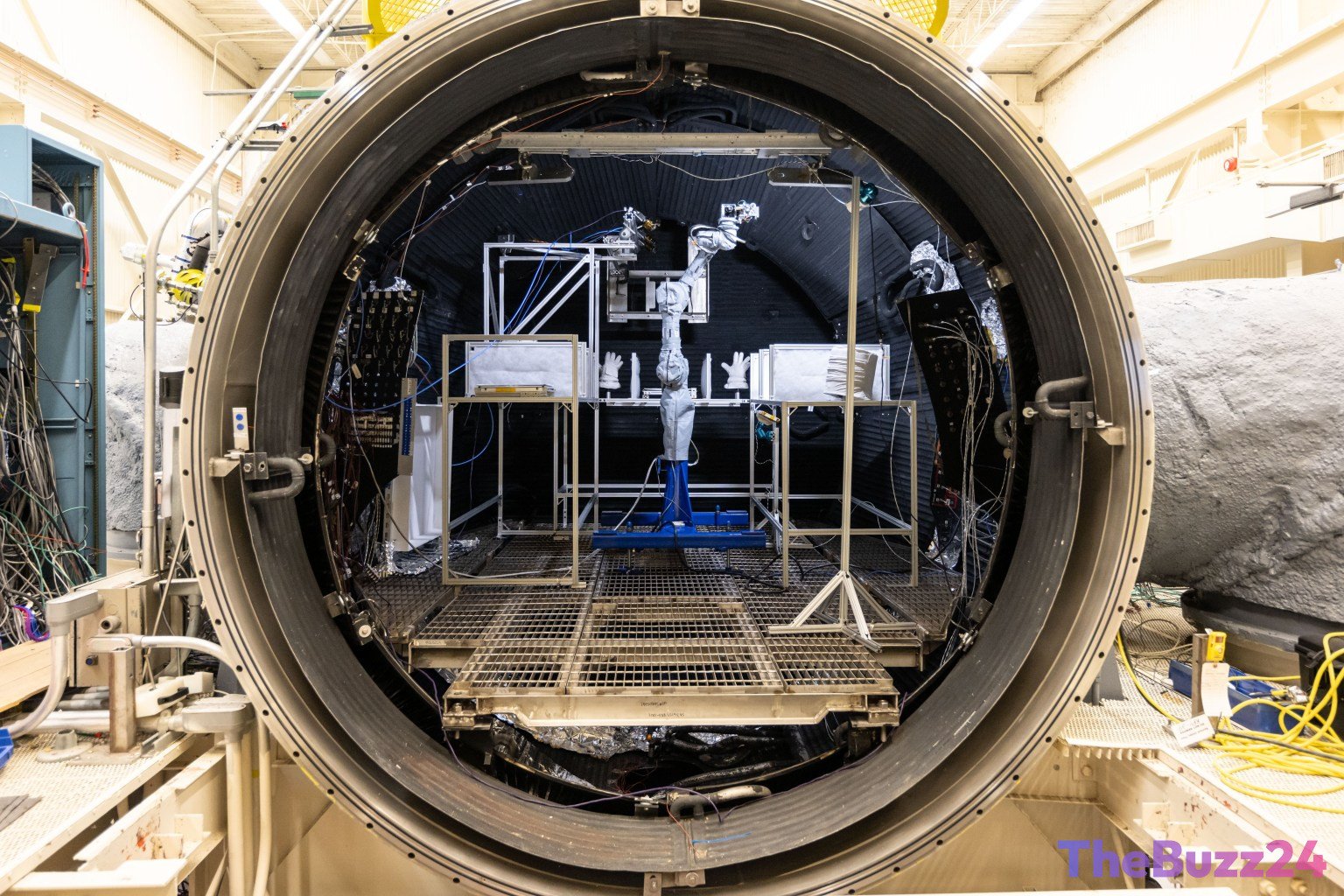
To mitigate these dangers, engineers are utilizing specialized vacuum chambers filled with simulated lunar soil to observe how moving parts, protective suits, and specialized tools perform under extreme conditions. Among the equipment undergoing evaluation is the Handheld Lunar Electrostatic Dust Mitigation tool, alongside advanced spacewalking gear. Testing relies on ambient containment labs, a 3-foot vacuum chamber, and a 15-foot thermal vacuum chamber equipped with a closed-loop nitrogen system to replicate the true, unforgiving environment of the Moon.
Beyond mere equipment survival, the facility plays a pivotal role in developing next-generation lunar survival strategies. Research is currently pushing forward techniques to extract useful resources directly from lunar regolith. By processing this native dust, researchers aim to generate breathable oxygen for crew members and convert lunar materials into liquid oxygen for rocket propellant, laying the technical foundation for long-duration human habitation on the Moon.
Key Takeaways
- Engineers in Houston are actively testing Artemis hardware to combat the destructive effects of sharp, abrasive lunar dust.
- Testing environments utilize thermal vacuum chambers and regolith simulants to evaluate spacewalking tools and mechanical joints under true Moon conditions.
- Researchers are leveraging these tests to develop methods for converting lunar dust into breathable oxygen and rocket propellant for long-term missions.
Editor’s Analysis & Impact
Dust mitigation is a foundational technological hurdle for sustained human presence on the Moon. During the Apollo era, dust compromised suit seals, degraded visors, and caused thermal control issues. As modern space exploration shifts focus from short visits to long-term lunar habitats and resource utilization under the Artemis initiative, developing reliable dust-repelling and dust-tolerant hardware is mission-critical. Furthermore, breakthroughs in resource extraction from lunar regolith could revolutionize off-world logistics, drastically reducing the payload mass needed from Earth. Success in these simulation tests directly impacts the commercial and operational viability of future lunar bases and interplanetary transport systems.
Frequently Asked Questions
Q: Why is lunar dust so dangerous for space missions?
A: Lunar dust consists of extremely sharp, abrasive, and electrically charged micro-particles. It clings to suit fabrics, degrades equipment seals, wears down mechanical joints, and poses health risks if inhaled by astronauts inside habitat modules.
Q: What is the primary purpose of the Lunar Development and Test Facility?
A: The facility simulates harsh lunar environmental conditions using thermal vacuum chambers and regolith simulants to test spacesuits, tools, and mechanical components before deployment on space missions.
Q: How can lunar dust be turned into rocket fuel and oxygen?
A: Engineers are refining resource extraction techniques that heat or chemically process the oxides present in lunar regolith to release oxygen, which can then be used for astronaut life support or liquefied into rocket fuel.
AI Disclosure: This article is based on verified data and official reports. Our Team and AI have cross-referenced every financial detail with primary sources to ensure total accuracy.
More from this Category