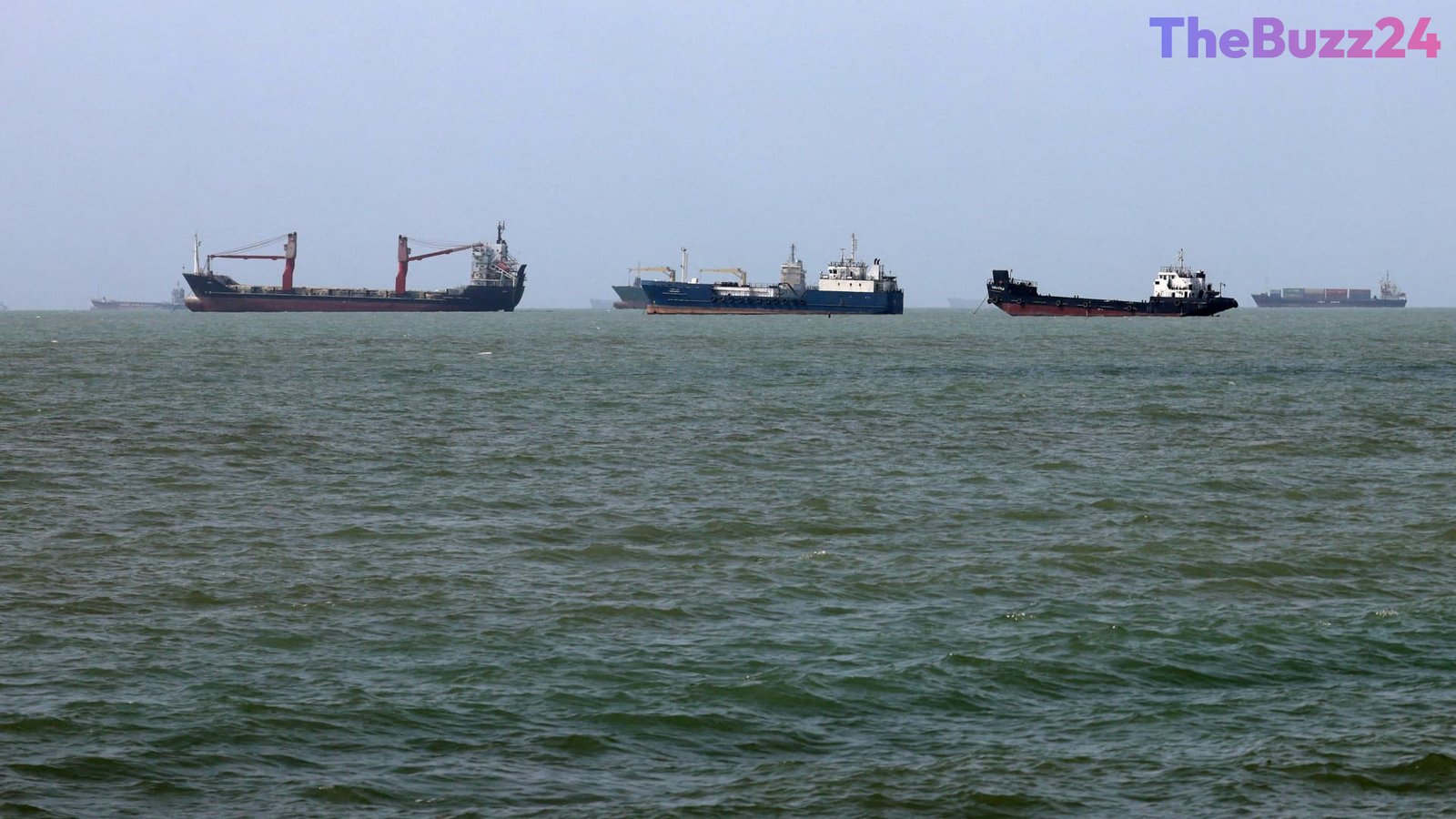
Oil Surges as U.S.-Iran Hormuz Deal Doubts Intensify
Global oil prices experienced a significant surge, climbing approximately 5% as skepticism grew regarding the likelihood of a deal between the United States and Iran to facilitate increased shipping traffic through the critical Strait of Hormuz. This uncertainty has reignited concerns over supply stability in a vital global energy chokepoint.
U.S. West Texas Intermediate (WTI) futures closed at $82.13 per barrel, while Brent crude, the international benchmark, settled around $87.72 a barrel. The market reaction follows recent statements from U.S. President Donald Trump, who indicated that Washington is “only semi-negotiating” with Tehran. President Trump suggested a preference for relying on the existing U.S. naval blockade to pressure Iran, rather than initiating another round of airstrikes, noting Iran’s economic challenges.
Conversely, Iran’s Foreign Ministry spokesman, Esmail Baghaei, asserted that the U.S. must lift its naval blockade before Tehran would agree to fully open the Strait of Hormuz. This hardening of positions from both sides contrasts with earlier optimism, which saw oil prices dip last week following suggestions from Treasury Secretary Scott Bessent that a deal for freedom of movement in Hormuz could be imminent. However, no such agreement has materialized.
The ongoing tensions have also impacted U.S. energy reserves, with oil stocks in the Strategic Petroleum Reserve reportedly falling below 300 million barrels, marking the lowest level since January 1983. Previous attempts to reach an understanding, such as a memorandum of understanding signed in June to open Hormuz to commercial ships, quickly collapsed amid disputes over shipping routes and subsequent attacks on tankers in the strait, which led to U.S. retaliatory airstrikes and the reimposition of the naval blockade.
Key Takeaways
- Global oil prices, including WTI and Brent crude, surged by approximately 5% due to increasing skepticism about a U.S.-Iran agreement on the Strait of Hormuz.
- U.S. President Donald Trump indicated "semi-negotiations" with Iran, favoring a naval blockade to exert pressure over military strikes.
- Iran's Foreign Ministry spokesman, Esmail Baghaei, stated that the U.S. naval blockade must be lifted before Tehran would agree to fully open the critical Strait of Hormuz.
Editor’s Analysis & Impact
The renewed uncertainty surrounding a U.S.-Iran deal on the Strait of Hormuz has immediately translated into significant volatility in global oil markets. This price surge underscores the critical role the strait plays in global energy supply chains, as any disruption or perceived threat to its navigability can trigger substantial market reactions. The hardening stances from both Washington and Tehran suggest that a quick resolution is unlikely, pointing towards sustained geopolitical risk premiums in oil prices. This situation could lead to higher energy costs for consumers and businesses globally, potentially impacting inflation and economic growth. Furthermore, the reliance on a naval blockade as a primary pressure tactic highlights a shift in strategy, but one that carries its own set of risks for regional stability and international shipping. The market will closely watch for any diplomatic breakthroughs or escalations, as these will directly influence future price trajectories and broader economic sentiment.
Frequently Asked Questions
Q: What is the Strait of Hormuz and why is it important?
A: The Strait of Hormuz is a narrow, strategically vital waterway connecting the Persian Gulf with the Arabian Sea and the Gulf of Oman. It is one of the world's most important chokepoints for oil transit, with a significant portion of the world's seaborne oil passing through it daily, making its security crucial for global energy markets.
Q: Why are U.S. and Iran negotiations over Hormuz stalled?
A: Negotiations are stalled primarily due to differing demands. The U.S. seeks freedom of movement for ships, while Iran insists on the lifting of the U.S. naval blockade as a prerequisite for fully opening the strait. Past agreements have also collapsed over disputes regarding specific shipping routes.
Q: How has the conflict impacted U.S. oil reserves?
A: As the conflict and associated tensions persist, U.S. oil stocks in the Strategic Petroleum Reserve have reportedly fallen to their lowest levels since January 1983, indicating a draw on reserves amidst ongoing market uncertainty.
AI Disclosure: This article is based on verified data and official reports. Our Team and AI have cross-referenced every financial detail with primary sources to ensure total accuracy.
More from this Category