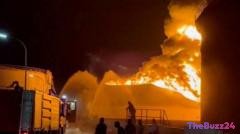
Drone Strikes Ignite Massive Fire at Libya’s Largest Oil Refinery, Threatening Energy Shutdown
Emergency response teams in Libya are fighting a massive blaze at the Zawiya oil refinery following a series of targeted drone strikes. The facility, located west of the capital city of Tripoli, was struck in what marks the third aerial attack on the infrastructure within a forty-eight-hour window. The National Oil Corporation (NOC) confirmed that a direct hit on a storage tank containing approximately 4.5 million liters of fuel triggered the catastrophic fire, ultimately causing the structure to collapse.
Despite the scale of the inferno, local emergency services reported no severe casualties, with medical teams primarily treating individuals for smoke inhalation. However, the operational future of the facility remains highly precarious. As Libya’s largest functioning refinery, Zawiya processes roughly 120,000 barrels of oil per day. The NOC has warned that it may be forced to halt all operations at the site if the targeted hostilities do not cease immediately.
This latest escalation follows previous drone strikes earlier in the week that damaged a naphtha reservoir and a local water desalination plant. The NOC has strongly condemned the acts of sabotage and demanded a formal investigation by state authorities. The violence underscores the persistent volatility in Libya, which has remained deeply fractured since the 2011 overthrow of Muammar Gaddafi. The nation continues to be divided between competing political and military factions based in the east and west, constantly vying for control over the country’s vast energy wealth.
Key Takeaways
- Libya's largest operational refinery, the Zawiya facility, suffered a major fire after being targeted by three drone strikes in two days.
- The National Oil Corporation (NOC) warned of a potential total shutdown of the 120,000-barrel-per-day facility if security threats persist.
- The attacks highlight the ongoing geopolitical instability and security vacuum in Libya, which remains split between rival eastern and western factions.
Editor’s Analysis & Impact
The repeated drone strikes on the Zawiya refinery highlight the extreme vulnerability of Libya’s energy infrastructure, which serves as the economic backbone of the nation. As the country’s largest operational refinery, any prolonged shutdown at Zawiya would severely disrupt domestic fuel supplies and strain the fragile national economy. Furthermore, these targeted attacks on critical infrastructure—including water desalination and fuel storage—suggest a strategic shift by rival factions to weaponize economic assets. For global energy markets, continued instability in Libya threatens supply predictability, potentially driving up oil price volatility. Without a unified government and a cohesive national security strategy, Libya’s oil sector will remain a prime target for political leverage, deterring foreign investment and delaying long-term economic recovery.
Frequently Asked Questions
Q: What is the significance of the Zawiya refinery to Libya?
A: The Zawiya refinery is Libya's largest operational oil facility, processing approximately 120,000 barrels of crude oil per day and serving as a critical source of domestic fuel and energy.
Q: Who is responsible for the drone strikes on the refinery?
A: The perpetrators of the drone strikes remain unidentified. The National Oil Corporation has called on state authorities to launch an immediate investigation to determine who is behind the attacks.
Q: How has the political situation in Libya contributed to these attacks?
A: Since the ousting of Muammar Gaddafi in 2011, Libya has been divided between rival power centers in the east and west. This political fragmentation and lack of centralized security have left critical infrastructure vulnerable to armed factions seeking leverage.
AI Disclosure: This article is based on verified data and official reports. Our Team and AI have cross-referenced every financial detail with primary sources to ensure total accuracy.
More from this Category