Miracle Rescue in Colombia: Woman Pulled Alive After 36 Hours Trapped in Quake Rubble
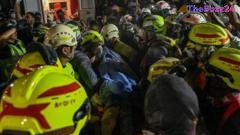
A 32-year-old woman has been successfully rescued from beneath the debris of a collapsed building in western Colombia, more than a day and a half after a devastating 7.4-magnitude earthquake struck the region. The survivor, identified as Daniela Largo, endured 36 hours trapped beneath heavy concrete slabs in the city of Pereira before emergency crews finally reached her following an arduous 10-hour extraction operation.
The dramatic rescue unfolded after a vigilant local resident heard faint cries for help emanating from the ruins. Emergency response teams quickly deployed specialized equipment, utilizing a micro-camera to pinpoint Largo’s exact location. However, extracting her proved exceptionally challenging due to the massive weight of four concrete slabs blocking access. Firefighters from Pereira, reinforced by specialized units from Bogotá and the national police disaster response team, worked tirelessly to excavate two separate tunnels. While the upper tunnel supplied vital oxygen to sustain her, it was the lower tunnel that ultimately allowed rescuers to safely extricate her.
The widespread devastation left in the wake of the tremor has claimed hundreds of lives, with official estimates placing the death toll at least 188, while numerous individuals remain unaccounted for. Cali and Pereira have suffered the heaviest casualties and structural damage, prompting local authorities to implement strict security measures, including night-time curfews and military patrols in heavily impacted zones, to facilitate ongoing search and rescue efforts. Despite the grim scale of the disaster, Largo’s triumphant survival has provided a powerful beacon of hope for grieving families and relentless rescue workers alike.
Key Takeaways
- A 32-year-old woman named Daniela Largo was rescued alive after being trapped for 36 hours under rubble in Pereira, Colombia.
- The rescue required a grueling 10-hour operation where teams had to dig tunnels beneath heavy concrete slabs.
- The 7.4-magnitude earthquake has caused widespread destruction, leaving at least 188 dead and hundreds missing.
Editor’s Analysis & Impact
The catastrophic 7.4-magnitude earthquake in Colombia highlights the critical importance of robust emergency preparedness and rapid-response infrastructure in seismically active regions. While miracles like the rescue of Daniela Largo provide immense psychological boosts to affected communities, the broader economic and logistical implications are severe. The widespread collapse of buildings in major hubs like Cali and Pereira underscores systemic vulnerabilities in urban architecture and construction standards. Moving forward, the region will face substantial financial burdens related to urban reconstruction, humanitarian aid distribution, and structural reinforcement. Government officials will need to prioritize stringent building codes and invest heavily in advanced search-and-rescue technologies to mitigate future loss of life and accelerate post-disaster recovery timelines.
Frequently Asked Questions
Q: How long was Daniela Largo trapped under the rubble?
A: Daniela Largo was trapped under the collapsed building's rubble for 36 hours before being successfully rescued.
Q: What magnitude was the earthquake that struck western Colombia?
A: The earthquake that triggered the widespread devastation was a 7.4-magnitude tremor.
Q: How did rescuers manage to reach the survivor?
A: Rescuers located her with a small camera and dug two tunnels—one from above to supply oxygen and another from below to safely free her.
AI Disclosure: This article is based on verified data and official reports. Our Team and AI have cross-referenced every financial detail with primary sources to ensure total accuracy.
More from this Category