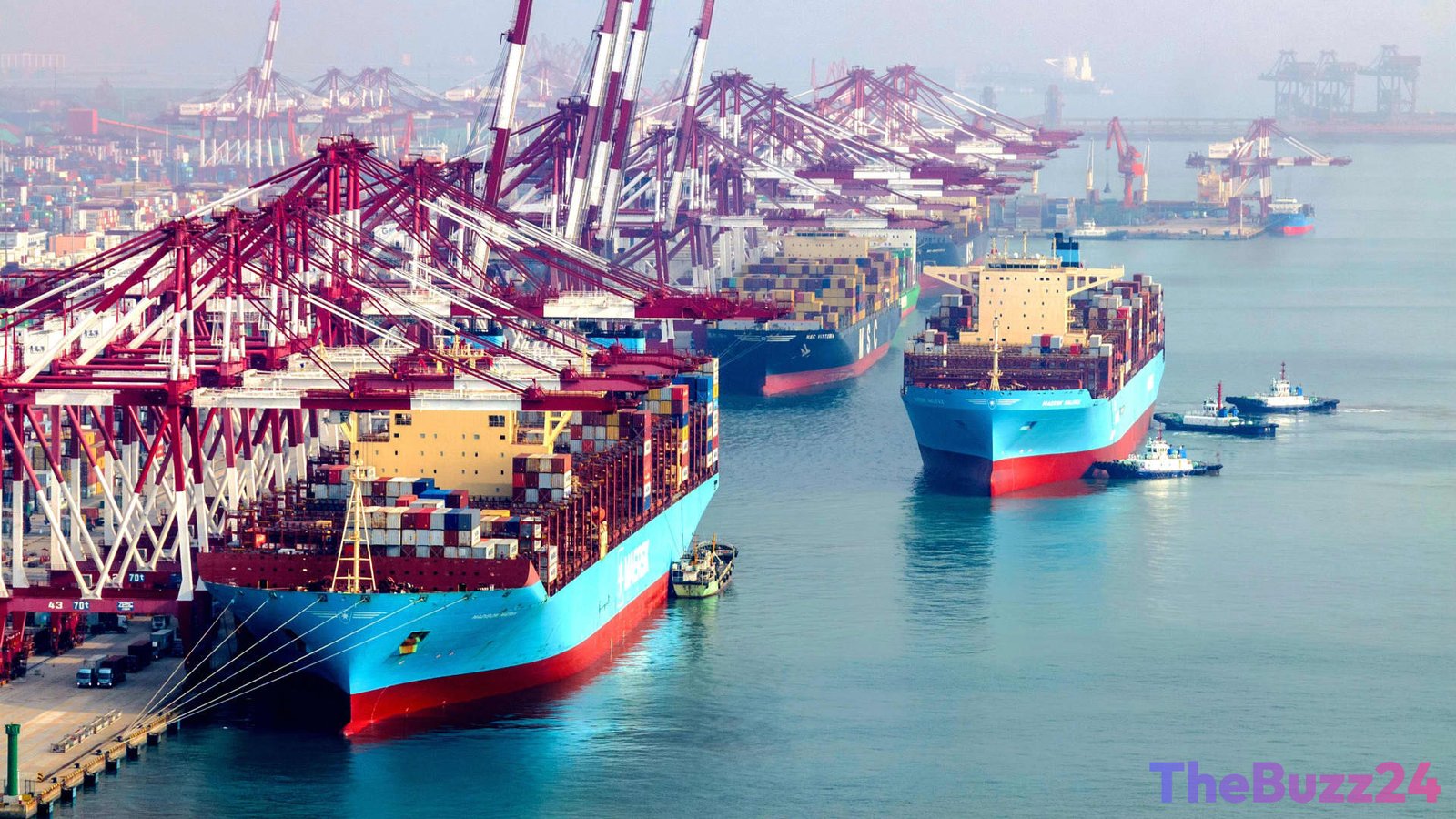
Global Shipping Giants Warn of Severe Landside Bottlenecks and Rising Freight Costs
Despite ongoing geopolitical tensions, international trade tariffs, and major disruptions along key maritime routes, global shipping demand remains remarkably resilient. However, the world’s leading ocean carriers are warning that a severe lack of landside infrastructure capacity—spanning ports, rail networks, and trucking—is creating critical bottlenecks. These logistical hurdles threaten to delay deliveries and drive up freight rates globally.
Leaders from industry giants Maersk and Hapag-Lloyd have highlighted that while ocean-bound volumes have held up surprisingly well, the transition from sea to land is where the system is failing. Decades of underinvestment in landside infrastructure are now clashing with growing trade volumes. Compounding these issues are environmental and geopolitical challenges, such as low water levels on Europe’s Rhine River, restrictions in the Panama Canal, and security threats in the Middle East, all of which are forcing more cargo onto already strained road and rail networks.
In Asian shipping hubs like Shanghai, ports are already struggling to keep pace with the influx of cargo, resulting in notable delays. Despite these operational headaches, shipping companies are seeing strong financial performances. Maersk recently upgraded its 2026 earnings guidance after posting a preliminary second-quarter EBITDA of $3 billion, significantly outperforming market expectations. Meanwhile, Hapag-Lloyd reported robust volumes and higher spot rates, though the German carrier noted a $600 million increase in operational costs tied directly to rerouting and fuel expenses stemming from the Middle East conflict.
Key Takeaways
- Global shipping demand remains highly resilient despite geopolitical conflicts, tariffs, and maritime route disruptions.
- A fifteen-year underinvestment in landside infrastructure, including ports, rail, and trucking, is causing severe bottlenecks and driving up freight rates.
- While shipping giants like Maersk and Hapag-Lloyd report strong financial earnings, they warn of ongoing volatility and delivery delays.
Editor’s Analysis & Impact
The resilience of global shipping demand in the face of macroeconomic headwinds is a testament to the enduring nature of global trade. However, the warnings from Maersk and Hapag-Lloyd expose a critical vulnerability: the physical limits of landside logistics. For years, the focus has been on building larger container ships, but the ports, roads, and railways required to disperse this cargo have not kept pace. This mismatch is poised to trigger a new wave of supply chain inflation. As retailers and manufacturers face longer lead times and higher shipping costs, these expenses will likely be passed down to consumers. In the long term, this infrastructure deficit will force governments and private logistics firms to aggressively invest in inland transport networks, or risk chronic supply chain instability and localized economic slowdowns.
Frequently Asked Questions
Q: Why are shipping rates rising if demand is stable?
A: While ocean shipping capacity is managing demand, severe bottlenecks at ports and a shortage of trucking and rail capacity are delaying cargo movement. This landside congestion creates artificial scarcity and drives up overall freight rates.
Q: How are geopolitical conflicts affecting shipping companies financially?
A: Geopolitical tensions, particularly in the Middle East, have forced ships to take longer routes, increasing fuel and operational costs. However, the resulting tight capacity has also driven up spot rates, allowing companies like Maersk and Hapag-Lloyd to maintain strong earnings.
Q: What regions are experiencing the worst port congestion?
A: Major Asian transit hubs, particularly Shanghai, are currently experiencing significant delays as ports struggle to cope with high cargo volumes and landside logistical constraints.
AI Disclosure: This article is based on verified data and official reports. Our Team and AI have cross-referenced every financial detail with primary sources to ensure total accuracy.
More from this Category