The $720 Billion Gamble: Inside the Massive AI Memory Expansion Reshaping South Korea
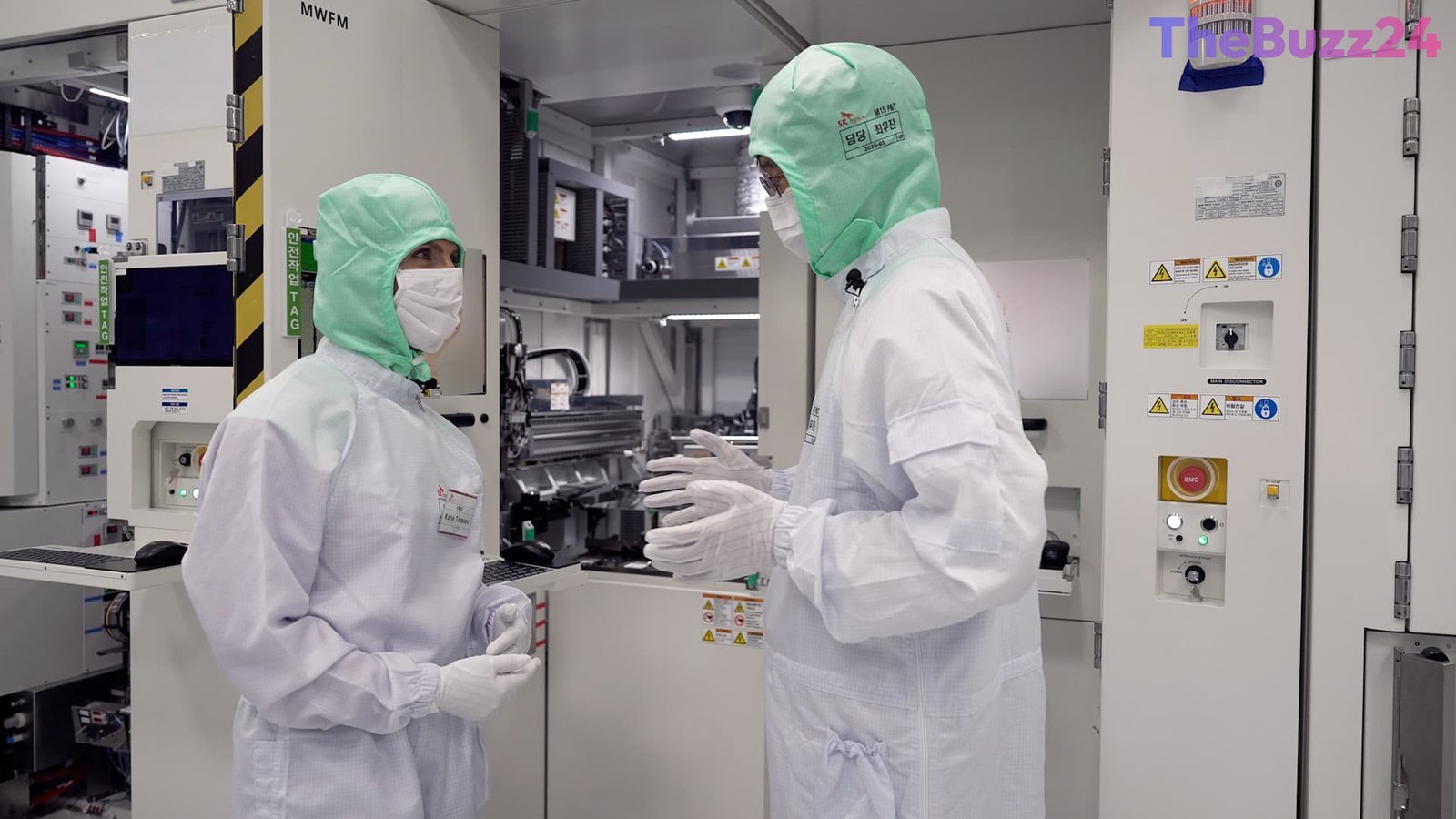
SK Hynix is currently spearheading one of the most ambitious industrial projects in history, committing $720 billion to construct a sprawling network of memory fabrication plants in South Korea. This massive infrastructure push, centered on the Yongin Cluster, is designed to meet the insatiable global demand for high-bandwidth memory (HBM) required to power modern artificial intelligence systems. As the industry shifts away from traditional, low-margin commodity memory, SK Hynix is positioning itself as the backbone of the AI revolution.
The scale of the project is unprecedented, with new facilities designed to reach the height of 50-story buildings to maximize vertical space in South Korea’s mountainous terrain. Unlike standard single-story chip fabs, these structures will house multiple stacked cleanrooms to facilitate the complex production of HBM. This technology, which involves stacking dynamic random access memory (DRAM) chips, has become so critical that AI giants like Nvidia are entering into long-term supply agreements to secure their production pipelines, effectively changing the traditional boom-and-bust cycle of the memory market.
Government support remains a cornerstone of this expansion, with South Korean leadership prioritizing the rapid scaling of memory capacity to maintain a competitive edge against global rivals. While the company faces market volatility and intense competition from firms like Samsung and Micron, the strategic importance of HBM has turned memory chip production into a high-stakes geopolitical race. With major tech leaders from Microsoft, Google, and Meta frequently visiting Korea to secure supply, the country has become the epicenter of the global AI hardware supply chain.
Beyond its domestic expansion, SK Hynix is also diversifying its footprint with a $4 billion packaging facility in Indiana, set to come online by 2028. As the industry moves toward custom-designed HBM tailored to specific AI processors, the company is betting that these specialized, high-value products will insulate it from the cyclical downturns that have historically plagued the semiconductor sector. By co-developing next-generation memory with major AI players, SK Hynix aims to transform memory from a standard component into a bespoke, essential technology.
Key Takeaways
- SK Hynix is investing $720 billion to build the world's largest memory fabrication network to satisfy the surging demand for AI-driven high-bandwidth memory.
- The industry is shifting from commodity memory to custom-designed HBM, with major tech companies signing long-term contracts to ensure supply stability.
- South Korea is aggressively expanding its semiconductor infrastructure, supported by national policies aimed at doubling memory production capacity within five years.
Editor’s Analysis & Impact
The massive capital expenditure by SK Hynix signals a fundamental shift in the semiconductor industry. By moving toward custom-designed HBM, the company is effectively commoditizing the ‘commodity’—turning a cyclical, low-margin product into a specialized, high-value asset that is deeply integrated into the AI value chain. This strategy mitigates the traditional risks of the memory market but introduces new challenges, including extreme reliance on a handful of hyperscale AI customers and the geopolitical complexities of export controls. The future outlook for the sector remains bullish, provided that the current AI infrastructure buildout continues at pace. However, the industry remains vulnerable to broader macroeconomic volatility and the potential for overcapacity if the AI investment bubble faces a correction. The race to dominate HBM production will likely define the competitive landscape for the next decade.
Frequently Asked Questions
Q: Why is high-bandwidth memory (HBM) so important for AI?
A: HBM is essential for AI because it allows for rapid data access and processing speeds, which are required to execute the complex tasks performed by AI processors. It is created by stacking DRAM chips, providing the high-performance memory necessary for modern computing.
Q: How is SK Hynix changing its business model to avoid market cycles?
A: SK Hynix is moving away from selling generic, low-margin memory chips toward co-developing custom HBM solutions with major AI companies. This shift makes their products more specialized and essential to specific hardware architectures, providing a buffer against the traditional boom-and-bust cycles of the memory industry.
AI Disclosure: This article is based on verified data and official reports. Our Team and AI have cross-referenced every financial detail with primary sources to ensure total accuracy.
More from this Category