The 2026 Perseids: A Rare Celestial Alignment
The 2026 Perseids meteor shower provided a spectacular display for stargazers, bolstered by exceptionally dark skies. A primary factor in the visibility of this year’s event was the absence of moonlight, as the Moon was positioned directly between the Earth and the Sun, resulting in a total solar eclipse visible from regions including Greenland and Spain. This rare alignment ensured that the night sky remained dark, allowing for a higher volume of meteors to be observed than in typical years.
The Perseids occur annually as Earth passes through a trail of debris left behind by Comet Swift-Tuttle. Despite the individual particles being roughly the size of a grain of sand, they create brilliant streaks across the sky. This intensity is due to the high-velocity collision between the debris and Earth’s atmosphere, exacerbated by the fact that the comet’s debris orbits the Sun in a direction largely opposite to Earth’s own orbital path.
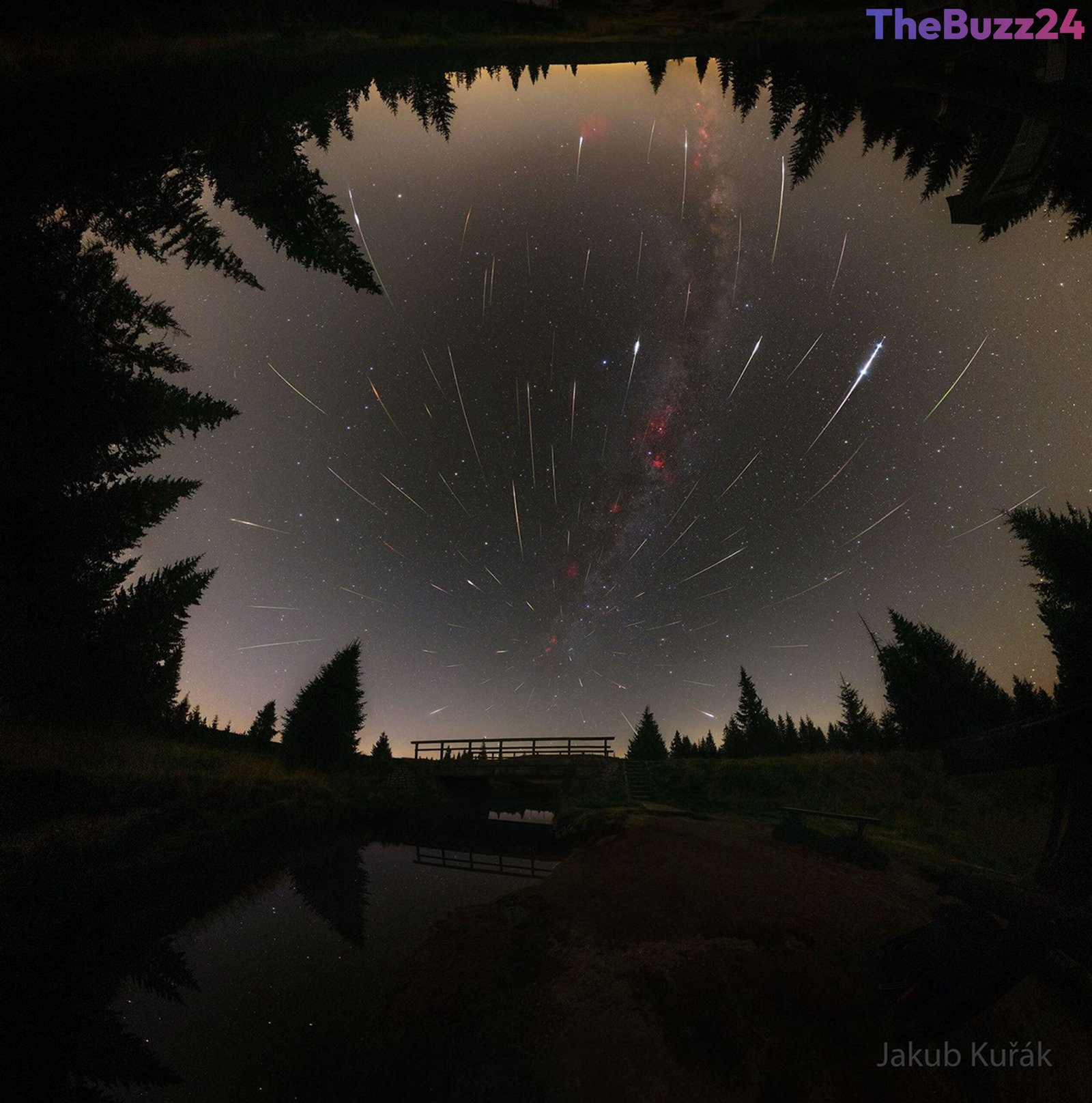
Photographic evidence captured from Jizerka in the Czech Republic highlights the phenomenon, showing multiple meteor streaks originating from a single point in the sky known as the radiant, located within the constellation Perseus. This compilation of images taken over several nights serves as a testament to the consistent and impressive nature of the Perseids, which remain one of the most reliable and anticipated astronomical events of the year.
Key Takeaways
- The 2026 Perseids meteor shower benefited from exceptionally dark skies due to the Moon's position during a total solar eclipse.
- Perseid meteors are caused by Earth colliding with debris from Comet Swift-Tuttle, which orbits the Sun in a retrograde direction.
- Despite their small size, the meteors appear bright and fast because of the high-speed impact with Earth's atmosphere.
Editor’s Analysis & Impact
The 2026 Perseids event underscores the intersection of orbital mechanics and public interest in astronomy. The rare coincidence of a major meteor shower occurring alongside a total solar eclipse highlights the dynamic nature of our solar system. From an industry perspective, such events serve as significant drivers for public engagement in science and space education. The ability to capture and analyze these events using long-exposure photography and data compilation continues to improve our understanding of cometary debris trails. As space observation technology becomes more accessible to amateur astronomers, the data gathered from these events contributes to a broader appreciation of celestial mechanics and the importance of preserving dark-sky environments for scientific research and public observation.
Frequently Asked Questions
Q: Why were the 2026 Perseids more visible than usual?
A: The meteors were more visible because the Moon was not in the night sky; it was positioned in front of the Sun, creating a total solar eclipse, which left the night sky exceptionally dark.
Q: What causes the Perseid meteor shower?
A: The Perseids occur when Earth passes through a stream of debris left behind by Comet Swift-Tuttle. When these particles enter our atmosphere at high speeds, they burn up, creating the streaks of light we see.
AI Disclosure: This article is based on verified data and official reports. Our Team and AI have cross-referenced every financial detail with primary sources to ensure total accuracy.
More from this Category