Kyiv Reels from Deadly Strikes: Air Defence Shortages Blamed for Civilian Toll
At least 15 individuals lost their lives in the Ukrainian capital, Kyiv, following a barrage of Russian aerial attacks that struck residential buildings and infrastructure overnight. The city’s mayor, Vitali Klitschko, confirmed the grim toll, attributing the fatalities to a critical shortage of air defence missiles that Ukraine relies on from its international partners.
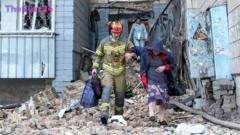
Residential blocks and warehouses across Kyiv bore the brunt of the assault, with emergency services reporting damage to a children’s hospital and a school. The State Emergency Service of Ukraine detailed the destruction, as rescue workers sifted through rubble in districts like Solomianskyi. Residents, some displaced by earlier fighting, found themselves homeless for a second time, grappling with the devastating reality of the ongoing conflict.
President Volodymyr Zelensky underscored the severity of the situation, directly linking the civilian deaths to the insufficient supply of air defence interceptors. He emphasized that without adequate anti-missile systems, Russia would not be inclined towards peace negotiations. Zelensky highlighted the urgent need for Western allies to replenish depleted stockpiles, particularly for systems like the Patriot, stating that each intercepted missile directly saves Ukrainian lives. The Ukrainian Air Force indicated that a significant number of the ballistic missiles launched by Russia were not intercepted during the latest attacks.
Amidst the escalating violence and pleas for aid, Ukraine’s political landscape has also seen internal challenges. The former Defence Minister, Mykhailo Fedorov, has publicly called for elections and raised concerns about alleged corruption impacting the military’s access to essential weaponry. Meanwhile, Russia’s defence ministry claimed its strikes targeted military facilities and warehouses, a narrative that contrasts sharply with the reported civilian casualties and destruction in Kyiv.
Key Takeaways
- At least 15 people were killed in Kyiv due to Russian strikes, with officials citing air defence shortages.
- Ukraine's President Zelensky stressed the urgent need for more air defence missiles from Western allies to save lives.
- The attacks damaged residential buildings, a children's hospital, and a school, displacing residents and causing widespread disruption.
Editor’s Analysis & Impact
This latest deadly assault on Kyiv underscores the critical vulnerability Ukraine faces due to its reliance on foreign military aid, particularly air defence systems. The civilian casualties directly linked to missile shortages highlight the precarious balance of the conflict and the immense pressure on Western nations to maintain a consistent flow of crucial weaponry. The situation not only impacts Ukraine’s immediate defence capabilities but also has broader geopolitical implications, potentially influencing future aid packages and diplomatic strategies. The internal political challenges within Ukraine, coupled with Russia’s persistent aerial attacks, suggest a protracted and challenging period ahead, with significant implications for regional stability and global security.
Frequently Asked Questions
Q: What caused the high number of civilian casualties in Kyiv?
A: The civilian casualties in Kyiv were primarily caused by Russian aerial strikes that hit residential areas and infrastructure. Ukrainian officials have stated that a critical shortage of air defence missiles prevented the interception of a significant number of incoming projectiles, leading to the tragic loss of life.
Q: What kind of military aid is Ukraine requesting?
A: Ukraine is urgently requesting more air defence missiles, specifically mentioning systems like the Patriot, to counter Russian aerial attacks. President Zelensky has emphasized that these interceptors are vital for saving civilian lives and that a lack of them emboldens Russia.
Q: What was the extent of the damage in Kyiv?
A: The Russian strikes caused significant damage across Kyiv, hitting blocks of flats, warehouses, a children's hospital, and a school. Thousands of properties lost power, and many residents were displaced from their homes.
AI Disclosure: This article is based on verified data and official reports. Our Team and AI have cross-referenced every financial detail with primary sources to ensure total accuracy.
More from this Category