Trump’s ‘Economic D-Day’ Threatens Global Penalties for Nations Trading with Iran
Nearly six months after promising a swift resolution to the standoff with Iran, the United States finds itself in a strategic deadlock, with neither a military breakthrough nor a diplomatic settlement in sight. To break this impasse, President Donald Trump has announced an impending “economic D-Day” campaign. Under this aggressive policy, any nation that continues to engage in commerce with Iran will face severe economic repercussions from the American government.
While the precise mechanics of this intensified pressure campaign remain under wraps, Treasury Secretary Scott Bessent is scheduled to unveil the details during a press conference on August 24. Bessent has already signaled a uncompromising stance, warning that the U.S. is prepared to penalize both allies and adversaries that offer an economic lifeline to Tehran. The administration’s message is clear: countries must choose between doing business with the United States or maintaining financial, energy, or maritime trade ties with Iran. Vice-President JD Vance has characterized this escalation as a vital new phase of the conflict, asserting that economic leverage remains the most effective tool to achieve Washington’s ultimate objectives.
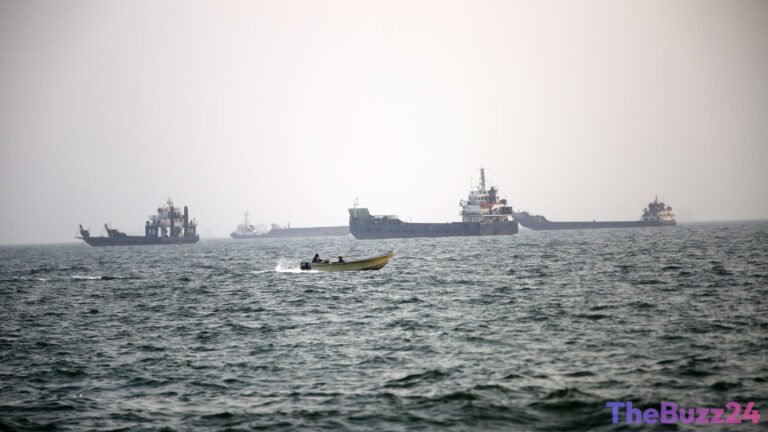
This strategy marks an expansion of existing measures, such as Operation Economic Fury, which combines Treasury-coordinated sanctions with a naval blockade of Iranian ports. According to Michael Parker, a former official with the Office of Foreign Assets Control (OFAC), the new approach aims to widen the “economic blast radius” by targeting third-party nations that rely on the U.S. dollar for international trade. This could place significant pressure on countries like Turkey, Iraq, and China, forcing them to weigh their bilateral trade interests against the risk of losing access to the American financial system.
However, experts question whether this escalation will yield the desired results. Iran has lived under various forms of U.S. sanctions since 1979 and has developed a highly resilient apparatus for bypassing economic blockades. Mohammed Hammouda, a sanctions specialist at the London Stock Exchange, noted that Tehran quickly adapts to new restrictions by deploying “shadow” oil tankers and establishing new, unlisted front companies. Consequently, some geostrategic analysts, including Imran Bayoumi of the Atlantic Council, suggest that without a clear, comprehensive diplomatic strategy, this latest round of economic warfare may simply prolong the stalemate rather than force a definitive resolution.
Key Takeaways
- The Trump administration is launching an 'economic D-Day' campaign to penalize any country or financial institution doing business with Iran.
- The strategy relies heavily on secondary sanctions, weaponizing the global dominance of the U.S. dollar to force third-party nations—including U.S. allies—to halt trade with Tehran.
- Sanctions experts warn that Iran's highly adaptive network of shadow vessels and front companies will make total economic isolation difficult to achieve.
Editor’s Analysis & Impact
The proposed ‘economic D-Day’ represents a significant escalation in geoeconomic warfare, signaling a shift toward aggressive secondary sanctions. By weaponizing the U.S. dollar’s dominance, the administration seeks to force global financial institutions into a binary choice: access the American financial system or maintain ties with Tehran. However, this strategy carries substantial risks. It could strain relations with key allies like Turkey and Iraq, while accelerating efforts by adversaries like China to develop alternative, non-dollar-denominated financial systems. Furthermore, the global energy market could face volatility if Iranian oil exports are successfully choked off, though Iran’s sophisticated ‘shadow fleet’ network is likely to mitigate total disruption. Ultimately, without a clear diplomatic off-ramp, this economic pressure campaign risks deepening geopolitical fragmentation without achieving its primary policy objectives.
Frequently Asked Questions
Q: What is the U.S. 'economic D-Day' strategy against Iran?
A: It is an aggressive economic campaign designed to penalize any country or financial institution that conducts business with Iran, effectively forcing global entities to choose between trading with Iran or maintaining access to the U.S. financial system.
Q: How has Iran historically responded to U.S. sanctions?
A: Iran has developed highly adaptive methods to circumvent sanctions, including utilizing 'shadow' shipping vessels to transport oil, establishing unlisted commercial front companies, and leveraging irregular financial channels.
Q: Which countries could be most affected by these secondary sanctions?
A: Beyond Iran, the sanctions could heavily impact third-party nations that maintain trade relations with Tehran, including U.S. allies like Turkey and Iraq, as well as major economic powers like China.
AI Disclosure: This article is based on verified data and official reports. Our Team and AI have cross-referenced every financial detail with primary sources to ensure total accuracy.
More from this Category